Cordless Impact Driver vs Cordless Drill

Is a Cordless Impact Driver Good?
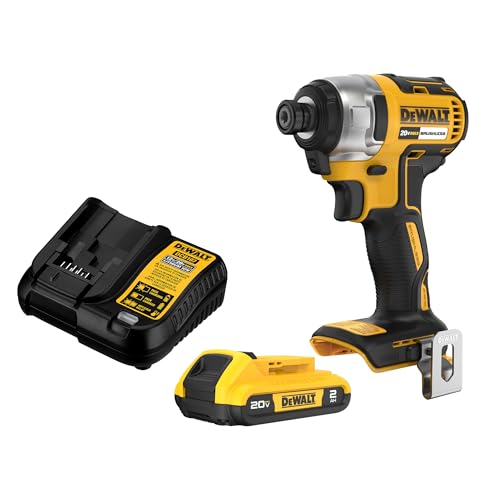
Yes. A cordless impact driver is an excellent choice if you often drive screws, bolts, and other fasteners. It uses a special hammering action to deliver strong rotational force. This helps it drive long screws into dense wood without making your arm work as hard.
Think about building a backyard deck in the United States. You may need to drive dozens of long deck screws into treated lumber. A regular drill can handle this job, but it may struggle as the screws get longer or the wood gets harder. An impact driver is built for this kind of work.
I would also consider one for fence repairs, shed construction, and heavy furniture assembly. Its short body can fit into tight spaces. Many models also have variable-speed triggers and several power settings.
However, an impact driver is not the best tool for every job. Its hammering action can make delicate work harder. It also needs special hex-shank accessories for many tasks. If I had to drill clean holes or work with small screws, I would rather use a regular drill.
What Makes It Stand Out / Key Features
- Impact mechanismThe tool uses repeated rotational impacts to deliver high turning force. This helps drive stubborn fasteners.
- High fastening torqueMany impact drivers deliver more fastening torque than ordinary cordless drills. Actual output depends on the model.
- Quick-change hex colletMost models use a 1/4-inch hex collet. It accepts compatible hex-shank driver bits and allows quick bit changes.
- Compact bodyIts short design helps reach corners, narrow gaps, and spaces where larger tools may not fit.
- Variable-speed triggerThe trigger lets you control speed by adjusting finger pressure. This helps when starting a screw.
- Multiple power modesSome models offer speed or impact settings for different fasteners and materials. Features vary by brand.
- Cordless operationA rechargeable battery lets you work away from wall outlets. Battery capacity affects runtime and weight.
My Recommendation
Choose a cordless impact driver if you build decks, install fences, assemble outdoor structures, or drive many long screws. It is a strong partner for demanding fastening work. Keep a regular drill nearby for holes and delicate tasks.
| Best For | Why |
|---|---|
| Deck building | It drives long deck screws into wood with strong rotational force. |
| Fence repairs | It handles repeated fastening without the same effort as a basic drill. |
| Heavy DIY work | It is useful for sheds, outdoor structures, and large wood projects. |
Is a Cordless Drill Good?
Yes. A cordless drill is one of the most useful tools for a home workshop. It can drill holes, drive screws, and handle many repair jobs with one machine. For most homeowners, it is a smart first power-tool purchase.
Imagine installing curtain rods, mounting shelves, or fixing a kitchen cabinet. You may need to drill a pilot hole, then drive a screw. A cordless drill can do both jobs with the right bit. Its adjustable clutch also helps prevent damage when working with softer wood or small fasteners.
I would choose a cordless drill for furniture assembly, basic woodworking, and home maintenance. The adjustable chuck accepts many common drill bits and driver bits. This gives it more flexibility than a standard impact driver.
Its main weakness appears during heavy fastening. A long screw can make the motor work hard. The drill may slow down, twist in your hand, or reach its torque limit. That does not make it a poor tool. It simply has a different job.
What Makes It Stand Out / Key Features
- Adjustable chuckMany cordless drills use a 3/8-inch or 1/2-inch keyless chuck. It holds a wide range of compatible round-shank and hex-shank accessories.
- Variable-speed controlThe trigger controls the speed. This makes it easier to start holes and drive screws with care.
- Adjustable clutchThe clutch limits turning force at a selected setting. It helps prevent stripped screw heads and damaged materials.
- Two-speed gearboxMany models offer a low-speed setting for higher torque and a high-speed setting for faster drilling.
- Drilling abilityA cordless drill can make holes in wood, metal, plastic, and other materials when paired with the correct bit.
- Forward and reverseA direction switch lets you drive screws forward and remove them by reversing the motor.
- Battery-powered designA rechargeable battery provides freedom to work in garages, driveways, workshops, and outdoor areas.
My Recommendation
Choose a cordless drill if you need one tool for general home repairs, woodworking, drilling holes, and light fastening. It offers more flexibility for everyday jobs and gives beginners better control over delicate tasks.
| Best For | Why |
|---|---|
| Homeowners | It handles common repairs, shelves, cabinets, and furniture. |
| Woodworking | It drills pilot holes and works with many common accessories. |
| DIY beginners | Its clutch and adjustable speed make many tasks easier to control. |
Cordless Impact Driver vs Cordless Drill: Side-by-Side Test
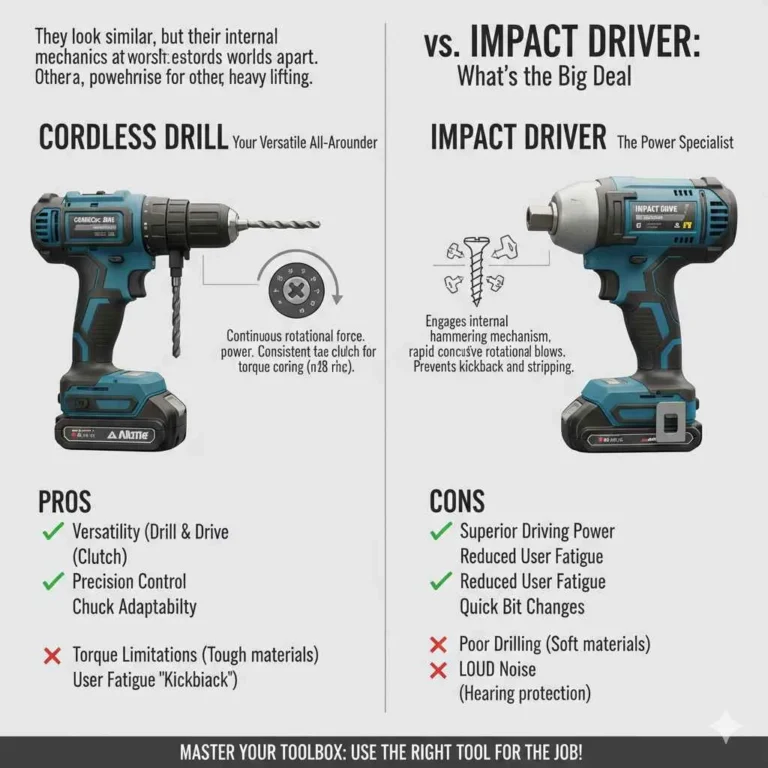
The main difference in cordless impact driver vs cordless drill comes down to how each tool delivers power. An impact driver uses repeated rotational impacts. A regular drill uses a motor and gearbox to turn the chuck smoothly.
Both tools can drive screws. However, they do not handle every task in the same way. An impact driver shines during heavy fastening. A drill offers more control and accepts a wider range of accessories. The better choice depends on the work you plan to do.
1. Power and Torque: Which Is Stronger?
Torque is the turning force a tool uses to rotate a screw or drill bit. Impact drivers often deliver higher fastening torque than standard cordless drills.
| Feature | Cordless Impact Driver | Cordless Drill |
|---|---|---|
| Power delivery | Repeated rotational impacts | Smooth motor rotation |
| Heavy fastening | Excellent | Moderate to good |
| Long screws | Handles them with ease on suitable models | May need more effort |
| Delicate work | Needs careful trigger control | Better clutch control |
⭐ Cordless Impact Driver – 9/10 | Cordless Drill – 7/10
The impact driver has the edge for heavy fastening. The drill remains better for controlled everyday work.
2. Drilling Ability: Which Makes Better Holes?
A cordless drill is the clear choice when your project needs clean, accurate holes. Its chuck accepts many common drill bits.
| Feature | Cordless Impact Driver | Cordless Drill |
|---|---|---|
| Standard drill bits | Needs compatible hex-shank accessories | Accepts many round-shank bits |
| Wood drilling | Possible with suitable accessories | Very good |
| Metal drilling | Possible with compatible bits | Better control and flexibility |
| Hole accuracy | Less suited to precise drilling | Better for controlled holes |
⭐ Cordless Impact Driver – 6/10 | Cordless Drill – 10/10
The cordless drill wins because its chuck and smooth rotation make drilling easier and more precise.
3. Screw Driving: Which Works Faster?
Driving screws is where the impact driver earns its name. Its impact mechanism helps move stubborn fasteners into dense materials.
| Feature | Cordless Impact Driver | Cordless Drill |
|---|---|---|
| Long deck screws | Excellent | Can struggle under heavy load |
| Small cabinet screws | Needs careful handling | Excellent with clutch settings |
| Repeated fastening | Very good | Good |
| Fastener removal | Very good | Good for light to medium tasks |
⭐ Cordless Impact Driver – 10/10 | Cordless Drill – 8/10
The impact driver wins for long screws and repeated fastening. The drill is better for small, delicate fasteners.
4. Speed and Control: Which Is Easier to Use?
Speed matters, but control matters just as much. A powerful tool can damage a project if it sends a screw too deep.
| Feature | Cordless Impact Driver | Cordless Drill |
|---|---|---|
| Speed adjustment | Variable trigger and model-dependent modes | Variable trigger and gearbox |
| Clutch control | Usually no traditional adjustable clutch | Common on standard models |
| Small screws | Requires extra care | Easier to control |
| Heavy fastening | Very efficient | May need slower work |
⭐ Cordless Impact Driver – 8/10 | Cordless Drill – 9/10
The drill has the edge for precise control, while the impact driver offers better speed and force for tough screws.
5. Chuck and Bit Compatibility: Which Is More Flexible?
The chuck is a key difference in cordless impact driver vs cordless drill. It decides which accessories you can attach to the tool.
| Feature | Cordless Impact Driver | Cordless Drill |
|---|---|---|
| Common holder | 1/4-inch hex collet | 3/8-inch or 1/2-inch chuck |
| Round-shank bits | Requires a suitable adapter or accessory | Usually supported directly |
| Driver bits | Compatible hex-shank bits | Compatible bits held in the chuck |
| Accessory range | More focused on fastening | Wider drilling and fastening options |
⭐ Cordless Impact Driver – 7/10 | Cordless Drill – 10/10
The cordless drill wins for accessory flexibility. Its adjustable chuck accepts more types of common bits.
6. Size, Weight, and Comfort: Which Feels Better?
A tool should feel comfortable during long jobs. Its weight, balance, grip, and body shape all affect how easy it is to use.
| Feature | Cordless Impact Driver | Cordless Drill |
|---|---|---|
| Body design | Often short and compact | Often longer due to its chuck |
| Tight spaces | Often easier to fit | Can be harder to position |
| Wrist movement | Impact action helps with tough screws | Can twist when a bit binds |
| Handling | Can feel lighter without the battery | Weight varies by model and chuck size |
⭐ Cordless Impact Driver – 9/10 | Cordless Drill – 8/10
The impact driver often wins in tight spaces, but actual comfort depends on the tool, battery, and user.
7. Noise and Vibration: Which Is Quieter?
Both tools make noise, but their sound differs. The impact mechanism creates repeated sharp impacts during demanding fastening work.
| Feature | Cordless Impact Driver | Cordless Drill |
|---|---|---|
| Operating sound | Often loud and sharp | Usually smoother and quieter |
| Impact noise | Produces repeated impact sounds | No impact sound in normal drill mode |
| Vibration | Noticeable during impact use | Can vibrate when bits bind |
| Hearing protection | Recommended for noisy tasks | Useful when noise levels are high |
⭐ Cordless Impact Driver – 6/10 | Cordless Drill – 9/10
The regular drill usually wins for quiet operation. Use hearing protection when noise exposure may be harmful.
8. Price and Overall Value: Which Is Worth Buying?
The best value depends on how often you use the tool. A lower purchase price does not always mean better value if the tool cannot handle your main jobs.
| Feature | Cordless Impact Driver | Cordless Drill |
|---|---|---|
| Entry-level options | Available from many brands | Available from many brands |
| Main value | Heavy and repeated fastening | General-purpose use |
| Accessory needs | May need compatible impact-rated bits | Uses many common drill accessories |
| Best first purchase | For frequent fastening jobs | For general home projects |
⭐ Cordless Impact Driver – 8/10 | Cordless Drill – 10/10
The drill offers better overall value for most homeowners because it handles more types of everyday tasks.
Final Verdict: Which Should You Buy?
In the cordless impact driver vs cordless drill debate, neither tool wins every job. A cordless impact driver is the better choice for long screws, deck building, fence repairs, and heavy fastening. It delivers strong rotational force and often fits into tight spaces.
A cordless drill is the better first purchase for most homeowners. It drills holes, drives screws, accepts more accessories, and offers better control for delicate work. If your budget allows, owning both gives you a useful pair. Use the drill to make holes and the impact driver to drive tough screws. Together, they make home projects easier.