Hammer Drill vs Rotary Hammer Drill: Key Differences

Is a Hammer Drill Good?
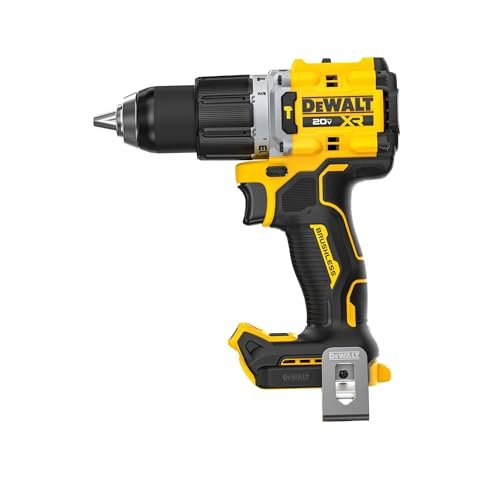
Yes. A hammer drill is a good choice for homeowners, DIY users, and contractors who need to make small holes in masonry. It combines normal rotation with a fast hammering action. This helps the bit break through brick, concrete block, and some concrete surfaces while it spins.
I would consider this tool for jobs such as mounting a TV bracket, hanging shelves, installing a handrail, or fixing a light fixture to a brick wall. These tasks rarely need the heavy impact force of a large rotary hammer. A hammer drill also works as a regular drill when you switch off its hammer mode.
The biggest benefit is flexibility. You can use it for wood, metal, plastic, and masonry with the correct bit. Most hammer drills use a standard three-jaw chuck, so they accept many common drill bits. However, drilling hard concrete with large bits can take time and put extra strain on the tool.
For the hammer drill vs rotary hammer drill debate, this tool makes sense when you want one useful drill for many home projects. It offers a good balance of size, cost, and everyday use. It is not the best choice for repeated large holes or heavy demolition.
What Makes a Hammer Drill Stand Out?
- Hammer and rotation actionThe drill spins the bit while two mechanical plates or gears create a rapid hammering action. This helps the bit cut through masonry.
- Standard chuckMany models use a three-jaw chuck. It holds common round-shank and hex-shank drill bits.
- Multiple operating modesMost models offer drilling and hammer drilling modes. Some also include a clutch for driving screws.
- Variable speedA variable-speed trigger helps control the drilling rate. This is useful when starting a hole or working with different materials.
- Compact designMany hammer drills are smaller and lighter than rotary hammers. This makes them easier to carry and use around a home.
- Wide bit selectionThe standard chuck accepts many common bits. Masonry bits are needed for brick, block, and concrete.
- Cordless and corded optionsYou can choose a battery-powered model for portability or a corded model for a steady power supply.
My Recommendation
Choose a hammer drill if you mostly work on home repairs, small masonry holes, and general drilling. It is a practical all-around tool for occasional concrete work.
| Best For | Why |
|---|---|
| Homeowners | Handles common drilling and mounting jobs around the house. |
| DIY projects | Works with many standard drill bits and materials. |
| Light masonry | Makes small holes in brick and concrete block without a heavy tool. |
Is a Rotary Hammer Drill Good?
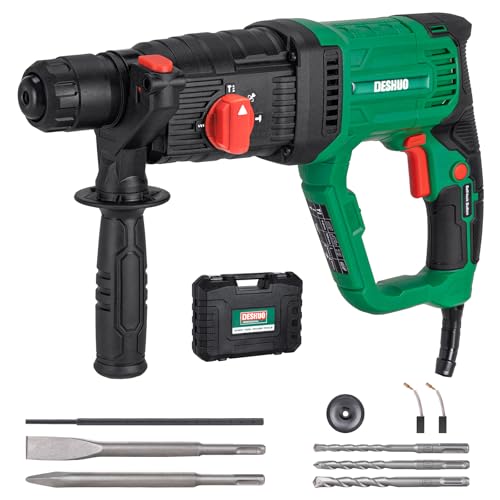
Yes. A rotary hammer drill is an excellent choice for people who regularly drill into concrete, stone, and other hard masonry. It uses a piston-driven hammer mechanism to deliver stronger impacts than the mechanical hammer action found in most standard hammer drills.
I would choose this tool for larger anchor holes, concrete installation work, and demanding construction projects. For example, fitting heavy-duty anchors into a concrete foundation can be much easier with a rotary hammer. Its impact system does much of the hard work instead of forcing you to push the tool into the surface.
Many rotary hammers use an SDS-Plus or SDS-Max bit system. These bits lock into the tool while allowing movement along the bit’s axis. This helps transfer impact energy into the material. Some models also offer a hammer-only mode for light chiseling and surface removal.
In the hammer drill vs rotary hammer drill comparison, the rotary hammer wins for demanding concrete work. However, it is often heavier, more expensive, and less convenient for small everyday drilling jobs. I would not buy one just to hang a few pictures or install occasional shelves.
What Makes a Rotary Hammer Stand Out?
- Piston-driven impactA piston and striker create powerful impacts that help break hard masonry as the bit rotates.
- SDS bit connectionMany models use SDS-Plus or SDS-Max bits. The special shank locks into the tool and allows axial movement.
- Higher impact energyRotary hammers often deliver more impact energy than standard hammer drills. Manufacturers usually list this value in joules.
- Hammer-only modeMany models can work without bit rotation. This mode supports light chiseling and surface removal.
- Rotary hammer modeThe tool combines rotation and strong impacts to drill holes in hard concrete and masonry.
- Larger drilling capacityDepending on the model, it can handle larger masonry holes than a typical hammer drill.
- Professional-duty designMany models have features such as vibration control, safety clutches, and durable internal impact systems.
My Recommendation
Choose a rotary hammer if you often drill into hard concrete, install large anchors, or work on construction and renovation projects. It is worth the extra cost when impact power matters.
| Best For | Why |
|---|---|
| Construction workers | Offers strong impact action for repeated concrete drilling. |
| Concrete installation | Handles larger holes for anchors and other fixtures. |
| Renovation work | Hammer-only models can help with light chiseling and tile removal. |
Hammer Drill vs Rotary Hammer Drill: Side-by-Side Test
When comparing a hammer drill vs rotary hammer drill, both tools can make holes in masonry. The real difference is how they create impact force. A hammer drill uses a mechanical system. A rotary hammer uses a piston-driven system that usually delivers stronger blows.
That difference affects drilling speed, bit choice, comfort, and price. The best tool depends on your project. A small hole in a brick wall does not need the same power as a large hole in a concrete foundation.
1. Working Mechanism: How Do They Work?
The biggest difference between these tools is the way they produce their hammering action.
| Feature | Hammer Drill | Rotary Hammer |
|---|---|---|
| Impact system | Mechanical plates or gears | Piston and striker system |
| Impact movement | Rapid vibration and short impacts | Stronger axial hammer blows |
| Rotation | Yes | Yes, in rotary modes |
| Hammer-only mode | Usually no | Common on many models |
⭐ Hammer Drill – 7/10 | Rotary Hammer – 10/10
The rotary hammer has the edge because its piston-driven mechanism delivers stronger impacts for hard masonry.
2. Drilling Power: Which Is Stronger?
Both tools can drill masonry, but a rotary hammer has a clear advantage when the material becomes dense and hard.
| Feature | Hammer Drill | Rotary Hammer |
|---|---|---|
| Brick walls | Good for small holes | Excellent |
| Concrete block | Good for light work | Excellent |
| Dense concrete | Slow on demanding jobs | Better suited |
| Large masonry holes | Limited capacity | Higher capacity on suitable models |
⭐ Hammer Drill – 7/10 | Rotary Hammer – 10/10
The rotary hammer wins for drilling power, especially when working with dense concrete and larger holes.
3. Speed and Efficiency: Which Saves More Time?
The right tool can save time and reduce effort. The difference becomes clear when you drill several holes in concrete.
| Feature | Hammer Drill | Rotary Hammer |
|---|---|---|
| Small masonry holes | Efficient | Very efficient |
| Large concrete holes | Often slower | Usually faster |
| Repeated drilling | More demanding | Better suited |
| User effort | May require more pressure | Impact system does more work |
⭐ Hammer Drill – 8/10 | Rotary Hammer – 10/10
The rotary hammer has the edge on demanding jobs, while the hammer drill remains efficient for small holes.
4. Bit Compatibility: What Bits Can You Use?
Bit compatibility matters because the wrong bit can reduce performance or fail to fit the chuck.
| Feature | Hammer Drill | Rotary Hammer |
|---|---|---|
| Common bit system | Three-jaw chuck | SDS-Plus or SDS-Max |
| Standard drill bits | Usually compatible | Need a suitable adapter or chuck |
| Masonry bits | Round or hex shank | Matching SDS shank |
| Bit changes | Manual chuck tightening | Quick SDS insertion on compatible models |
⭐ Hammer Drill – 9/10 | Rotary Hammer – 9/10
The hammer drill offers broader standard bit compatibility, while the rotary hammer offers a secure and convenient SDS system.
5. Weight and Handling: Which Feels Better?
A tool can be powerful and still feel uncomfortable. Weight and vibration matter during long jobs.
| Feature | Hammer Drill | Rotary Hammer |
|---|---|---|
| Typical size | Compact to medium | Medium to large |
| Weight | Often lighter | Often heavier |
| Overhead work | Usually easier | Can be tiring |
| Vibration | Can feel sharp and fast | Can be strong, depending on the model |
⭐ Hammer Drill – 9/10 | Rotary Hammer – 7/10
The hammer drill has the edge for portability and light work, although vibration control varies by model.
6. Versatility: Which Handles More Jobs?
A good home tool should handle more than one task. This is where the standard hammer drill has an advantage.
| Feature | Hammer Drill | Rotary Hammer |
|---|---|---|
| Wood drilling | Yes, with the right bit | Possible with suitable accessories |
| Metal drilling | Yes, with the right bit | Possible with suitable accessories |
| Screw driving | Possible on suitable models | Not its main purpose |
| Chiseling | Generally no | Yes, on models with hammer-only mode |
⭐ Hammer Drill – 10/10 | Rotary Hammer – 8/10
The hammer drill wins for general versatility, while the rotary hammer is more specialized for masonry and concrete.
7. Price and Value: Which Is More Affordable?
Your budget matters, but buying the wrong tool can cost more in the long run.
| Feature | Hammer Drill | Rotary Hammer |
|---|---|---|
| Entry-level price | Usually lower | Usually higher |
| Bit cost | Common bits are widely available | SDS bits may cost more |
| Home repair value | Very good | Depends on usage |
| Heavy concrete value | Limited | Very good |
⭐ Hammer Drill – 9/10 | Rotary Hammer – 9/10
The hammer drill offers better value for occasional home repairs, while the rotary hammer earns its cost through regular concrete work.
8. Maintenance and Durability: Which Lasts Longer?
Both tools can last for years with proper care. Workload, build quality, and maintenance matter more than the tool name alone.
| Feature | Hammer Drill | Rotary Hammer |
|---|---|---|
| Routine care | Clean chuck and vents | Clean SDS holder and vents |
| Wear points | Chuck, gears, motor | Piston seals, striker, chuck |
| Heavy-duty use | Less suitable | Designed for demanding work |
| Service needs | Depends on design and use | May need specialized service |
⭐ Hammer Drill – 8/10 | Rotary Hammer – 9/10
The rotary hammer has an advantage for demanding work, but proper care and build quality decide actual service life.
Final Verdict: Which Should You Buy?
The winner in hammer drill vs rotary hammer drill depends on the job. A hammer drill is the better choice for most homeowners who need a flexible tool for small holes, brick walls, shelves, and general repairs. It is usually lighter, more affordable, and easier to use with common drill bits.
A rotary hammer is the better choice for hard concrete, large anchor holes, repeated drilling, and renovation work. Its piston-driven impact system delivers more force and saves effort on demanding jobs. If concrete is your main material, I would choose the rotary hammer. For everyday home use, the hammer drill is the smarter buy.