Best Chainsaw Sharpening Tool: 5 Top Picks
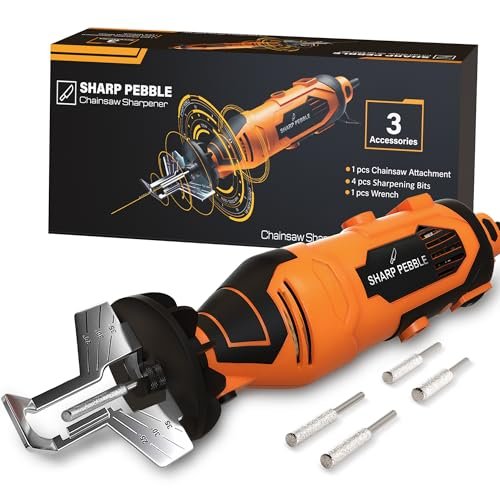
**The Sharp Pebble Electric Chainsaw Sharpener Kit is my top overall pick for consistent, convenient chain sharpening at home.**
Imagine cutting firewood for winter in your backyard or clearing fallen branches after a storm. Your chainsaw starts cutting slowly, makes fine dust instead of useful chips, and needs more pressure to move through wood. A dull chain can turn a simple job into a tiring task. You could buy a replacement chain, but sharpening the one you own often makes more sense. The best chainsaw sharpening tool helps restore sharp cutting teeth, saves time, and makes regular maintenance easier. I compared five popular options, including electric sharpeners, portable hand-crank kits, and a traditional Oregon filing kit, to help you choose the right tool for your needs.
🏆 Top 3 Products

Sharp Pebble Electric Chainsaw Sharpener Kit
Its corded design, multiple grinding wheel sizes, and angle guide make it a strong choice for repeatable home sharpening.

Sharp Pebble Electric Cordless Chainsaw Sharpener Kit
Its cordless design offers more freedom when sharpening chains away from a convenient power outlet.
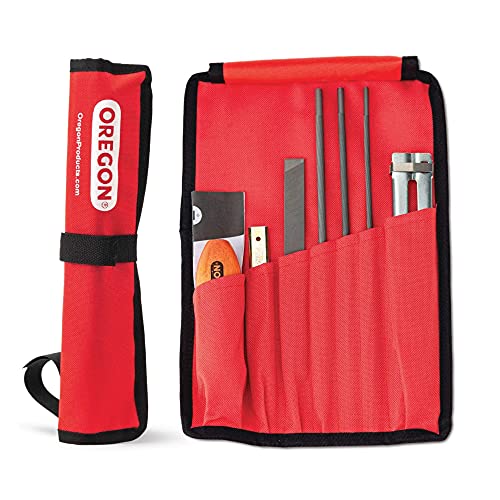
Oregon Universal Chainsaw Field Sharpening Kit
Its traditional files and filing guide provide a practical way to maintain compatible chains without buying an electric sharpener.
Sharp Pebble Electric Chainsaw Sharpener Kit
The Sharp Pebble Electric Chainsaw Sharpener Kit is my first choice for homeowners who sharpen their chains more than once in a while. It uses a corded electric sharpening tool and includes four grinding wheel sizes. This gives users options when working with different compatible chain cutters. The angle guide attachment also helps users maintain a more consistent sharpening position. For someone who wants a repeatable process, this setup offers a useful mix of control and speed.
The kit also includes a wrench and an eBook, which can help new users learn the basic sharpening process. I like the idea of having several wheel sizes in one package because chains do not all use the same sharpening specifications. However, the correct wheel must match the chain manufacturer’s requirements. An electric sharpener does not remove the need for care. You still need to hold the tool steadily, use the correct angle, and remove only a small amount of metal from each cutter.
✅ Pros
- ✔ Electric operation can reduce the time needed to sharpen a dull chain.
- ✔ Four grinding wheel sizes offer options for compatible chain types.
- ✔ The angle guide helps users maintain a more consistent filing position.
- ✔ The corded design does not depend on a rechargeable battery.
- ✔ Useful for homeowners who sharpen chains regularly.
- ✔ Can help produce more even cutter lengths when used with care.
- ✔ The included wrench supports basic tool setup and adjustment.
- ✔ The eBook gives beginners an additional learning resource.
- ✔ A practical option for maintaining several compatible chains.
- ✔ Can reduce the repetitive hand effort required by traditional filing.
⚠️ Cons
- ✖ The power cord limits where you can use the sharpener.
- ✖ Beginners need time to learn the correct sharpening angle and pressure.
- ✖ An electric grinding wheel can remove too much metal if used carelessly.
- ✖ The correct wheel must match the chain’s specifications.
- ✖ It requires a suitable power outlet during operation.
- ✖ It may be more equipment than an occasional chainsaw user needs.
My Recommendation
I recommend the Sharp Pebble corded kit as the best chainsaw sharpening tool overall for many home users. Its main strength is the combination of electric operation, multiple wheel sizes, and an angle guide. These features make it useful for people who maintain their chains on a regular schedule. It can also suit small property owners who keep more than one compatible chainsaw chain. Before sharpening, I would check the chain manufacturer’s instructions and confirm the correct wheel size, sharpening angle, and depth-gauge requirements. I would also secure the chain and work slowly rather than pressing the grinding wheel hard against each cutter. This is not a fully automatic sharpener, so careful handling still matters.
| Best For | Why |
|---|---|
| Homeowners | The electric design can make routine chain maintenance faster and easier. |
| Regular Firewood Users | Multiple grinding wheel sizes offer flexibility for compatible chains. |
| Sharpening Beginners | The angle guide and included learning material provide useful support. |
CONGDAREN Hand Crank Chainsaw Sharpener Kit

The CONGDAREN upgraded hand-crank chainsaw sharpener takes a different approach from an electric grinding tool. It uses a manual crank and a sharpening jig to help guide the sharpening process. The package description lists five sharpening rods, a storage bag, gloves, and a cleaning brush. This combination may appeal to users who want a portable kit without depending on an electrical outlet. It is also worth considering if you prefer a manual tool for routine maintenance.
A hand-crank sharpener can provide a steady sharpening process when you set it up correctly. The jig helps guide the tool, while the sharpening rods provide the contact surface for the cutters. Still, the chain must match the tool’s supported specifications. I would check the included instructions before using it on a particular saw. The listed accessories make the package look useful, but the quality of the sharpening result depends on correct setup, careful alignment, and consistent technique.
✅ Pros
- ✔ Manual operation does not require an electrical outlet.
- ✔ The hand crank gives users direct control over the sharpening movement.
- ✔ Five sharpening rods provide multiple supplied sharpening components.
- ✔ The jig-style design helps guide the sharpening process.
- ✔ A portable option for property maintenance and outdoor work.
- ✔ The included storage bag helps keep the kit and accessories together.
- ✔ A cleaning brush supports basic maintenance after sharpening.
- ✔ Gloves are included as an additional package accessory.
- ✔ Can be useful for users who prefer manual sharpening.
- ✔ Does not rely on a rechargeable battery or power cord.
⚠️ Cons
- ✖ Manual operation can take more time than powered sharpening.
- ✖ Correct setup and alignment still require attention.
- ✖ Compatibility should be confirmed before purchase.
- ✖ The sharpening rods may need replacement after extended use.
- ✖ It may not be the fastest choice for several badly worn chains.
- ✖ The included gloves do not replace proper chainsaw safety equipment.
My Recommendation
I would consider the CONGDAREN kit for users who want a manual chainsaw sharpening system with several accessories in one package. It is particularly interesting for people who work outside and do not always have access to electricity. The crank-based design may also help users who want more guidance than a loose round file provides. However, I would not buy it based only on the number of included accessories. The most important point is whether its jig and rods match the chain on your saw. Check the supported chain sizes and the manufacturer’s instructions first. If you sharpen chains often and want the quickest process, an electric option may be more convenient.
| Best For | Why |
|---|---|
| Outdoor Maintenance | Manual operation works without an electrical connection. |
| Manual Tool Users | The hand crank provides direct control over the sharpening process. |
| Portable Storage | The included bag helps organize the sharpening rods and accessories. |
Sharp Pebble Cordless Electric Chainsaw Sharpener
The Sharp Pebble Electric Cordless Chainsaw Sharpener Kit is a good option for people who want the convenience of electric sharpening without a fixed power cord. Its cordless design makes it easier to move around a property or work area. The package includes four sharpening wheels, an angle attachment, a wrench, and an eBook. This gives the user several useful components for maintaining compatible chains. It shares the general sharpening approach of the corded Sharp Pebble kit but adds greater freedom of movement.
I see the cordless design as its main selling point. A person maintaining a chainsaw in a garage, shed, or outdoor work area may not always have an outlet nearby. A portable electric tool can make that task easier. However, cordless convenience also brings battery considerations. Users need to check the battery arrangement, charging requirements, and available runtime before relying on the tool for a large maintenance session. The correct grinding wheel and sharpening angle remain essential, even when the tool offers electric operation.
✅ Pros
- ✔ Cordless operation provides more freedom of movement.
- ✔ Useful when a power outlet is not close to the sharpening area.
- ✔ Four sharpening wheel sizes offer options for compatible chains.
- ✔ The angle attachment helps guide the sharpening position.
- ✔ Electric sharpening can reduce repetitive hand work.
- ✔ A portable choice for home and property maintenance.
- ✔ The included wrench supports basic setup and adjustment.
- ✔ The eBook provides an additional learning resource.
- ✔ Can be moved between different work areas with less setup.
- ✔ A practical alternative to a traditional corded sharpening tool.
⚠️ Cons
- ✖ Battery runtime can limit extended sharpening sessions.
- ✖ Users must manage charging before taking the tool into the field.
- ✖ The correct grinding wheel still depends on chain specifications.
- ✖ Beginners need practice to avoid uneven sharpening.
- ✖ A cordless motor does not remove the need for careful pressure control.
- ✖ Battery replacement or charging may add long-term maintenance needs.
My Recommendation
I would choose this Sharp Pebble cordless model if portability matters more than having a constant power connection. It offers a useful mix of electric sharpening and movement freedom. That can help homeowners who maintain equipment in different parts of a large property. It may also suit users who want to sharpen a chain in a shed or outdoor workspace. Before buying, I would check the battery details and make sure the package meets my expected sharpening workload. I would also compare its cost with the corded Sharp Pebble version. If both offer the same basic sharpening approach, the decision comes down to whether cordless convenience is worth the extra cost.
| Best For | Why |
|---|---|
| Large Properties | The cordless design makes it easier to move between work areas. |
| Outdoor Sharpening | It does not need a nearby electrical outlet during use. |
| Electric Tool Fans | It offers powered sharpening without a fixed cord. |
OMCCHK Universal Hand Crank Chainsaw Sharpener

The OMCCHK Universal Hand Crank Chainsaw Sharpener Jig Kit is another manual option for users who want a guided sharpening process. Its listed package includes five diamond sharpening bits and a hand-crank jig. The product description states that it fits chainsaws from 4 inches to 22 inches. That is a broad stated size range, but I would still check the actual chain compatibility before buying. Bar length alone does not determine the correct sharpening bit or filing angle.
The diamond sharpening bits are a notable part of this kit. They provide the contact points for sharpening the chain cutters, while the hand crank helps guide the movement. A manual jig can be appealing to someone who wants a more structured process than freehand filing. It also avoids the need for an electrical connection. However, the result still depends on correct alignment and the right sharpening specifications. I would treat the word universal as a general product description, not a promise that every chain type will fit.
✅ Pros
- ✔ Hand-crank operation works without electricity.
- ✔ Five diamond sharpening bits are listed in the package.
- ✔ The jig design helps guide the sharpening movement.
- ✔ Portable construction can suit outdoor maintenance.
- ✔ The stated 4-inch to 22-inch range covers many bar sizes.
- ✔ A manual alternative to powered sharpening systems.
- ✔ Can provide a repeatable sharpening routine after proper setup.
- ✔ Diamond bits offer a different sharpening surface from ordinary files.
- ✔ Useful for users who prefer a guided manual tool.
- ✔ No battery charging or power cord is required.
⚠️ Cons
- ✖ The stated bar-size range does not guarantee compatibility with every chain.
- ✖ Manual cranking may require more effort and time.
- ✖ Users must verify the correct bit size for their chain.
- ✖ The jig needs accurate positioning for even results.
- ✖ Replacement diamond bits may be needed over time.
- ✖ It may be less convenient for users who sharpen many chains regularly.
My Recommendation
The OMCCHK hand-crank kit is worth considering if you want a portable manual sharpener with several diamond bits. I would place it on the shortlist for homeowners who do not need an electric sharpening tool. Its jig-based design may also appeal to beginners who want help maintaining a steady sharpening position. The stated 4-inch to 22-inch range is useful information, but it should not be the only factor in your decision. I would compare the chain pitch, cutter type, and required sharpening angle with the product instructions. If the specifications match, this kit may be a practical addition to a basic chainsaw maintenance setup.
| Best For | Why |
|---|---|
| Manual Sharpening | The hand-crank system does not depend on electrical power. |
| Portable Maintenance | Its compact jig-style approach suits work away from a fixed workshop. |
| Diamond Bit Users | The package lists five diamond sharpening bits for compatible chains. |
Oregon Universal Chainsaw Field Sharpening Kit
The Oregon Universal Chainsaw Field Sharpening Kit is my favorite option for people who prefer traditional hand filing. Unlike the electric and hand-crank models in this list, it uses conventional round files and a flat file. The package includes 5/32-inch, 3/16-inch, and 7/32-inch round files, along with a handle, filing guide, and travel pouch. These different file sizes help cover several common chain requirements. It is a straightforward kit for people who want to maintain a chain with simple hand tools.
Oregon is a familiar name in chainsaw chain and maintenance equipment, and this field kit focuses on the basic tools needed for filing. The filing guide can help users maintain the correct position and angle when they sharpen compatible cutters. The flat file is useful for depth-gauge maintenance when used with the proper gauge tool and instructions. The pouch also makes it easier to carry the tools together. This kit does require patience and practice, but it offers a simple approach without motors, batteries, or charging.
✅ Pros
- ✔ Includes three common round file sizes.
- ✔ The 5/32-inch file supports compatible smaller chain cutters.
- ✔ The 3/16-inch file suits chains that specify this file size.
- ✔ The 7/32-inch file provides another common sharpening option.
- ✔ A flat file is included for relevant maintenance tasks.
- ✔ The filing guide helps users maintain a consistent filing position.
- ✔ The handle gives users a more secure way to hold the file.
- ✔ The travel pouch keeps the supplied tools together.
- ✔ Manual operation requires no electricity or batteries.
- ✔ Useful for field maintenance and basic chainsaw care.
- ✔ A practical choice for users who want to learn traditional filing.
- ✔ Can provide precise control when used with the correct technique.
⚠️ Cons
- ✖ Hand filing takes more time than electric sharpening.
- ✖ Beginners need practice to maintain consistent cutter angles.
- ✖ The supplied file sizes do not cover every chainsaw chain.
- ✖ The user must select the correct file for the chain specification.
- ✖ A separate depth-gauge tool may be needed for accurate depth-gauge work.
- ✖ It requires regular inspection and proper file replacement.
My Recommendation
I recommend the Oregon Universal Field Sharpening Kit as the best value choice for users who want a traditional filing system. It provides several round file sizes, a flat file, a handle, a filing guide, and a storage pouch. That is a useful combination for basic chain maintenance. I especially like this approach for people who want to learn how their chainsaw cutters work rather than depend entirely on an electric device. The main thing I would check is the file size required by my chain. I would also get the correct depth-gauge tool if my maintenance routine requires one. For regular field use, this compact kit is a sensible option.
| Best For | Why |
|---|---|
| Budget-Minded Owners | It offers several traditional sharpening tools in one package. |
| Field Maintenance | The travel pouch makes the files and accessories easier to carry. |
| Traditional Filing | It provides round files, a flat file, and a filing guide for manual work. |
Final Verdict: Which Should You Buy?
After comparing these five options, I would choose the Sharp Pebble Electric Chainsaw Sharpener Kit as the best chainsaw sharpening tool overall. Its four grinding wheel sizes, angle guide, and corded electric design make it a practical choice for regular home maintenance. The cordless Sharp Pebble is a strong alternative for outdoor use, while the Oregon field kit offers excellent value for people who prefer manual filing.
The right chainsaw sharpener should match your chain, skill level, and workload. Check the manufacturer’s specifications, sharpen carefully, and inspect the chain before every job. A suitable chainsaw sharpening tool can help you maintain a cleaner cut, reduce wasted effort, and get more useful service from your chain.
FAQs Of best chainsaw sharpening tool
Q What is the best chainsaw sharpening tool overall?
Q Are electric chainsaw sharpeners better than manual files?
Q What size file do I need for my chainsaw chain?
Q How often should I sharpen a chainsaw chain?
Q Can I sharpen a chainsaw chain with a cordless sharpener?