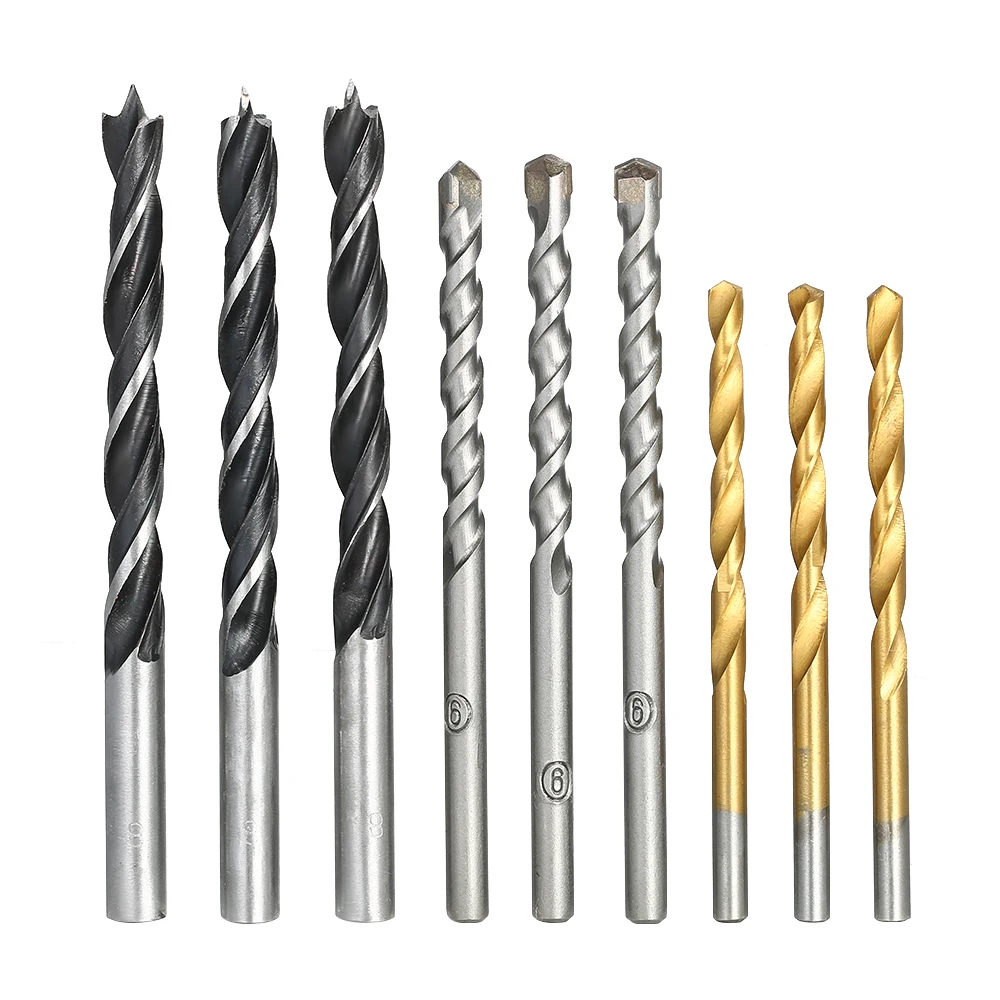
Drill bits look like slim metal rods with sharp tips and spiral grooves, but their shapes vary by material and task. Wood bits often have a pointed center, metal bits usually have a simple angled tip, and masonry bits have a wider, blunt-looking carbide tip.
If you have ever opened a drill bit case while fixing a loose cabinet handle, hanging a shelf, or building a backyard deck, you may have noticed that the bits do not all look alike. Some have long spiral grooves, some end in a tiny sharp point, and others have flat, paddle-shaped heads. These differences are not just for show. Each shape helps the bit cut, clear debris, or make a hole in a particular material.
In American homes and workshops, drill bits are used for jobs ranging from assembling furniture and installing curtain rods to drilling into concrete walls and metal brackets. The easiest way to identify a bit is to look at its tip, cutting edges, body shape, and any markings on its shank. Once you know what these features mean, a crowded tool case becomes much easier to understand.
This guide explains what common drill bits look like, how their shapes differ, and which features help you identify them. It also covers confusing look-alikes, size markings, worn bits, and basic safety checks. You do not need to memorize every bit design; learning a few visible clues will help you make a better choice for most household and workshop tasks.
Source: drillvilla.com
What Does a Typical Drill Bit Look Like?
A typical drill bit looks like a narrow metal rod with a pointed end and one or more grooves running along its body. The grooves are called flutes. They help form cutting edges and carry chips or dust away from the hole as the bit turns. Many common bits have two spiral flutes, which give them the familiar twisted appearance.
The end that enters the drill is called the shank. It may be round, hexagonal, or specially shaped for a particular tool. The cutting end is called the tip, and its design changes depending on what the bit is meant to drill. A standard twist bit, for example, has an angled cutting point, while a wood brad-point bit has a small center spike and outer cutting spurs.
Drill bits also come in different lengths and diameters. A short bit may suit a small hole in a cabinet panel, while a long bit can reach through a thicker workpiece. Larger bits may have broad cutting heads or hollow bodies. The overall appearance gives you a useful first clue, but the manufacturer’s label is the better way to confirm the bit’s intended use.
Source: animalia-life.club
Shank
The smooth or specially shaped end held by the drill chuck or tool holder. Its shape must match the tool’s holder.
Body and flutes
The long section between the shank and tip. Spiral channels help carry material away from the hole.
Cutting tip
The working end. Its point, edges, and overall shape help reveal what material the bit is designed to cut.
Size markings
Some bits display a diameter, fractional size, metric size, or product code on the shank. These markings can help you choose the correct hole size.
Why Do Some Drill Bits Have Spiral Grooves?
Spiral grooves help move chips away from the cutting area as the bit turns. This matters because trapped debris can slow drilling, create excess heat, or make the bit bind. The flute shape and length vary with the bit’s purpose, so two bits with similar spiral bodies may still be designed for different materials.
A long, narrow spiral bit may be intended for deep holes, while a short twist bit may be better suited to routine work. Do not assume that deeper grooves or a longer body always mean better performance. The correct design depends on the material, hole depth, and tool instructions.
What Do Common Twist Drill Bits Look Like?
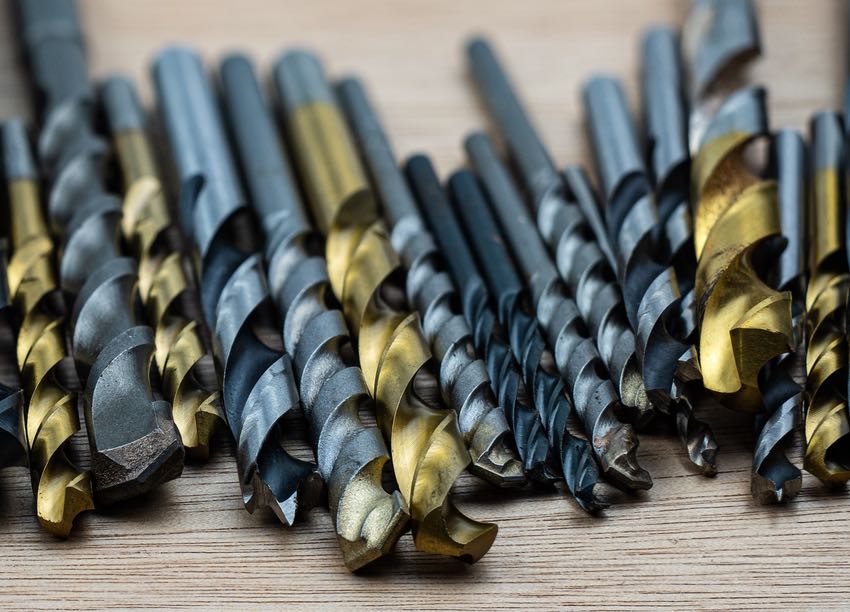
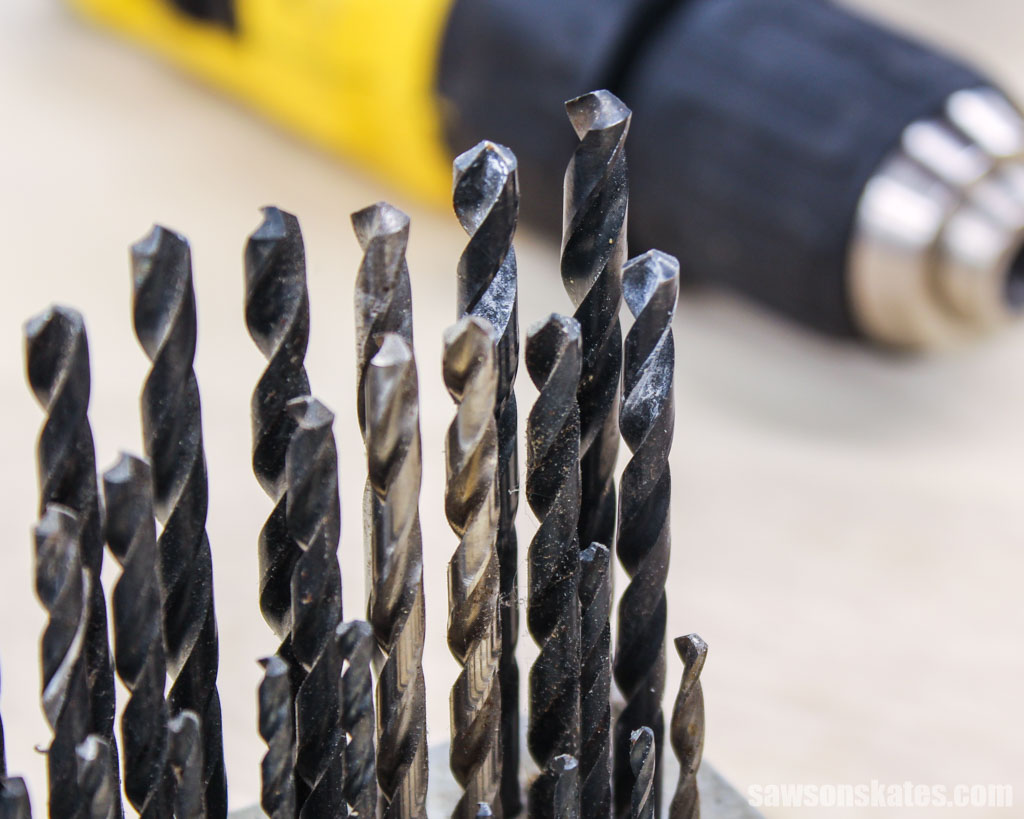
Twist drill bits are among the easiest bits to recognize. They usually look like slim rods with two helical grooves winding around the body and a pointed cutting end. Many household drill sets contain several sizes of twist bits arranged in rows or slots, often with labels printed beside them.
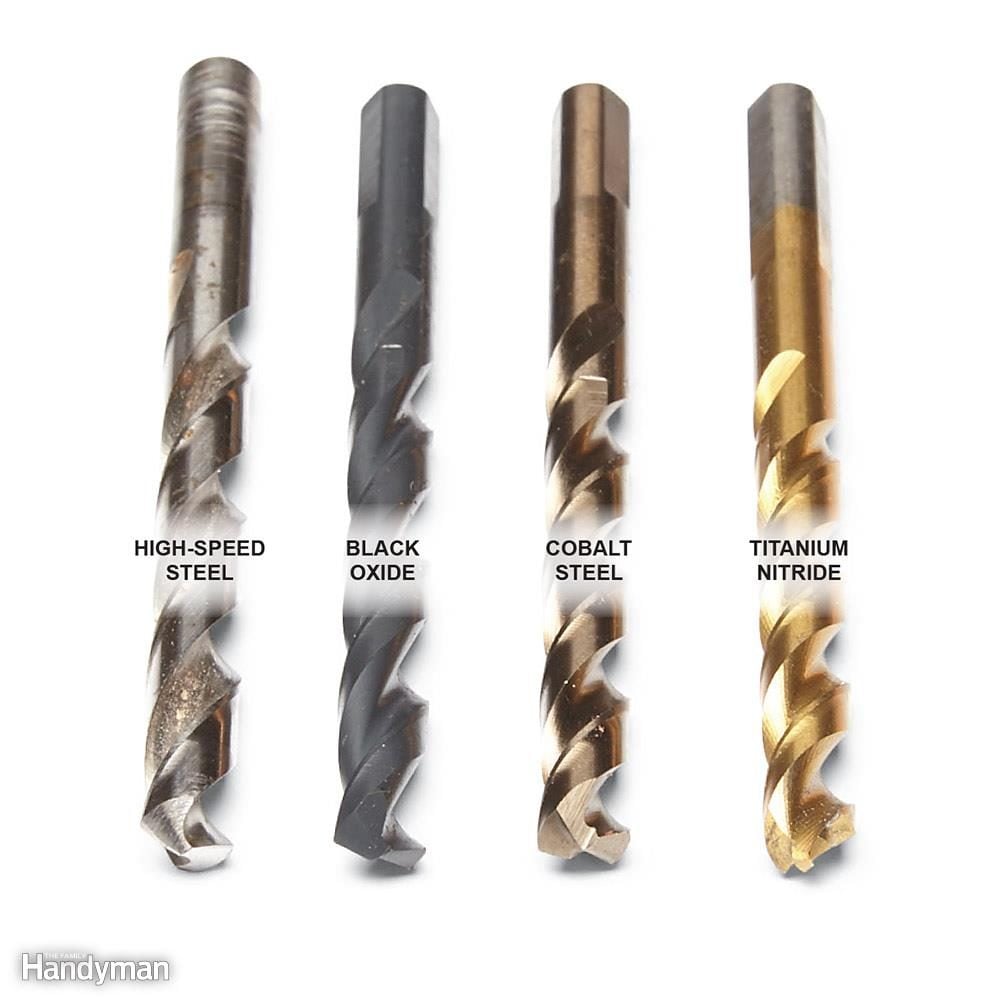
Twist bits are widely used for holes in metal, plastic, and other materials when the bit’s design and cutting material are suitable. General-purpose high-speed steel bits often have a plain metallic finish. Other versions may have a dark coating, a gold-colored coating, or a brighter polished surface. These finishes can indicate a coating or treatment, but appearance alone does not prove what material the bit can handle.
The cutting tip is usually a cone-like point formed by two angled lips. It does not have the long center spike seen on many wood bits. That distinction is useful when you sort loose bits, although some specialty metal bits have different point designs for particular jobs.
Source: ar.inspiredpencil.com
Standard high-speed steel bit
Often silver or gray, with a simple pointed tip and twisted flutes. It is commonly used for general drilling within its rated materials.
Black oxide bit
Often dark gray or black. The finish may improve wear or corrosion resistance, but it does not make the bit suitable for every material.
Titanium-coated bit
Often gold-colored. The coating is applied to a base bit, commonly high-speed steel. The gold color alone does not establish the exact coating or its quality.
Cobalt-alloy bit
Often bronze, brown, or gold-brown, though color varies. These bits are commonly made for demanding metal drilling, including certain stainless steel applications, when used correctly.
How Can You Tell If a Twist Bit Is for Metal?
A conventional metal-cutting twist bit usually has two cutting lips and a fairly even, pointed end. It generally lacks the center spur and wide outer spurs found on a brad-point wood bit. Check the packaging or the markings on the bit to confirm its material rating, since several bit types share the same basic twisted shape.
When drilling metal, use a bit intended for that metal, secure the workpiece, and follow the recommended speed and lubrication guidance. A bit that is too dull or used at an unsuitable speed can overheat, cut poorly, or damage the workpiece.
What Do Wood Drill Bits Look Like?
Wood drill bits often have a more distinct point than ordinary metal bits. Many include a center spur that keeps the bit from wandering when you start a hole. Some also have small outer spurs that score the wood fibers around the edge of the hole, helping create a cleaner opening.
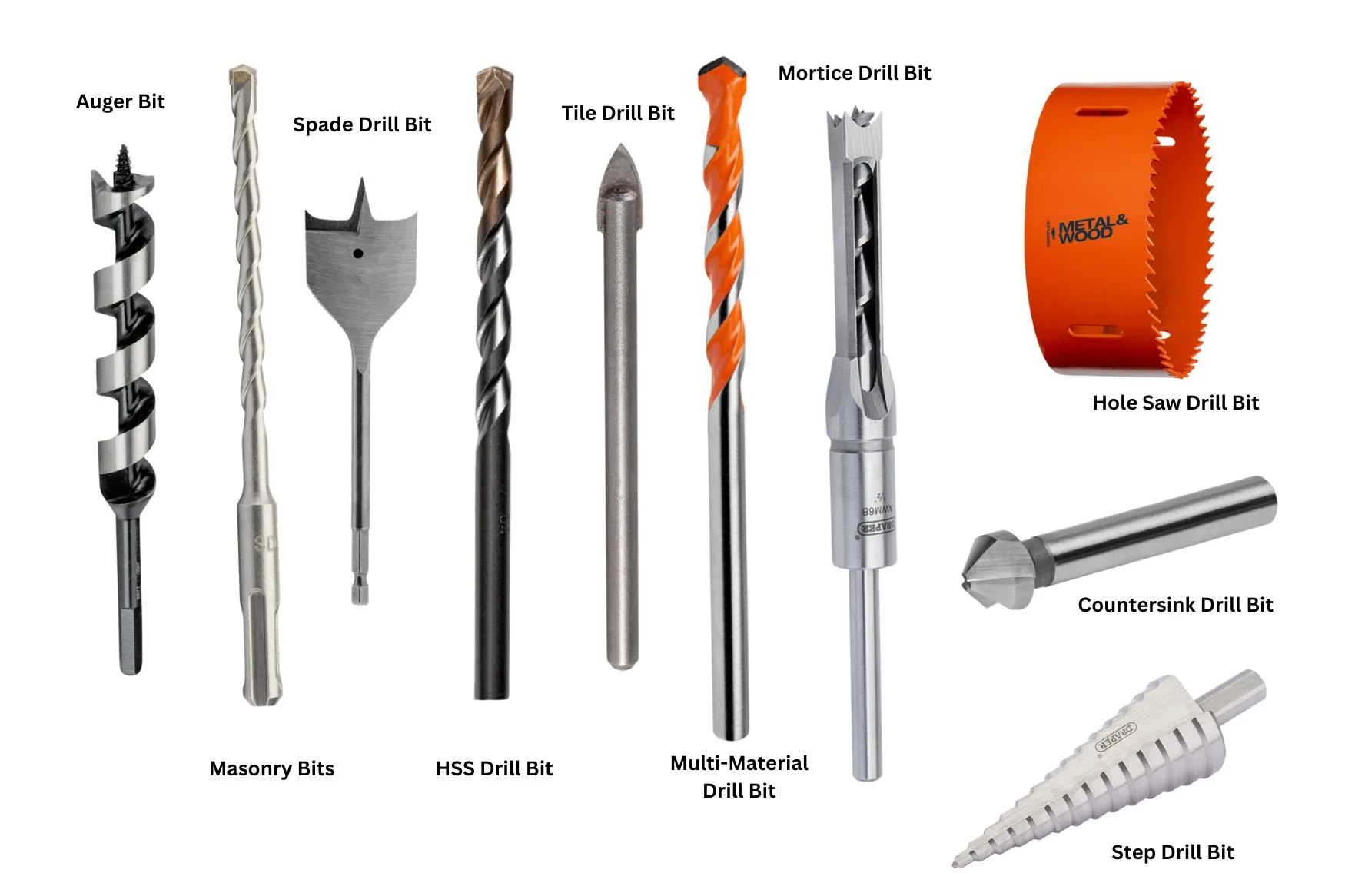
Wood bits come in several recognizable shapes. Brad-point bits look like twist bits with a sharp center pin and small side points. Spade bits look like flat metal paddles with a pointed center and two cutting edges. Auger bits have a long screw-like lead point and broad spiral flutes, while Forstner bits have a wide, round cutting head for clean, flat-bottomed holes.
The type of wood matters. Soft pine, hardwood, plywood, and composite boards can behave differently during drilling. A suitable bit, a steady drill, and proper support can help reduce tear-out and wandering. For visible surfaces, a scrap test can reveal whether the bit leaves the finish you want.
Source: qaqooking.wiki
Brad-point bit
Has a sharp center point and often two outer spurs. It is designed to start accurately in wood.
Spade bit
Has a broad, flat, paddle-shaped head. It is commonly used for relatively large holes in wood.
Auger bit
Has a screw-like lead point and a long spiral body. Its design helps pull the bit into wood and remove chips.
Forstner bit
Has a wide cylindrical cutting head with a rim and internal cutting edges. It is useful for clean, flat-bottomed holes when the setup is suitable.
Hole saw
Looks like a hollow metal cup with teeth around its rim. It cuts large circular openings rather than drilling a small round hole with a solid tip.
What Does a Brad-Point Bit Look Like?
A brad-point bit resembles a slim twist bit, but its tip has a noticeable center spike. Small pointed spurs may also extend near the outside edges of the cutting head. Viewed from the front, the tip can look like a tiny three-pointed shape rather than a plain cone.
The center spike helps locate the hole, and the outer spurs score the wood around its edge. This makes brad-point bits useful for cabinet work, furniture assembly, shelving, and other projects where hole placement and neat edges matter.
What Does a Spade Bit Look Like?
A spade bit looks more like a flat metal paddle than a narrow drill rod. Its broad head has a sharp center point and cutting edges on each side. The shank is usually much narrower than the paddle-shaped head, making the bit easy to identify in a mixed tool set.
Spade bits are often used to bore larger holes in wood, such as holes for cables or pipes through framing lumber. They can leave rougher edges than some other wood bits, so they may not be the first choice for a visible finished surface.
What Do Masonry Drill Bits Look Like?
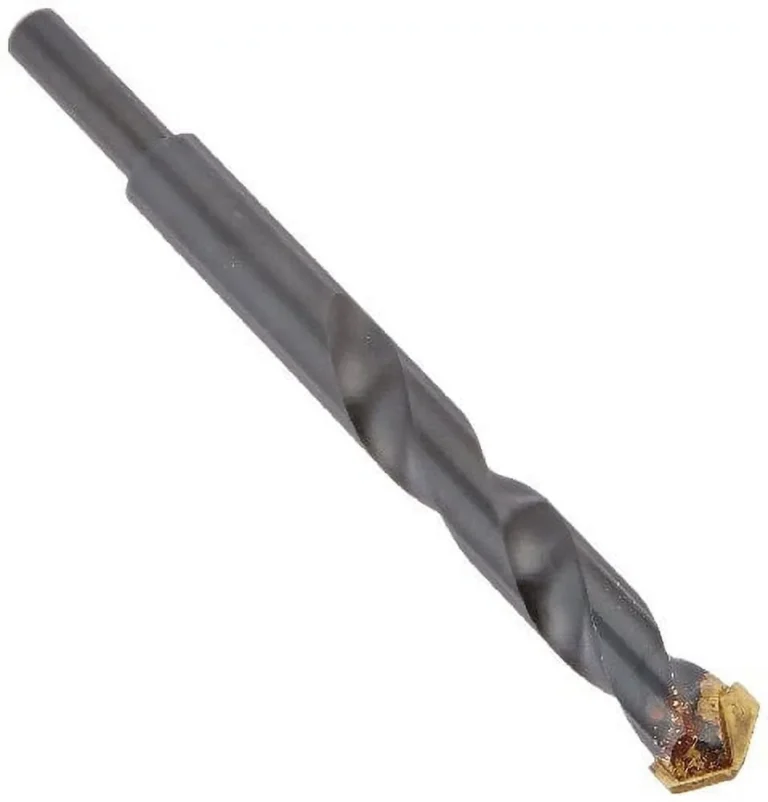
Masonry drill bits usually have a strong-looking cutting tip that is wider or more blunt than the pointed end of a standard twist bit. The tip often has a small, flat carbide cutting plate at the end of a steel shaft. The body may have spiral flutes that carry dust out of the hole as the bit turns.
These bits are made for materials such as brick, concrete, and some types of stone. Their cutting edges are designed to withstand the abrasion and impact associated with masonry drilling. Some masonry bits can be used with a standard rotary drill, while others are intended for hammer drills or rotary hammers. The bit and tool must be compatible.
A masonry bit may look similar to a metal twist bit along most of its length. The tip is the most useful visual clue, but the label remains important. Do not use a regular wood or metal bit as a substitute for a masonry bit when drilling hard brick or concrete.
Source: exopadwui.blob.core.windows.net
Carbide-tipped masonry bit
Often has a broad, chisel-like tip that may look like a small flat cap across the end of the shaft.
Hammer-drill masonry bit
May have a carbide cutting head and a shank designed for the drill’s chuck. Its exact appearance depends on the tool system.
Rotary-hammer bit
Often has a specialized slotted shank, such as an SDS design, and a robust masonry cutting head. It will not fit every standard drill chuck.
Can You Identify a Masonry Bit by Color?
No. Masonry bits may be silver, gray, black, or another finish. Their colors can overlap with those of metal bits, so color is not a reliable way to identify them. Look for the carbide-style cutting head, then verify the packaging or model markings.
If you are drilling into a wall in a US home, first check what may be behind the surface. Electrical wiring, plumbing, and other hidden services can make drilling dangerous. Use suitable detection tools and follow local requirements; if you cannot confirm that the drilling area is safe, ask a qualified professional.
What Do Specialty Drill Bits Look Like?
Specialty drill bits often look very different from the slim, twisted bits found in basic home tool kits. Their shapes reflect a specific task, such as making a wide hole, creating a countersink for a screw head, or drilling through tile. If you know the basic outlines, you can sort many specialty bits without confusing them with standard twist bits.
The most useful distinction is whether the bit removes material with a pointed cutting tip, a broad head, a cup-shaped rim, or a stepped profile. A countersink bit, for example, often has a cone-shaped head with flutes. A step bit resembles a cone with a series of stair-like rings. A tile bit may have a spear-shaped carbide tip or a diamond-coated cutting edge, depending on its design.
Source: qaqooking.wiki
Countersink bit
Has a cone-shaped cutting head that creates a beveled recess for a screw head. Some designs include a central pilot drill.
Step bit
Looks like a cone with several stepped diameters. It is commonly used to make or enlarge holes in suitable thin sheet materials.
Tile bit
May have a spear-shaped point or a diamond-coated tip. It is designed for specific tile materials and often requires careful speed and pressure control.
Hole saw
Has a hollow circular body with teeth or an abrasive rim. The cup cuts around the edge of a large hole.
Installer bit
Often has a long, narrow body and a small cutting tip. Some versions include an opening near the tip to help pull a wire through a drilled path.
Glass and ceramic bit
May use a spear-like carbide tip or a diamond-coated cutting surface. The correct style depends on the material and manufacturer guidance.
What Does a Step Drill Bit Look Like?
A step drill bit looks like a small metal cone with several levels cut into its sides. Each step has a different diameter, so one bit can make holes of different sizes within its rated range. Many step bits have size markings etched or printed near the steps.
Step bits are often used on thin sheet metal and other compatible materials. They are not a universal substitute for ordinary drill bits, and the workpiece must be secured. Check the material rating and the hole-size range before use.
What Does a Hole Saw Look Like?
A hole saw looks like a short hollow cup with teeth around its open rim. Many versions use a central pilot bit to guide the cut, while others use a different attachment system. The wide cutting rim leaves a large circular opening, unlike a standard twist bit that removes material from the center of a small hole.
Hole saws are available for wood, metal, tile, and other materials, but one type should not be assumed suitable for all of them. Match the cutting edge to the workpiece and check the manufacturer’s speed limits.
How to Identify a Drill Bit by Its Shape
The quickest way to identify an unknown drill bit is to inspect the tip first, then the body, shank, and markings. Set the bit on a clear surface and compare its shape with the common designs below. Do not test an unfamiliar bit by spinning it against a workpiece, because the wrong bit can slip, break, or damage the material.
A single feature is not always enough to confirm a bit’s purpose. For example, several metal-cutting and masonry bits have spiral bodies. Use the tip shape as a starting clue, then check the package, manufacturer label, or tool manual before drilling.
Source: narodnatribuna.info
Step 1: Look at the tip
A long center spike often suggests a wood brad-point bit. A broad carbide-style head may indicate a masonry bit. A cone-like point with cutting lips is common on twist bits.
Step 2: Check the body
Spiral flutes are common on twist and many masonry bits. A flat paddle head points to a spade bit, while a hollow cup suggests a hole saw.
Step 3: Inspect the shank
A round shank is common on standard drill bits. A hex shank may fit a quick-change holder, while a slotted rotary-hammer shank is made for a compatible tool system.
Step 4: Read the markings
Look for the diameter, material designation, product number, or symbols. Use the manufacturer’s information to confirm intended materials and operating limits.
Step 5: Check the condition
Look for chipped cutting edges, cracks, bends, heavy wear, or unusual discoloration. A damaged bit should not be used.
Drill Bit Identification Table
Use this table as a visual guide when sorting a mixed drill bit set. It lists common shapes and their usual jobs, but the actual rating on the package or manufacturer’s documentation takes priority.
Twist bit
Slim body, spiral flutes, pointed cutting tip; commonly used for metal, plastic, and general drilling within its rating.
Brad-point bit
Sharp center spike with outer spurs; designed for accurate holes in wood.
Spade bit
Flat paddle-shaped head; used for larger holes in wood.
Auger bit
Long screw-like lead point and deep flutes; designed for drilling into wood.
Masonry bit
Broad, often carbide-tipped cutting head; intended for suitable brick, concrete, or masonry.
Step bit
Cone with stepped levels; used for holes in compatible thin materials.
Hole saw
Hollow cup with a toothed or abrasive rim; cuts large circular holes.
Countersink bit
Cone-shaped cutting head; creates a beveled recess around a screw hole.
How Do Drill Bit Sizes and Markings Look?
Drill bit size is usually shown as a number, a fraction, a decimal measurement, or a metric diameter. In the United States, common sets often use fractional-inch sizes such as 1/8 inch or 1/4 inch. Metric sets show sizes in millimeters, such as 3 mm or 6 mm. Some specialty sets use numbered or lettered sizes instead.
The size marking may appear on the shank, near the cutting end, on a label in the case, or on the product packaging. Small bits may have markings that are hard to read, especially after use. If the marking is missing, use a suitable measuring tool to check the diameter rather than guessing by eye.
The stated diameter usually describes the nominal hole size the bit is designed to make under suitable conditions. The actual hole can vary with the bit’s design, material, wear, and drilling method. A clearance hole for a screw may need to be larger than the screw’s core diameter, while a pilot hole may need to be smaller. Follow the fastener or project instructions when the fit matters.
Source: ar.inspiredpencil.com
Fractional-inch marking
A label such as 1/4 in indicates a nominal diameter of one-quarter inch.
Metric marking
A label such as 6 mm indicates a nominal diameter of six millimeters.
Material or coating label
A product label may identify high-speed steel, carbide, cobalt alloy, or a coating. Confirm the exact specification with the manufacturer.
Shank style
The shank may be round, hexagonal, or a specialized design. It must fit the drill or driver holder securely.
Why Do Some Bits Look Almost the Same Size?
Small diameter differences can be difficult to spot when several bits are arranged side by side. A 3/16-inch bit and a 1/4-inch bit, for example, may look similar in a tool case, yet they create different hole sizes. Read the markings or measure the cutting diameter instead of relying on visual estimates.
Keep bits in labeled slots when possible. If the case labels have worn off, a size gauge or caliper can help identify them. Store sharp bits so their tips do not strike one another, since damaged edges can reduce cutting quality.
How to Choose the Right-Looking Bit for Your Project
Start with the material, not the color or appearance of the bit. A hole in pine calls for a different cutting design than a hole in stainless steel, brick, or ceramic tile. Once you know the material, consider the hole diameter, hole depth, desired edge quality, and the drill you plan to use.
For a small pilot hole in a wooden cabinet, a brad-point bit may help you place the hole accurately. For a routine hole in a suitable metal bracket, a rated twist bit may be appropriate. For a concrete wall, use a compatible masonry bit and drill that are designed for the task. These are general examples; confirm the material and tool ratings before starting.
Source: storage.googleapis.com
For wood
Consider a brad-point bit for precise placement, a spade bit for a larger rough hole, or an auger bit for suitable deeper holes.
For metal
Choose a twist bit rated for the specific metal. Secure the workpiece and follow the recommended speed and lubrication guidance.
For brick or concrete
Choose a masonry bit compatible with the material and drill. Use hammer action only when both the tool and bit are designed for it.
For tile or glass
Use a bit specifically rated for the tile or glass type. Follow the maker’s speed, cooling, and pressure instructions to reduce the risk of cracking.
For a large round opening
A suitable hole saw may be more appropriate than a wide twist bit. Confirm that the saw’s cutting rim matches the material.
For a screw head that should sit flush
A countersink bit may create the required bevel, provided the screw and workpiece design call for one.
Does Every Drill Bit Fit Every Drill?
No. Standard round-shank bits often fit a conventional drill chuck within its stated capacity. Hex-shank bits may fit quick-change holders, while SDS-style bits require a compatible rotary hammer. Some larger specialty bits also need a tool with enough power and the correct chuck capacity.
An impact driver is not the same as a standard drill. It usually accepts hex-shank accessories in its quick-change holder, but not every bit is rated for impact use. Check the accessory’s markings and the tool manual before using it. Do not force a shank into a holder that does not match.
Common Drill Bit Identification Mistakes
Many drill bit mistakes happen because two bits look similar at first glance. A spiral body does not automatically mean that a bit is suitable for metal, and a dark finish does not automatically mean that it is a masonry bit. Identifying the tool by one visual clue can lead to a damaged workpiece, a poor hole, or a broken bit.
The safer method is to combine appearance with reliable product information. If a bit has no label and its purpose remains unclear, do not use it on a demanding or fragile material until you identify it. Replace badly worn bits rather than trying to compensate with extra force.
Mistake: Choosing by color alone
Silver, black, and gold finishes can appear on different bit types. Check the tip and manufacturer’s description.
Mistake: Using a wood bit on concrete
A wood-cutting edge is not designed for masonry. Use a suitable masonry bit and compatible drill.
Mistake: Forcing a dull bit
Excess pressure can increase heat and damage the workpiece. Stop, inspect the bit, and replace or sharpen it only as the manufacturer permits.
Mistake: Ignoring the shank
A bit may have the correct cutting tip but an incompatible holder. Confirm the chuck or tool-holder requirements first.
Mistake: Treating all twist bits as interchangeable
Similar-looking bits can use different materials, point angles, coatings, or heat treatments. Verify their intended use.
Mistake: Ignoring hidden hazards
Before drilling into a wall, check for electrical wires, pipes, and other hidden services. Wear suitable eye protection and follow the tool manual.
What If You Cannot Identify a Loose Drill Bit?
Begin by looking for a brand name, part number, size marking, or symbol. Compare the tip and shank with the manufacturer’s product information, if available. If the bit came from a mixed set, inspect the original case or remaining labels for clues.
If you still cannot confirm the bit’s purpose, set it aside rather than testing it on an important workpiece. A clearly labeled replacement is usually a better choice than risking damage or injury with an unknown cutting tool.
Frequently Asked Questions
Q
What does a normal drill bit look like?
A normal drill bit usually looks like a slim metal rod with a pointed tip and spiral grooves along its body. These grooves help carry chips away from the hole. The shank at the opposite end fits into the drill chuck or holder.
The exact tip shape varies by purpose. A wood bit may have a center spike, while a masonry bit often has a broader cutting head.
Q
How can I tell the difference between wood and metal drill bits?
Many wood bits have a sharp center spur and may have outer spurs that score the edge of a hole. Standard metal twist bits usually have an angled cutting tip without that long center spike.
These visual clues are useful, but they are not conclusive for every specialty bit. Check the manufacturer’s label to confirm the material rating.
Q
What do concrete drill bits look like?
Concrete and masonry bits often have a robust tip with a small carbide cutting plate that looks wider or flatter than the point of a standard twist bit. Their bodies may have spiral flutes to help remove dust.
Some masonry bits are made for ordinary rotary drills, while others require a hammer drill or rotary hammer with a compatible holder. Check both the bit and tool specifications.
Q
Are gold drill bits better than silver ones?
Not necessarily. A gold-colored bit may have a titanium-based coating, while a silver bit may have a plain finish or a different treatment. Color alone does not prove cutting performance, service life, or suitability for a specific material.
Compare the bit’s material, coating specification, intended use, and manufacturer guidance instead of choosing by color.
Q
How do I know what size a drill bit is?
Look for a size marking on the shank, near the tip, on the storage case, or on the original packaging. US drill bit sets often use fractional inches, while metric sets use millimeters.
If the marking is missing, measure the cutting diameter with a suitable measuring tool. Do not estimate the size by eye when a precise hole is needed.
Q
Can I use any drill bit in an impact driver?
No. An impact driver commonly uses a hex-shank quick-change holder, so a bit must fit that holder and be rated for the intended use. Standard round-shank drill bits may not fit directly.
Use accessories specifically approved for impact-driver use when required. For precise drilling, a conventional drill may be the better tool, depending on the material and task.
Q
When should I replace a drill bit?
Replace a bit if it is cracked, bent, badly chipped, or too worn to cut properly. Other warning signs include repeated slipping, poor hole quality, or unusual heat despite correct technique and settings.
Do not keep pushing a damaged bit through the material. Stop the tool, disconnect its power or remove its battery as directed by the manual, and inspect or replace the bit safely.
✦ Wrapping Up
Conclusion
Drill bits come in many shapes, but their tips and cutting heads offer useful clues about their purpose. Standard twist bits have spiral grooves and pointed tips, wood bits often have a center spur, masonry bits usually have a robust cutting head, and specialty bits may have paddle-shaped, stepped, cone-shaped, or hollow-cup designs.
When you need to identify a bit, inspect its tip first, then check its body, shank, size markings, and manufacturer information. These steps help you avoid confusing similar-looking bits and make it easier to choose the right tool for wood, metal, masonry, tile, or another material.
A bit that looks right is only a starting point. Confirm that it is rated for the workpiece and compatible with your drill, secure the material, wear suitable eye protection, and check for hidden services before drilling into walls. If you cannot identify an unknown bit, choose a clearly labeled replacement rather than taking a guess.
💡 Key Takeaway
Before your next project, lay out the bits you own and sort them by tip shape, shank type, and labeled size. Match each bit to the material and hole you need, then confirm its rating in the manufacturer’s instructions before use.
You’ve got a bit in your hand and you’re not sure what it’s for. That’s the exact question behind how can you tell a masonry drill bit, and the answer comes…