What are black oxide drill bits used for: Full Guide
You've probably grabbed a box of black oxide drill bits from the hardware store and assumed the dark finish meant something premium. It doesn't, and that confusion is exactly why the question "what are black oxide drill bits used for" keeps showing up in workshop threads. The black color is a passivation step, not a performance coating.
Underneath that matte layer sits M2 high-speed steel, an alloy defined by ASTM A1222. The oxide film is 1 to 3 micrometers of magnetite. It buys you a little rust resistance in storage and cuts glare at the workpiece.
That's the whole trick. The rest of this breakdown walks you through when that trick is enough and when you need to step up.
Quick Answer
Black oxide drill bits are M2 HSS twist drills. They're meant for mild steel, cast iron, aluminum, and wood. The black finish passivates the surface against rust.
It does not change cutting speed or heat tolerance. Run them at standard shop RPMs for those materials.
You're Holding a Black Oxide Bit: What It Actually Is and Isn't
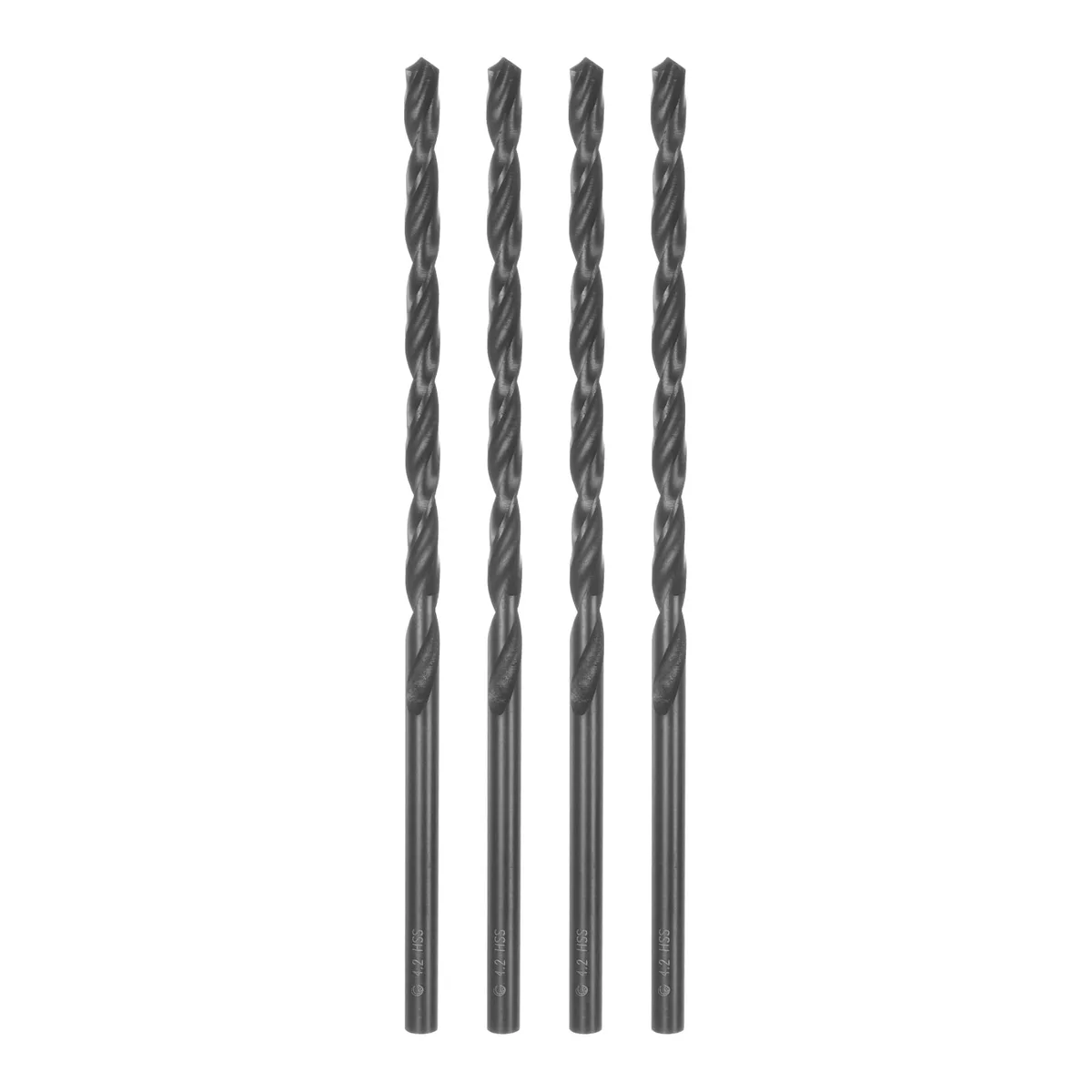
A black oxide drill bit is a standard M2 HSS twist drill that has been dipped in a hot alkaline caustic bath, typically at 130 to 140 °C. The bath deposits a thin film of iron oxide (Fe3O4, magnetite) onto the surface. The result is a matte-black, slightly porous layer about 1 to 3 μm thick.
Here's what that layer is not:
- It is not a PVD or CVD coating. No titanium nitride, no chromium layer, no 70-HV hardening film.
- It does not raise the thermal ceiling of the steel. M2 still softens around 600 °C whether it's black or bare.
- It does not change the cutting geometry. The 118° point, flute width, and helix angle are identical to a plain HSS bit.
What it does do is passivate the surface so the bit doesn't spot with rust within a week of opening the box. In a humid garage or coastal shop, that's a real quality-of-life bump. As of 2026, most budget and mid-range HSS bits you find at any hardware counter carry this finish by default.
It's the baseline, not the upgrade.
The M2 HSS Base and Why Black Oxide Is a Finish, Not an Upgrade
The alloy underneath matters more than the color. Per ASTM A1222, M2 (SAE 4341) carries roughly 0.8% carbon, 5.8% tungsten, 4% molybdenum, 0.8% vanadium, and 1.8% chromium. After proper heat treatment, you get 62 to 65 HRC hardness at the tip.
That's a solid, workable cutting edge for the materials most people actually drill. The black oxide layer adds essentially zero measurable surface hardness on top of that. Compare it to a TiN PVD finish, which deposits 0.5 to 1.5 μm of titanium nitride and bumps surface hardness by 70 to 80 HV.
The oxide does nothing comparable.
So the honest read is this: black oxide is a cheap, fast conversion-coat process that protects the bit in your drawer. Manufacturers use it because it costs pennies more than leaving the bit bare and it makes the packaging look intentional. You're not paying for a performance tier.
You're paying for "won't rust before you use it."
What Black Oxide Drill Bits Are Good For: The Material Decision Tree
This is where the if/then logic actually matters. Pull a bit out of the box and ask yourself one question first: what am I cutting?
- Mild steel (1018, 1020, 1045, sheet, pipe, framing): Yes. Black oxide M2 HSS is the default pick. Run 600 to 1,000 RPM for a 3/8" bit. Light cutting fluid or dry for thin gauge.
- Cast iron (valve bodies, flanges, engine blocks): Yes, for light to medium holes. Same bit, slightly lower RPM, around 500 to 800. Let the bit feed. Don't force it.
- Aluminum (HVAC duct, framing, panels): Yes, but keep RPM in the 1,000 to 1,500 range and use light oil. Aluminum gums up flutes fast if you skip lubrication.
- Wood and hardwood joinery: Yes. It's overkill but it works fine. The matte finish helps with reduced glare when you're checking a layout mark.
- 304/316 stainless, hardened tool steel, titanium, Inconel: No. Stop. HSS work-hardens against stainless and the oxide layer gives you zero thermal benefit. You need M42 cobalt or solid carbide here.
The pattern is simple. If the material is softer than about 30 HRC and your spindle is running under 2,000 RPM, the black oxide M2 bit is the right tool. Push past that and you're in cobalt or carbide territory.
When You Should Step Up to Cobalt M42 or Solid Carbide Instead
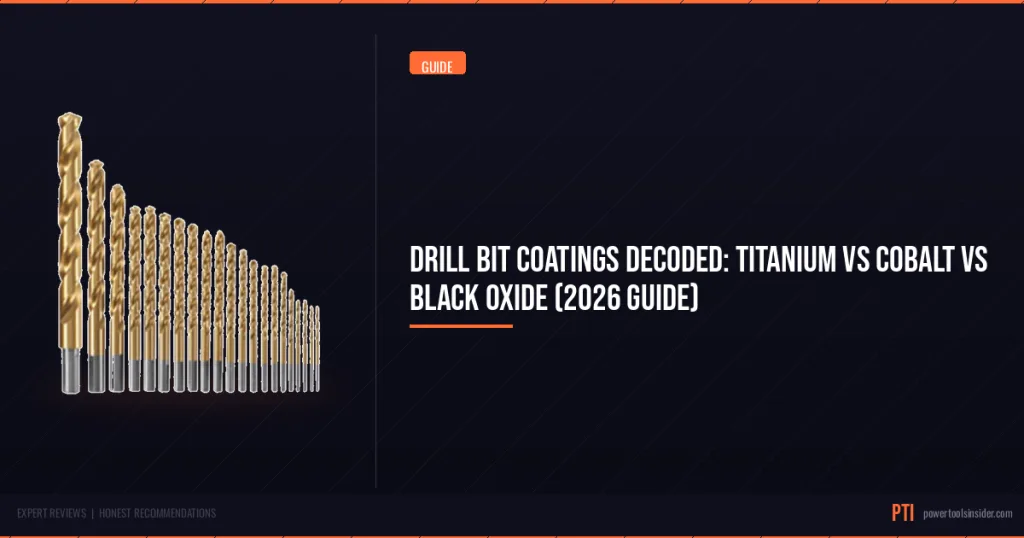
You make the jump when three conditions overlap: the material is hard or work-hardening, you need to run above 2,000 RPM, and the bit will see frequent or heavy use.
M42 cobalt HSS carries about 8% cobalt in the alloy. That pushes the red-heat threshold up to roughly 650 °C and lets you drill stainless, deep cast iron, and heat-treated tool steel without the bit losing its edge in a pass or two. The price bump is real.
Bulk M42 bits run $0.60 to $1.50 per piece versus $0.15 to $0.50 for M2 black oxide.
Solid carbide (WC-Co) is the next rung up. It handles Inconel, titanium, and very hard alloys at 2 to 3× the cutting speed of HSS. But it's brittle.
One interrupted cut against a weld or a keyway and you can chip the tip. You don't reach for carbide for a fence post or a shelf bracket.
| Alloy / Finish | Best Material Range | Typical Bulk Price per Bit |
|---|---|---|
| M2 HSS, black oxide | Mild steel, cast iron, Al, wood | $0.15 – $0.50 |
| M42 cobalt HSS | Stainless, hard cast iron, tool steel | $0.60 – $1.50 |
| TiN-coated HSS | Same as M2 at slightly higher RPM | $0.30 – $0.80 |
| Solid carbide (WC-Co) | Inconel, Ti, hardened alloys | $3 – $8 |
If your job is 90% mild steel and light fab, the M2 black oxide box is still the smart buy. You save money and the bits last long enough for the work.
Picking the Right Bit: Size, 118° Point vs. 135°, and Flute Count for Your Job
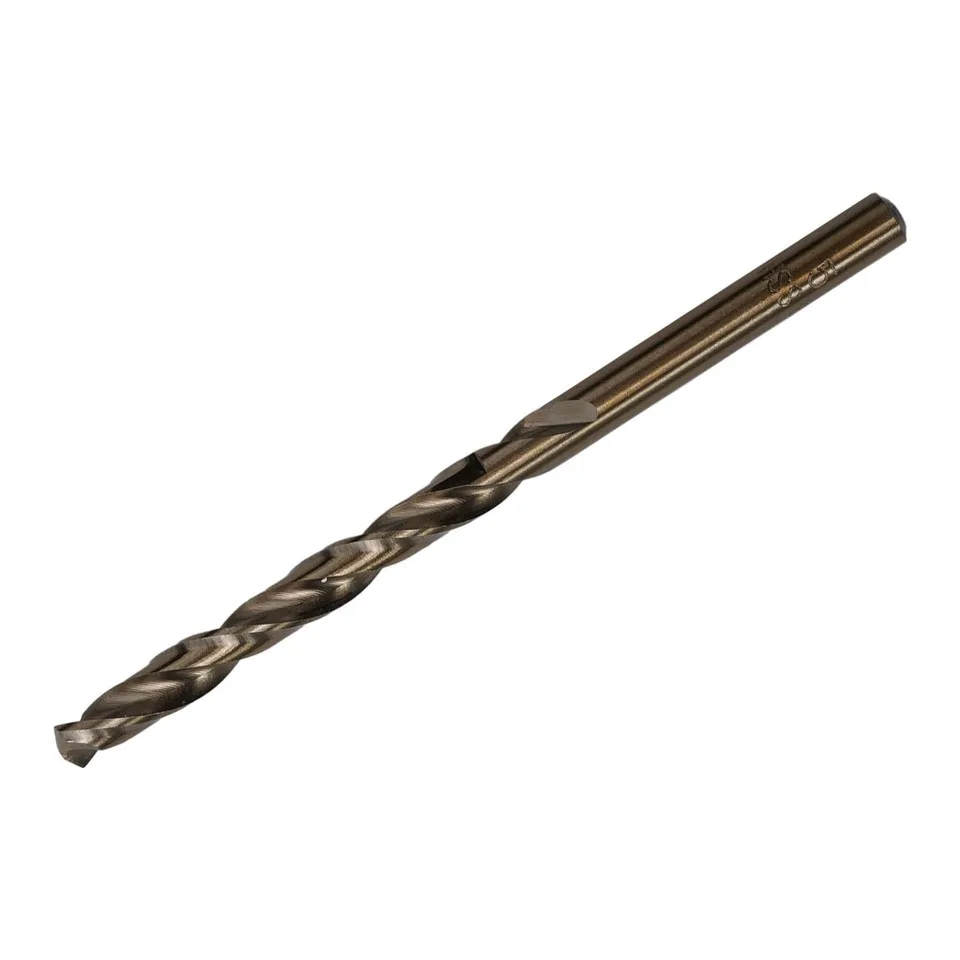
Size first. Caliper or ruler the hole you need, then round up to the nearest 1/64" increment. A 6 mm hole in metric is a 1/4" bit in fractional.
Don't freehand it.
Point angle second. A standard 118° included angle is the "mild steel default." It cuts into most materials with minimal wander. A 135° split-point bit has a narrow central land with two micro-grooves.
It grips the surface better and reduces the initial dig-in. Use it on thin sheet under 18 gauge, soft hardwood, or any job where a wandering start would ruin a layout mark.
Flute count third, and this one surprises a lot of people:
- 2-flute: The workhorse. Good chip clearance in metal, fine in wood. This is what "black oxide HSS" almost always refers to.
- 3-flute: More rigid, less chip room. Better for wood and plastics where you want a cleaner exit hole.
- 4-flute: For hardened steel and high-rigidity work. Not common in the black oxide HSS line. You'll see it on carbide or cobalt more often.
For 80% of the jobs a black oxide bit handles, a 2-flute, 118° twist in the right diameter is all you need. Step to 135° when your material is thin or your start point is on a curved surface. That's the whole decision.
Running the Bit Right: RPM, Feed Rate, and Lubrication by Material
The fastest way to ruin a black oxide HSS bit is running it too fast. M2 steel softens around 600 °C, and you won't hear a dramatic "clunk." You'll just notice the bit stops holding an edge. The good news is that the RPM and feed rate you need are straightforward for the materials a black oxide bit actually handles.
| Material | Bit Size | RPM Range | Feed Rate | Lubrication |
|---|---|---|---|---|
| Mild steel | 1/4" | 800 to 1,000 | 0.005 to 0.010 in/rev | Light oil or dry |
| Cast iron | 1/2" | 500 to 700 | 0.004 to 0.008 in/rev | Dry or light oil |
| Aluminum | 3/8" | 1,000 to 1,500 | 0.006 to 0.012 in/rev | Light cutting fluid |
| Wood / hardwood | 5/16" | 1,200 to 2,000 | Steady, moderate | Dry |
A few rules that keep the bit alive:
- Don't force the feed. Let the bit cut. If the motor is screaming and you're pressing hard, you've passed the bit's capability.
- Cast iron wants slow and dry. The chips are brittle and break off clean. Skip the coolant unless you're going deeper than 1" into the part.
- Aluminum packs its flutes fast. Use light oil or cutting fluid, or the swarf will weld into the flute and the bit stops cutting.
- Wood runs dry. Oil in a wood hole is a glue mess and stains the workpiece.
Set your speed before you start. If your hand drill or drill press has a variable governor, dial it in first. Don't just floor the trigger and hope the bit figures it out.
The Five Mistakes That Kill Black Oxide HSS Bits Faster Than They Should
1. Treating "black" as a performance upgrade. You grab a black oxide bit for a stainless job because the box looks professional. HSS work-hardens against 304 and 316.
The bit glazes, builds a ridge on the lip, and dies in two passes.
2. Skipping the center punch. You start the bit on a hard surface without a dimple. It skates, catches, and chips a lip.
One chipped lip means the bit wanders on every hole after that. Punch it. Every time.
3. Reusing a bent or packed bit. If the point is visibly off or the flutes are stuffed with swarf, you're fighting the tool. Re-sharpen or replace.
Forcing a dull bit through steel just rounds the edge faster.
4. Maxing out a hand drill on a large bit. A 3/8" or 1/2" M2 bit in mild steel at 2,000 RPM is overheating the microstructure. For bits 1/2" and up in steel, stay under 800 RPM.
Drop the speed, raise the feed slightly, and the bit stays happy.
5. Storing bits in a wet, un-oiled cabinet. The oxide layer is a thin passivation film. In a coastal garage at 80% humidity, you'll see orange spotting in six to eight weeks.
A thin coat of machine oil before you put the bit back kills that problem.
Bulk Pricing, Per-Hole Cost, and What "Good" Looks Like on the Shelf
As of 2026, a 10-piece M2 HSS black oxide set (3/32" to 1/2" fractional) runs $4 to $8 at most hardware counters. A 50-piece set is $12 to $22. That puts you at roughly $0.15 to $0.50 per bit.
A single M2 bit will drill 50 to 150 holes in mild steel before it needs a re-sharpen, depending on feed rate and material thickness. At $0.30 per bit, the per-hole cost is well under a penny. That's why they're the default for shop work.
What separates a usable bit from junk on the shelf:
- Shank finish. It should be ground smooth with no burrs. A rough shank means a sloppy grinding pass upstream.
- Flute consistency. Run your thumbnail down the flute. It should feel even, not gouged or scored.
- Point symmetry. A clean, centered 118° or 135° tip means the bit was ground after heat treat. An asymmetric point will wander in every hole.
- Oxide coverage. The black should be uniform. Patches of bare silver mean the bit wasn't fully submerged in the conversion bath. Those spots will rust first.
At big-box stores, the Bosch Blue and DeWalt general-purpose lines are reliably M2. At a fab supply counter, OSG, Kennametal, and Mersen stock the same M2 alloy with tighter geometric tolerances.
Storing, Oiling, and Sharpening So the Bits Outlast One Season
Storage is where most HSS bits quietly die. A short routine keeps them usable year after year:
- Wipe swarf and metal chips off the bit after each session.
- Apply a thin film of light machine oil to the flutes and shank. A quick spray of WD-40 works in a pinch, but a proper tool oil lasts longer.
- Store in a dry cabinet or a tackle box with a silica gel packet. Avoid the wet garage wall.
- In coastal or high-humidity areas, inspect the bits every two months. Orange spots mean the oxide has failed locally. Re-oil or replace that bit.
Sharpening is the other half. A diamond or CBN wheel on a bench grinder restores the point. Grind to match the original 118° or 135° included angle.
Keep both lips equal length. Check symmetry by spinning the bit in the chuck and watching for wobble. If the usable length drops below 1", scrap it.
A short, worn bit chatters and produces a bad hole.
A well-maintained box of M2 bits will outlast three full seasons of mixed shop work. Neglect them and you're buying new bits every spring.
Safety Checks Before You Pull the Trigger on the Drill
Thirty seconds of checking before you start prevents most hand-drill injuries. Run through this list every session:
- Eye protection on. HSS chips are thin, sharp, and they fly outward. Safety glasses or a face shield, not a squint.
- Workpiece clamped. If the material can spin or shift, the bit will catch and torque your wrist. Use a clamp or vise, not a helper holding the part.
- RPM confirmed. Double-check the speed dial matches the material and bit size. A hand drill at 2,000 RPM on a 3/8" steel bit is an overheat waiting to happen.
- Chuck secure. Keyed chucks: verify the key is fully seated. Unkeyed 3-jaw: torque the jaws to spec. A loose chuck at speed is a projectile.
- Swarf managed. Use a chip tray or shop vacuum. HSS chips find your ankles and your eyes if you just let them pile on the bench.
- Ventilation. Drilling painted, galvanized, or cast-iron material kicks up fine particulate and zinc fumes. Local exhaust or a respirator in enclosed spaces.
These align with OSHA 29 CFR 1910.217 and 1910.219 for power-driven drill safety. For a home shop, it boils down to: eyes protected, work clamped, speed correct, and a clear path for the bit to exit the material.
Quick Decision Guide: Which Bit Do You Actually Need for This Job?
Keep this if/then flow taped inside your shop door:
- Material is mild steel, cast iron, or thin aluminum, and your RPM stays under 2,000? Grab the black oxide M2 HSS box.
- Hitting 304/316 stainless or 4140 steel? Switch to M42 cobalt or TiAlN-coated.
- Running above 2,000 RPM on any metal? Cobalt or carbide. HSS softens.
- Drilling wood, hardwood, or plastic? Black oxide HSS is fine. You do not need the extra alloy.
- Budget shop, high volume, non-critical holes? M2 black oxide at $0.30 a bit is the move.
- Precision work, tight tolerances, or repeated production use? Spend the extra on M42 or carbide. The per-hole math flips in your favor after about 40 holes.
That is the whole tree. When in doubt, check the material's hardness against the 600 °C red-heat ceiling of M2. If the workpiece holds an edge above that temperature, HSS is the wrong tool, regardless of what color the bit is.
The Questions That Keep Coming Up in Workshop Threads
Can black oxide drill bits cut stainless steel?
Not effectively. M2 HSS work-hardens against 304 and 316. The bit glazes, builds a ridge on the lip, and loses its edge in two passes.
Use M42 cobalt or solid carbide for stainless. The oxide finish changes nothing about the base alloy's limitations.
Is black oxide the same as a titanium nitride coating?
No. Black oxide is a 1 to 3 micron passivation layer deposited in a caustic bath. TiN is a PVD film that adds 70 to 80 HV of surface hardness.
One keeps rust off your drawer. The other actually extends cutting life at the edge. They solve different problems.
How many holes will a black oxide HSS bit last?
In mild steel, expect 50 to 150 holes before a re-sharpen, depending on diameter and feed rate. In cast iron, the count drops by roughly a third. In wood, the bit can easily outlast a full season of project work.
Do I need cutting fluid with a black oxide bit on aluminum?
Yes, light oil or a thin film of cutting fluid. Aluminum chips weld into the flutes when dry. The lubricant keeps them breaking clean and stops the bit from gumming up and stalling mid-hole.
What RPM should I run a 1/4-inch black oxide bit in mild steel?
Around 800 to 1,000 RPM. That keeps surface speed near 300 SFM, which is the M2 HSS sweet spot. Above 1,500 RPM on a 1/4-inch bit, you are edging into the overheat zone and the oxide layer will not save you.