Nut Setter vs Nut Driver: Which Tool Wins?


Is the Heavy-Duty Rivet Nut Tool Good?
Yes, if your job needs threaded inserts. This tool is not a normal nut driver. It is a rivet nut setter. It creates a threaded point in thin material where you may not have access to the back side. That makes it useful for sheet metal, automotive work, panels, brackets, and many DIY builds.
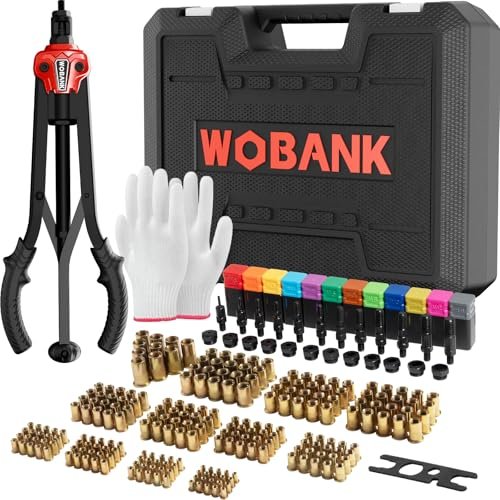
I like this style of tool when a panel gives me no easy way to hold a regular nut behind it. The long handles also give useful leverage. The kit includes 12 metric and SAE mandrels plus 230 rivet nuts, so it can cover a wide range of common jobs. For a garage project, that can feel like having a small hardware store in one case.
The main catch is simple. It does not replace a nut driver. If I only need to tighten a 1/4-inch or 5/16-inch hex nut, this tool is the wrong tool for the task. In the nut setter vs nut driver debate, this product wins only when the job calls for a rivet nut or threaded insert.
What Makes It Stand Out / Key Features
- 16-Inch HandlesLong handles provide strong leverage and can make setting rivet nuts easier than using a short hand tool.
- 12 MandrelsThe kit includes 12 metric and SAE mandrels for working with several common rivet nut sizes.
- 230 Rivet NutsThe included hardware gives you a useful starting supply for automotive, metal, furniture, and DIY work.
- Auto Release DesignThe release design helps remove the tool from the installed rivet nut after setting.
- Metric and SAE SupportBoth measurement systems make the kit more useful for mixed hardware found in many U.S. workshops.
- Carrying CaseThe case keeps the tool, mandrels, rivet nuts, and accessories together between projects.
My Recommendation
Consider it if you often work with sheet metal, panels, automotive parts, or thin materials that need new threaded mounting points. It is not the right pick for simple hex nut driving.
| Best For | Why |
|---|---|
| Automotive DIY | It can add threaded mounting points to panels and brackets. |
| Sheet Metal Work | It works where you cannot easily reach the back of a panel. |
| Garage Projects | The mixed-size kit covers many common repair and fabrication tasks. |
Is the Klein 32910 Nut Driver Good?
Yes, if you need fast and simple hex nut driving. The Klein Tools 32910 is built around common SAE nut sizes and combines seven functions in one compact tool. It includes 1/4, 5/16, 3/8, 7/16, 1/2, and 9/16-inch nut driver sizes plus a 1/4-inch bit holder.
This is the tool I would reach for when a project has a row of small hex nuts and I want speed. It fits the rhythm of common U.S. repair work. Pick a size, engage the nut, and drive it. With an impact driver, the work can move even faster.
In the nut setter vs nut driver comparison, the Klein has the edge for everyday nut tightening. It is compact, quick, and easy to carry. But it cannot create a new threaded mounting point. If the panel has no threaded hole, a nut driver cannot solve that problem.
What Makes It Stand Out / Key Features
- 7-in-1 DesignIt combines six common SAE nut driver sizes with a 1/4-inch bit holder.
- Six SAE Nut SizesThe included sizes cover 1/4, 5/16, 3/8, 7/16, 1/2, and 9/16-inch nuts.
- Impact Driver UseThe design lets the tool work with a compatible impact driver for faster fastening.
- Compact FormatOne tool can replace several loose nut driver pieces in a basic SAE setup.
- 1/4-Inch Bit HolderThe bit holder adds flexibility when a project switches between nut driving and bit work.
- Common U.S. SizesThe SAE size range fits many common American automotive, electrical, maintenance, and DIY tasks.
My Recommendation
Choose it for fast hex nut work, especially if you already own an impact driver. It is a practical everyday tool for mechanics, electricians, maintenance workers, and DIY users.
| Best For | Why |
|---|---|
| Everyday Fastening | It handles several common SAE nut sizes in one compact tool. |
| Automotive Work | The common SAE sizes suit many vehicle repair and maintenance jobs. |
| Impact Driver Users | It can speed up repeated nut installation and removal. |
nut setter vs nut driver: Side-by-Side Test
The biggest mistake in a nut setter vs nut driver comparison is treating the two tools as direct substitutes. They are not. A rivet nut setter installs a threaded insert. A nut driver turns an existing hex nut.
Once I look at the job first, the choice becomes much easier. One tool builds the threaded connection. The other tightens or removes the fastener. They are more like two different keys on the same key ring than two versions of the same tool.
Main Job: What Does Each Tool Do?
Start with the task. This single question usually solves the nut setter vs nut driver choice.
| Feature | Rivet Nut Setter | Klein Nut Driver |
|---|---|---|
| Primary job | Installs threaded rivet nuts | Drives and removes hex nuts |
| Creates threads | Yes | No |
| Tightens existing nuts | No | Yes |
| Best use | Panel and insert work | Fastening work |
⭐ Rivet Nut Setter – 9/10 | Klein Nut Driver – 9/10
The edge depends on the job: the setter creates the threaded point, while the driver uses it.
Ease of Use
Both tools are simple, but they have different learning curves and hand motions.
| Feature | Rivet Nut Setter | Klein Nut Driver |
|---|---|---|
| Basic operation | Insert, clamp, set, release | Fit, turn, tighten or loosen |
| Physical effort | Moderate hand force | Low with power use |
| Speed | Moderate | Fast |
| Setup | Choose the correct mandrel | Choose the correct nut size |
⭐ Rivet Nut Setter – 7/10 | Klein Nut Driver – 9/10
For quick fastening, the nut driver feels like the faster path.
Size Range and Flexibility
A good kit saves time when your project uses more than one fastener size.
| Feature | Rivet Nut Setter | Klein Nut Driver |
|---|---|---|
| Included sizes | 12 metric and SAE mandrels | Six SAE nut driver sizes |
| Metric support | Yes | Not the main focus |
| SAE support | Yes | Yes |
| Hardware included | 230 rivet nuts | Integrated tool functions |
⭐ Rivet Nut Setter – 9/10 | Klein Nut Driver – 8/10
The rivet nut kit offers broader insert coverage, while the Klein keeps common SAE driving simple.
Automotive Use
Cars and trucks can need both tools, but they serve very different roles in the garage.
| Feature | Rivet Nut Setter | Klein Nut Driver |
|---|---|---|
| Panel repairs | Excellent | Limited |
| Existing hex nuts | Poor fit | Excellent |
| Adding mounting points | Excellent | Not designed for it |
| Repeated fastening | Moderate | Excellent |
⭐ Rivet Nut Setter – 9/10 | Klein Nut Driver – 9/10
For automotive work, the right tool depends on whether you are creating or tightening the connection.
Portability and Storage
Tool bags get heavy fast, so compact storage matters for mobile work.
| Feature | Rivet Nut Setter | Klein Nut Driver |
|---|---|---|
| Tool size | Large 16-inch hand tool | Compact multi-function tool |
| Storage | Carrying case | Easy tool-bag storage |
| Mobile work | Good for planned jobs | Excellent for daily carry |
⭐ Rivet Nut Setter – 7/10 | Klein Nut Driver – 9/10
The Klein is easier to carry when space and weight matter.
Power Tool Compatibility
This is where the nut setter vs nut driver difference becomes very clear.
| Feature | Rivet Nut Setter | Klein Nut Driver |
|---|---|---|
| Manual use | Yes | Yes |
| Impact driver use | Not the primary design | Yes |
| Speed with power | Limited | High |
⭐ Rivet Nut Setter – 6/10 | Klein Nut Driver – 10/10
If speed with an impact driver matters, the Klein has a clear practical edge.
Best Value for Different Jobs
Value is not just about price. It is about whether the tool solves the problem sitting on your bench.
| Feature | Rivet Nut Setter | Klein Nut Driver |
|---|---|---|
| Specialized jobs | Excellent value | Limited value |
| General fastening | Limited value | Excellent value |
| One-time DIY project | Worth it if inserts are needed | Useful for many projects |
| Workshop versatility | Specialized | Broad for SAE fastening |
⭐ Rivet Nut Setter – 8/10 | Klein Nut Driver – 9/10
The Klein is more broadly useful, while the rivet nut setter is valuable when its special job is required.
Final Verdict: Which Should You Buy?
The nut setter vs nut driver question has no single answer because these tools do different jobs. The 16-inch rivet nut tool is the better choice when you need to add threaded inserts to panels, sheet metal, automotive parts, or other thin materials. The Klein 32910 is the better fit for fast, repeated work on existing SAE hex nuts.
If your garage work often involves fabrication or panel repairs, keep the rivet nut setter in your kit. If you mostly assemble, repair, or service items with hex nuts, the Klein is the more practical daily tool. In simple terms, the setter creates the connection and the driver works the connection.