How long have cordless drills been around: Easy guide
If you've ever Googled how long have cordless drills been around, you're probably standing in a hardware store staring at a wall of 18-volt lithium-ion tools and wondering when the cord actually disappeared. The short answer: about 45 years, but the story splits into three distinct chapters tied to battery chemistry.
The first retail cordless drill, a 7.2-volt nickel-cadmium (NiCd) tool, hit U.S. shelves around 1979. By 2010, lithium-ion had fully replaced NiCd and NiMH in new tool lines. As of 2026, cordless platforms account for over 70% of new power-tool unit sales in hardware channels.
The timeline below walks through each era with the specs that actually changed what you could do with the tool.
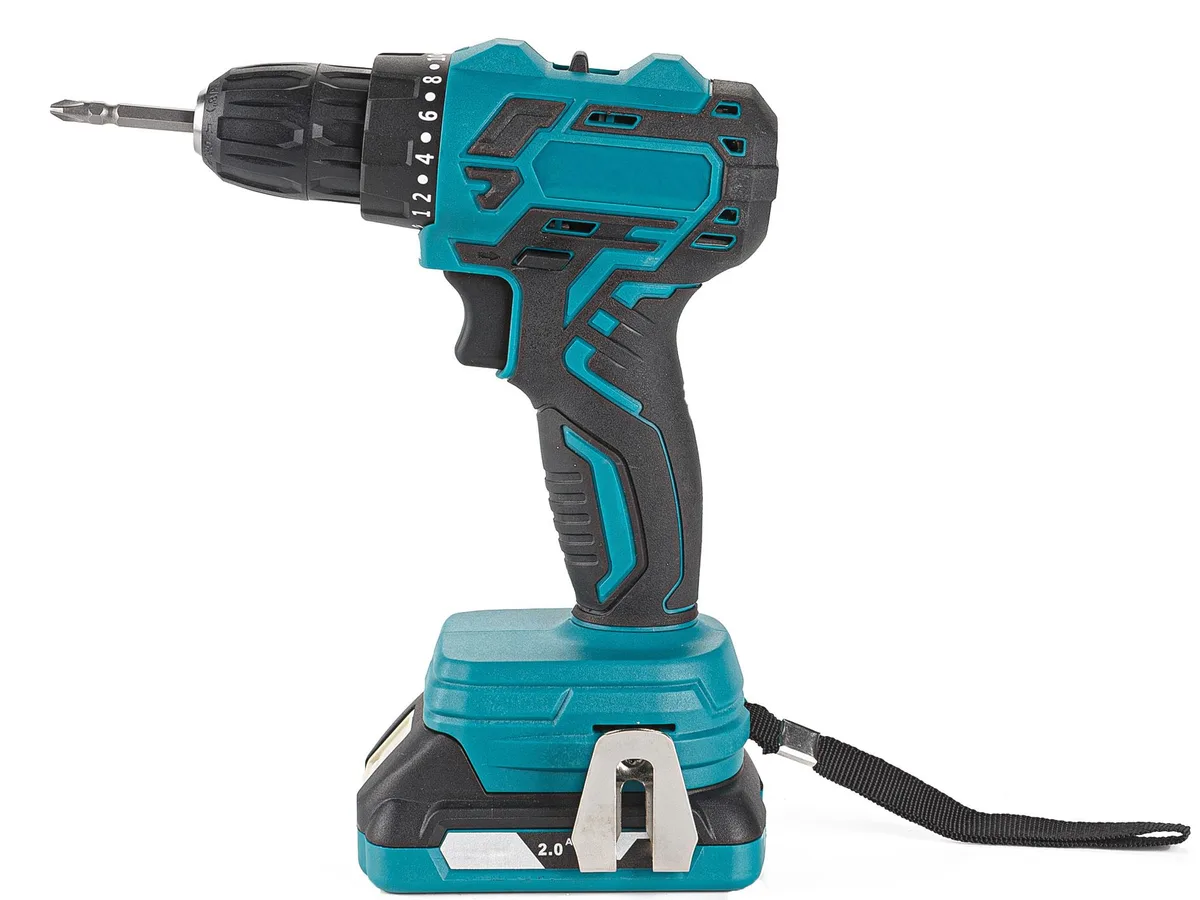
Quick Answer: Cordless Drills Have Been Around for Roughly 45 Years
Cordless drills have been commercially available for about 45 years. The first retail model hit U.S. shelves in 1979. Lithium-ion platforms became the industry standard by 2010.
As of 2026, cordless tools account for over 70% of new sales. The timeline splits into three distinct battery eras.
Why "No Cord" Was a Revolution on Job Sites and in Garages
The cord was never the glamorous part of drilling. On a job site, it was a trip hazard, a snag point, and the thing that limited you to whatever outlet was within 25 feet. OSHA flags trailing cords under 1926 and 1910 as electrical exposure risks, especially in wet or confined spaces.
In a home garage, the cord meant chasing an extension cord up a ladder to drill into a soffit. Or dragging it across a workshop floor where you kept catching it on tool boxes. Removing that constraint didn't just add convenience.
It changed which tasks were practical at all.
That's the core reason the timeline matters. Each battery generation didn't just get smaller. It unlocked a new class of job that was previously "you'd have to run a cord to do that."
The 1980s Starting Point: Black & Decker, 7.2 V NiCd, and a 15-Minute Runtime
The first commercial cordless drill you could actually buy came from Black & Decker, shipped to U.S. retail around 1979 to 1981. It ran on six 1.2-volt NiCd cells, totaling 7.2 volts. The tool weighed roughly 3 to 4 pounds with the battery seated.
What could it do? Drive a #8 drywall screw or chase a small hole in pine. Runtime per charge sat around 15 to 20 minutes of light work.
Recharging took 8 to 12 hours on a dedicated slot charger. You'd pop the pack in overnight and use it the next day.
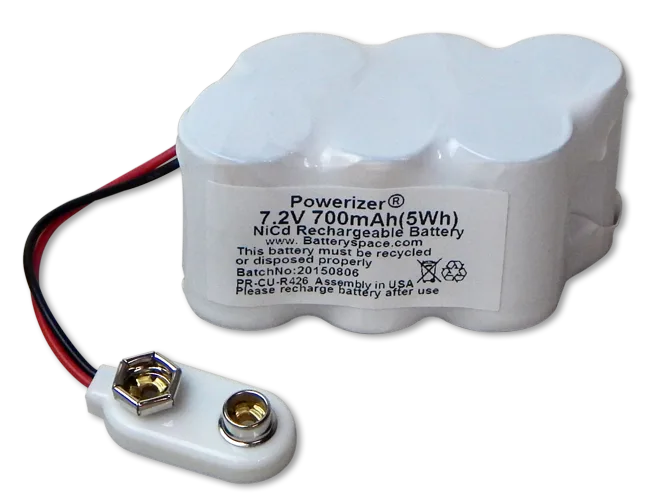
NiCd had a real flaw called memory effect. If you topped off a pack after only 30% discharge, the cells "remembered" that level and gave you less usable capacity over time. In practice, your 7.2-volt tool's runtime kept shrinking every few weeks unless you did full discharge cycles.
For a screwdriver, that was a minor annoyance. For a pro on a job, it was a workflow killer.
Patent filings at the USPTO from 1977 to 1981 show multiple applications for battery-powered rotary tools. The Black & Decker unit was the one that actually reached a store shelf in volume.
The 1990s Crossover: NiMH Doubles Capacity but Triples the Wait for a Full Charge
Nickel-metal hydride (NiMH) packs landed in cordless tools around 1992 to 1995. They offered 30 to 50% more energy density than NiCd at the same voltage. A 14.4-volt NiMH pack gave you roughly double the runtime of its NiCd predecessor.
The trade-off was brutal. Charge times stretched to 10 to 14 hours because NiMH cells accept current slower. Packs also ran heavier.
A 14.4-volt NiMH tool with battery sat at 5 to 7 pounds. And cell imbalance meant one weak cell in a six-cell pack could drag the whole pack's output down.
| Spec | 7.2 V NiCd (early '80s) | 14.4 V NiMH (mid-'90s) |
|---|---|---|
| Runtime (light duty) | 15-20 min | 35-50 min |
| Full charge time | 8-12 hr | 10-14 hr |
| Tool + battery weight | 3-4 lb | 5-7 lb |
| Memory effect | Yes | Reduced, not eliminated |
For the average homeowner hanging a bookshelf, a 14.4-volt NiMH drill was a genuine upgrade. For a pro chasing 5/8-inch holes through 4×4 lumber, it still felt weak. The perception stuck: "cordless is fine for light stuff."
2005 to 2010: Li-Ion Arrives and the Pro Conversation Starts
Lithium-ion packs hit the U.S. power-tool market in 2005 to 2007, led by Makita, Milwaukee, and Bosch 18-volt platforms. The shift was not incremental. It was the first time a cordless tool matched or beat a corded 120-volt drill on torque.
An 18-volt Li-ion hammer drill in 2008 produced 80 to 110 newton-meters of torque. The equivalent 14.4-volt NiMH model from 1997? Maybe 45 to 55.
You needed two batteries on a job because a single 18-volt pack gave you 60 to 90 minutes of active work. Fast-charge dropped to 45 minutes for 80% state of charge.
Three things made Li-ion click for professionals:
- No memory effect. Top off whenever you hit a site. No overnight charging.
- Weight dropped 40% versus the NiMH equivalent at the same voltage.
- Platform design. One 18-volt battery fit the drill, the impact driver, the circular saw, the oscillating tool. You bought one pack and carried a whole kit.
By 2010, most major brands had discontinued new NiCd and NiMH lines. The "cordless is too weak" argument was dead. The conversation shifted to which 18-volt or 20-volt platform you'd standardize on for the next decade.
Torque, Weight, Charge Time: Hard Numbers Across Three Battery Generations
The jump between eras is easier to see in a table than in prose. Here's the core spec spread across the three battery chemistries that defined cordless drilling:
| Spec | 7.2 V NiCd (1980s) | 14.4 V NiMH (mid-'90s) | 18 V Li-ion (2005+) |
|---|---|---|---|
| Peak torque | 40-50 Nm | 55-70 Nm | 90-110 Nm |
| Tool + battery weight | 1.4-1.8 kg | 2.3-3.2 kg | 1.2-1.5 kg |
| Full charge time | 8-12 hr | 10-14 hr | 45-60 min |
| Runtime (light duty) | 15-20 min | 35-50 min | 60-90 min |
| Cycle life | 300-500 | 500-800 | 800-2,000 |
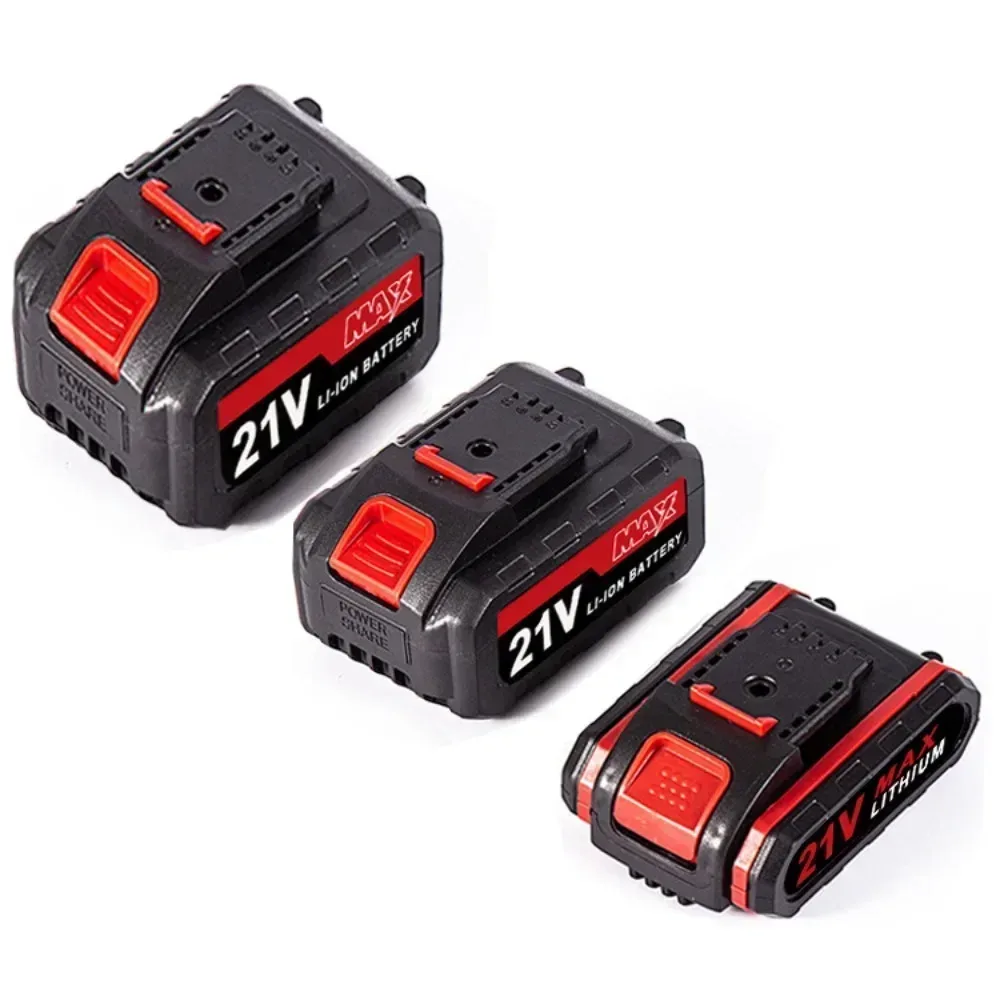
Two numbers in that table do most of the talking. Torque tripled from the first to the third generation. And charge time collapsed from a full overnight cycle to under an hour.
That single shift changed how pros planned their day.
When Pros Finally Dropped the Cord: The 18-Volt "Good Enough" Threshold
The 18-volt platform crossed a hard line around 2007 to 2009. An 18-volt Li-ion hammer drill could chase a 5/8-inch hole through a 4×4 stud without stalling. An 18-volt impact driver drove a 3-inch drywall screw in under a second.
Those were corded-drill numbers, and the cord was gone.
Before that threshold, a pro running 14.4-volt NiMH on a framing job would hit a stud that simply would not take a hole fast enough. The hammer function wasn't there. The torque wasn't there.
You'd grab the corded drill for the heavy hits and use the cordless for screws.
Once 18-volt Li-ion tools hit the tool belt, that split habit died. Electricians stopped running 150 feet of cord to the panel. HVAC techs drilling through ductwork didn't need a generator or a long cord dangled across a roof.
The "good enough" bar was finally met, and job sites standardized on 18-volt or 20-volt platforms within a couple of years.
2014 to Now: 40 V Platforms, Brushless Motors, and 30-Minute Fast Charges
The post-2014 era is all about motor efficiency and platform scale. Brushless motors replaced brushed commutators in most mid-to-high-tier 18-volt tools. No brushes meant no friction losses, no brush dust clogging the tool, and roughly 20 to 30% more usable runtime per charge.
High-torque work moved up to 40-volt platforms. Milwaukee's 40 V MAX, DeWalt's 20 V (marketed as 40 V under load), and Makita's 18 V LXT all compete in the "one battery, the whole job" space. A 40-volt brushless impact wrench hits 800 Nm of peak torque.
That's a truck tire lug nut. That's a concrete anchor bolt.
Charging got fast. A 5-amp fast charger tops an 18-volt 4.0 Ah pack to 80% in under 30 minutes. Add a smart BMS with Bluetooth telemetry, and you can check pack health from your phone.
The tool ecosystem that started as a single 7.2-volt screwdriver is now a network of 20-plus tools on one battery.
Cordless vs. Corded: Where Each One Still Holds Its Ground
Cordless wins every job where you need portability, speed, or no outlet within reach. Roofing, framing, drywall, in-wall fishing, off-grid repair. If the cord would snap, tangle, or cost you more time to manage than the drill saves, go cordless.
Corded still owns a narrow but real niche: continuous duty. A 120-volt drill or angle grinder running for 45 straight minutes in a machine shop, a welding bay, or a concrete-cutting crew on a long pour doesn't need a battery rotation. The motor is fed constantly, the tool weighs less with no 1.5 kg pack attached, and there's zero downtime for a swap.
For most homeowners and the vast majority of trade work, that corded niche is irrelevant. The corded drill on the shelf is a fallback, not the default. But it's still the right tool for a three-hour grinding session in a fixed shop location.
Three Things Most People Get Wrong About the Cordless Timeline
The first myth: "Cordless drills have always been there." They haven't. The first retail model shipped in 1979. Before that, the only wire-free option was a pneumatic tool, and you needed a compressor on-site to run one.
The second myth: "Lithium-ion just arrived." It didn't. Li-ion 18-volt tools hit U.S. hardware stores in 2005 to 2007. By 2010, NiCd and NiMH lines were already discontinued across every major brand.
The "new battery" we call standard today has been the standard for two decades.
The third myth: "Cordless tools are still weaker than corded." That was true of a 7.2-volt NiCd drill in 1981. It was arguably true of a 14.4-volt NiMH tool in 1997. It stopped being true in 2009.
A modern 40-volt brushless impact driver out-torques a 120-volt corded drill in most fastening tasks. The perception lagged the spec sheet by a full decade, and some of it still shows up in forum threads today.
Frequently Asked Questions
When did the first cordless drill come out?
The first commercial cordless drill reached U.S. retail shelves in 1979 to 1981. It was a 7.2-volt NiCd tool made by Black & Decker. Before that, the only cord-free drilling option was a pneumatic tool that needed a compressor on-site.
What battery chemistry replaced NiCd in cordless drills?
Nickel-metal hydride (NiMH) took over in the mid-1990s, offering 30 to 50% more capacity at the same voltage. Lithium-ion arrived in 2005 and replaced both NiCd and NiMH within five years. No major brand ships a new NiMH tool anymore.
How long does a modern cordless drill battery last on a full charge?
An 18-volt 4.0 Ah Li-ion pack delivers 60 to 90 minutes of light-duty drilling on a single charge. A 40-volt 5.0 Ah pack on a hammer drill gets roughly 45 to 70 minutes of continuous work. Fast-charge cycles bring you back to 80% in under 30 minutes.
Why were NiCd batteries phased out?
NiCd cells lose usable capacity over 300 to 500 charge cycles and contain cadmium, a regulated heavy metal. EPA hazardous-waste rules and the EU WEEE directive made disposal so expensive that the chemistry stopped making economic sense. By 2010, every major tool brand had dropped NiCd lines.
Are cordless drills still getting stronger?
Yes, but the gains are incremental now. Brushless motor efficiency and higher-density cell formats push peak torque up 5 to 10% per generation. The 40-volt platform era shifted focus from raw power to weight reduction and battery ecosystem compatibility across 20-plus tools on one pack.
The 45-Year Story in Six Lines
- 1979 to 1981: Black & Decker ships the first retail 7.2-volt NiCd cordless drill. Runtime sits at 15 minutes. A full charge takes 10 hours.
- 1992 to 1995: 14.4-volt NiMH packs double usable capacity. Charge time stretches to 12 to 14 hours.
- 2005 to 2007: 18-volt Li-ion tools hit U.S. hardware stores. Torque triples. Charge drops to 45 minutes.
- 2010: NiCd and NiMH lines are discontinued across all major brands. Li-ion becomes the default chemistry.
- 2014 to 2018: 20-volt and 40-volt platforms standardize. Brushless motors debut in mid-tier tool lines.
- 2026: Cordless platforms drive over 70% of new power-tool unit sales. A 40-volt brushless impact driver out-torques most 120-volt corded drills in fastening tasks.