Nut Driver vs Socket: Which Tool Should You Use?


Is a Nut Driver Good?
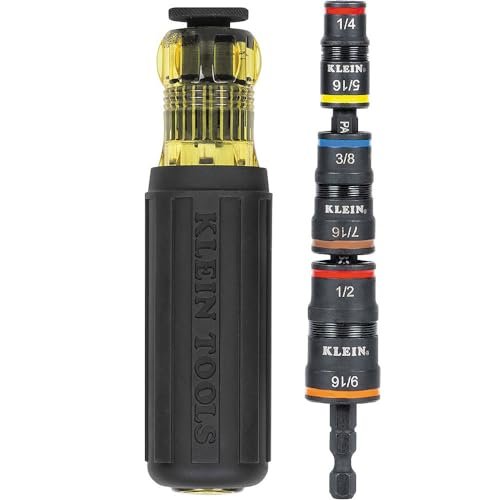
Yes. A nut driver is excellent for light and medium fastening jobs where speed matters. It has a handle and a hollow shaft that fits over a nut or hex-head fastener. I like it most when I have a row of small nuts to tighten. There is no ratchet to reset and no separate socket to pick. I can simply place the driver over the fastener and turn.
I have found this especially handy during basic home repairs and small assembly jobs. When I was working on a project with many small fasteners, the nut driver felt almost like using a screwdriver. That simple motion saved time. Still, I would not pick it for a stubborn automotive bolt. A ratchet and socket give me better leverage and more options.
What Makes It Stand Out / Key Features
- Simple designThe handle and shaft form one compact tool, so there are fewer parts to manage.
- Fast operationYou can turn many small fasteners quickly without changing a ratchet position.
- Good hand controlThe screwdriver-like grip gives you a direct feel while tightening small nuts.
- Compact sizeA nut driver takes little space in a toolbox or small home repair kit.
- Easy accessThe slim shaft can work well around some tight spaces where a bulky ratchet setup feels awkward.
- Low setup timeYou do not need to attach a separate socket before starting the job.
My Recommendation
Choose a nut driver if you often handle small fasteners and want speed and control. It is a great fit for home repairs, electronics, furniture assembly, and light workshop tasks.
| Best For | Why |
|---|---|
| Home DIY | Fast and easy for common light fastening jobs. |
| Small assemblies | The screwdriver-style grip makes repeated turns comfortable. |
| Compact tool kits | The design is simple and takes little space. |
Is a Socket Good?
Yes, and a socket is the better choice when I need more power or flexibility. A socket slips over the fastener and normally connects to a ratchet, breaker bar, torque wrench, or driver. That gives me many ways to work. I can add an extension for extra reach or switch tools when the fastener needs more torque.
This is the setup I reach for when a fastener fights back. On automotive and heavier garage work, the ratchet and socket combination feels like having a longer arm. It takes more setup than a nut driver, but the extra control is worth it. In the nut driver vs socket debate, the socket wins when the job calls for versatility.
What Makes It Stand Out / Key Features
- High torque potentialA socket can work with a ratchet or breaker bar when a fastener needs more turning force.
- Interchangeable sizesOne drive tool can accept many socket sizes.
- Extension supportExtensions can help reach fasteners deep inside an engine bay or other tight area.
- Multiple drive toolsSockets can work with ratchets, torque wrenches, impact tools, and other compatible drivers.
- Strong versatilityThe same socket system can handle many home, garage, and automotive tasks.
- Torque controlA compatible torque wrench can help tighten fasteners to a specified torque.
My Recommendation
Choose sockets if you want one system that can grow with your tool collection. They suit mechanics, serious DIY users, automotive work, and jobs where torque and reach matter.
| Best For | Why |
|---|---|
| Automotive work | Ratchets, extensions, and stronger drive tools add useful flexibility. |
| Heavy DIY | The setup can provide much more leverage than a nut driver. |
| Growing tool kits | Many sockets can work with the same compatible drive tools. |
nut driver vs socket: Side-by-Side Test
The nut driver vs socket question gets easier when you look at the job instead of the tool. Both turn hex fasteners. The difference comes from how much force, reach, and flexibility you need.
I think of the nut driver as a quick pocket knife and the socket system as a full toolbox. One is simple and direct. The other gives you more ways to solve a problem.
Speed and Ease of Use
For quick jobs, fewer parts can make a big difference.
| Feature | Product 1 | Product 2 |
|---|---|---|
| Setup | Very quick | Needs socket and drive tool |
| Repeated turns | Very easy | Fast with a ratchet |
| Learning curve | Very low | Low |
⭐ Nut Driver – 9/10 | Socket – 8/10
The nut driver has the edge when speed and simplicity matter.
Torque and Leverage
When a fastener is tight, leverage can turn a small task into a hard one.
| Feature | Product 1 | Product 2 |
|---|---|---|
| Light torque | Excellent | Excellent |
| High torque | Limited | Excellent with suitable drive tool |
| Breaker bar use | No | Yes |
⭐ Nut Driver – 6/10 | Socket – 10/10
The socket system has the edge for high torque and stubborn fasteners.
Reach and Access
Tight spaces can change which tool feels best in your hand.
| Feature | Product 1 | Product 2 |
|---|---|---|
| Slim profile | Often excellent | Depends on socket and ratchet |
| Deep access | Good for compatible shaft depth | Excellent with extensions and deep sockets |
| Flexible reach | Limited | Excellent |
⭐ Nut Driver – 8/10 | Socket – 9/10
The socket system has the edge when you need different reach options.
Versatility
A good tool earns its space by solving more than one kind of problem.
| Feature | Product 1 | Product 2 |
|---|---|---|
| Size range | Usually one size per tool | Many sizes in a set |
| Drive options | Limited | Many |
| Automotive use | Limited | Excellent |
⭐ Nut Driver – 6/10 | Socket – 10/10
The socket system has the clear edge for broad tool use.
Portability
If you carry tools between rooms or job sites, size matters.
| Feature | Product 1 | Product 2 |
|---|---|---|
| Single-tool size | Compact | Compact per socket, larger as a set |
| Storage needs | Low | Moderate to high |
| Quick carry | Excellent | Good |
⭐ Nut Driver – 9/10 | Socket – 8/10
The nut driver has the edge for a small, simple carry kit.
Best Value
Value depends on whether you need one simple tool or a system that can grow.
| Feature | Product 1 | Product 2 |
|---|---|---|
| Basic cost | Often simple | Varies by set and drive size |
| Long-term flexibility | Moderate | High |
| Extra accessories | Usually not needed | Extensions and adapters can add cost |
⭐ Nut Driver – 8/10 | Socket – 9/10
The nut driver is great for a focused need, while sockets offer stronger long-term flexibility.
Final Verdict: Which Should You Buy?
The nut driver vs socket choice comes down to the work. Pick a nut driver for quick, light fastening, small assemblies, and simple home repairs. It is fast, clean, and easy to control. Pick a socket system when you need more torque, reach, sizes, or drive options. It fits automotive work and demanding DIY jobs better.
If I could keep only one tool system for a broad range of repairs, I would choose sockets. If I wanted a compact tool for fast everyday fastening, I would keep a nut driver close by. In the nut driver vs socket debate, there is no single tool for every job.