Chainsaw vs Pole Saw: Which One Is Better?


Is the Seesii Mini Chainsaw Good?
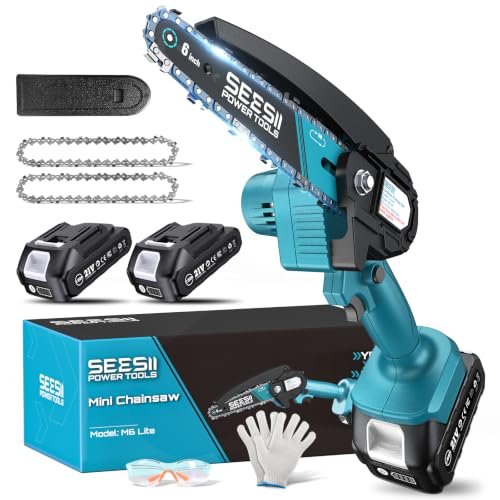
Yes. The Seesii 6-inch mini chainsaw is worth considering if you need a compact tool for small cutting jobs around your property. It uses a cordless electric design and comes with two batteries according to its product listing. Its short guide bar makes it easier to carry and store than many full-size chainsaws. It can help with small branches, garden cleanup, and cutting suitable pieces of wood.
Think about a common yard job in the United States. A small tree has several low branches that need trimming. A handheld chainsaw can make these cuts without the long pole of a pruning saw. It also gives you a more direct cutting position when working at ground level. However, its small size does not make it suitable for every tree or large log.
I would choose this model when portability and powered cutting matter more than overhead reach. The two-battery setup may also help reduce interruptions when one battery needs charging. Still, I would check the battery capacity, included charger, chain tension system, and safety instructions before buying. A mini chainsaw remains a serious cutting tool, not a harmless garden gadget.
What Makes It Stand Out / Key Features
- 6-inch guide barThe short guide bar suits many small cutting jobs. It is useful for manageable branches and small pieces of wood, but it limits the size of material the saw can handle.
- Cordless electric designThe battery-powered design removes the need for a power cord during normal operation. This gives you more freedom to move around a yard.
- Two included batteriesThe listing describes a two-battery package. A spare battery can help keep the work moving while the other one charges.
- Compact bodyIts small design makes storage easier than with many larger chainsaws. It can fit in a suitable tool cabinet or garage storage area.
- Handheld cuttingThe operator holds the saw directly and guides it through suitable wood. This makes it useful for low branches and other reachable cutting tasks.
- Battery maintenanceThe batteries need proper charging and storage. Their actual runtime depends on battery condition, wood type, cutting size, and workload.
- Chain maintenanceThe chain needs regular inspection, cleaning, and correct tension. Follow the manufacturer’s instructions for lubrication and replacement.
My Recommendation
Consider the Seesii mini chainsaw if you need cordless power for small branches, garden cleanup, and suitable wood-cutting jobs. It is less suitable when your main task involves high branches or large trees.
| Best For | Why |
|---|---|
| Small yard cleanup | Its compact design and powered chain suit many low-branch cutting tasks. |
| Portable cutting | The cordless design makes it easier to move around the property. |
| Small wood projects | The 6-inch guide bar can handle suitable small pieces of wood. |
Is the BlumeTrec Pole Saw Good?
Yes, if your main goal is to trim elevated branches without climbing a ladder. The BlumeTrec pole saw offers an adjustable length of up to 14.5 feet. Unlike a powered chainsaw, this model uses a manual steel saw blade. You provide the cutting force by pulling and pushing the blade through the branch.
Picture a tree near an American driveway. Several thin branches hang over the roof or block sunlight from a garden bed. A manual pole saw can help reach suitable limbs from the ground. Its long handle gives you extra reach, much like an extended arm. This can reduce the need to climb for ordinary pruning jobs.
I would consider this model for light to medium pruning where reach matters more than speed. Its manual design also avoids battery charging, fuel, and electrical connections. However, a long pole can become tiring to control. The branch may also move or fall as you cut it, so you must plan the cutting area before starting. This tool is not designed to replace a powered chainsaw for heavy wood cutting.
What Makes It Stand Out / Key Features
- 14.5-foot maximum lengthThe pole extends to a listed maximum length of 14.5 feet. This provides extra reach for elevated branches when used from a suitable position.
- Manual cutting actionThe saw uses human-powered cutting rather than a motor. You control the cutting speed by moving the blade through the branch.
- Mn steel bladeThe listing describes a manganese steel blade with a three-sided cutting edge. Its teeth are designed to grip branches during cutting.
- Multiple length settingsThe listed configurations include 8.5 feet, 11 feet, and 14.5 feet. You can select a suitable assembled length for the task.
- Section-based poleThe pole uses multiple sections that connect to provide different lengths. Check every connection before starting work.
- Anti-slip gripThe product listing describes an anti-slip grip to help maintain control while operating the saw.
- No battery requirementThis manual model does not need a battery, charger, gasoline, or electrical outlet. It depends on your physical effort.
My Recommendation
Choose the BlumeTrec pole saw if you mainly trim small or medium elevated branches. Its manual design works well for occasional pruning without the need for a powered cutting system.
| Best For | Why |
|---|---|
| High branch pruning | The 14.5-foot pole offers extended reach from the ground. |
| Occasional yard care | It does not need fuel, batteries, or electrical power. |
| Manual garden work | The operator controls the cutting action without a motor. |
Chainsaw vs Pole Saw: Side-by-Side Test
The biggest difference in the chainsaw vs pole saw comparison is how each tool reaches the wood. A handheld chainsaw works best on wood you can reach directly. A pole saw extends your reach and helps you trim branches above your head.
The two products in this comparison make that difference clear. The Seesii is a battery-powered 6-inch mini chainsaw. The BlumeTrec is a manual pole saw with a maximum listed length of 14.5 feet. They are not direct replacements for each other. One focuses on powered cutting, while the other focuses on reaching elevated branches.
1. Cutting Power: Which One Cuts Faster?
Cutting speed matters when you have several branches or a large cleanup job. A battery chainsaw uses a motor to move its chain through suitable wood. A manual pole saw needs repeated movement from the operator.
| Feature | Seesii Chainsaw | BlumeTrec Pole Saw |
|---|---|---|
| Power source | Rechargeable batteries | Human effort |
| Cutting method | Powered moving chain | Manual steel blade |
| Cutting effort | Motor provides cutting movement | Operator moves the blade |
| Best use | Suitable small wood and branches | Elevated pruning branches |
⭐ Seesii Chainsaw – 9/10 | BlumeTrec Pole Saw – 6/10
The Seesii has the edge for powered cutting speed. The manual pole saw trades speed for reach.
2. Reach: Which Tool Handles High Branches?
Reach is where the pole saw earns its place. A handheld chainsaw requires you to bring the cutting area within a safe working position. A pole saw lets you work on suitable elevated limbs from the ground.
| Feature | Seesii Chainsaw | BlumeTrec Pole Saw |
|---|---|---|
| Listed working design | Handheld | Long extension pole |
| Maximum listed pole length | No extension pole | 14.5 feet |
| Overhead pruning | Limited | Main purpose |
| Low branch cutting | Suitable | Suitable with shorter setup |
⭐ Seesii Chainsaw – 4/10 | BlumeTrec Pole Saw – 10/10
The BlumeTrec wins clearly for overhead reach. Its long pole is the main reason to buy it.
3. Ease of Use: Which Is Easier to Handle?
Ease of use depends on the job. A compact chainsaw can feel simple when cutting a reachable branch. A pole saw avoids the need to lift a powered chainsaw overhead, but its long handle takes practice to control.
| Feature | Seesii Chainsaw | BlumeTrec Pole Saw |
|---|---|---|
| Initial setup | Check battery and chain | Assemble pole sections |
| Physical effort | Lower cutting effort | Repeated manual effort |
| Positioning | Direct handheld control | Requires control of a long pole |
| Learning curve | Requires chainsaw safety skills | Requires safe pole positioning |
⭐ Seesii Chainsaw – 8/10 | BlumeTrec Pole Saw – 7/10
The compact chainsaw is easier to position for low cuts, while the pole saw needs more practice at full extension.
4. Safety: Which Tool Is Safer?
Neither tool is risk-free. A chainsaw has a fast-moving chain that can cause severe cuts and kickback. A pole saw avoids that powered chain when it is manual, but falling limbs and loss of control remain serious hazards.
| Feature | Seesii Chainsaw | BlumeTrec Pole Saw |
|---|---|---|
| Moving powered chain | Yes | No |
| Falling branch risk | Present | Present |
| Kickback risk | Present | No powered chain kickback |
| Main safety concern | Chain contact and kickback | Falling limbs and pole control |
⭐ Seesii Chainsaw – 6/10 | BlumeTrec Pole Saw – 8/10
The manual pole saw has fewer powered-chain hazards, but neither tool makes overhead tree work completely safe.
5. Maintenance: Which Needs Less Care?
Every cutting tool needs care. However, a battery chainsaw has more parts that need regular checks. A manual pole saw has a simpler design, though its blade and pole joints still need attention.
| Feature | Seesii Chainsaw | BlumeTrec Pole Saw |
|---|---|---|
| Battery charging | Required | Not required |
| Chain or blade care | Chain cleaning, tension, lubrication | Blade cleaning and sharpening as needed |
| Motor maintenance | Battery and electrical checks | No motor |
| Storage | Protect batteries and chain | Store pole sections and blade safely |
⭐ Seesii Chainsaw – 7/10 | BlumeTrec Pole Saw – 9/10
The manual pole saw wins for simple maintenance because it has no motor or battery system.
6. Versatility: Which Does More Jobs?
A good yard tool should match the work you do most often. A mini chainsaw can cut suitable wood and reachable branches. A manual pole saw focuses on pruning elevated limbs.
| Feature | Seesii Chainsaw | BlumeTrec Pole Saw |
|---|---|---|
| Low branch cutting | Yes | Yes |
| Elevated branch cutting | Limited | Yes, within safe reach |
| Small wood cutting | Yes, within bar limits | Possible but slower |
| Heavy tree work | Not suitable for large jobs | Not suitable |
⭐ Seesii Chainsaw – 9/10 | BlumeTrec Pole Saw – 7/10
The mini chainsaw offers more types of ground-level cutting, while the pole saw specializes in elevated pruning.
7. Running Cost: Which Is More Affordable to Own?
The purchase price is only one part of the cost. A battery saw may need replacement batteries over time. A manual pole saw avoids battery expenses, but its blade may need care or replacement.
| Feature | Seesii Chainsaw | BlumeTrec Pole Saw |
|---|---|---|
| Electricity | Needed for charging | Not needed |
| Fuel | Not needed | Not needed |
| Replacement parts | Chain and batteries may need replacement | Blade or pole parts may need replacement |
| Ongoing energy cost | Charging cost | None |
⭐ Seesii Chainsaw – 8/10 | BlumeTrec Pole Saw – 9/10
The manual pole saw has the edge for low running costs. The chainsaw offers powered cutting in return for battery care.
8. Best Value: Which One Should You Buy?
Value depends on how often you use the tool and what you need it to cut. Buying the wrong saw can leave you with an expensive tool that does not solve your main problem.
| Feature | Seesii Chainsaw | BlumeTrec Pole Saw |
|---|---|---|
| Best task | Small powered cutting jobs | Elevated branch pruning |
| Main advantage | Powered cutting | Extended reach |
| Main limitation | Short guide bar | Manual cutting effort |
| Ideal buyer | Homeowner needing a compact cutting tool | Homeowner pruning higher branches |
⭐ Seesii Chainsaw – 9/10 | BlumeTrec Pole Saw – 9/10
Both offer good value for different jobs. The best choice depends on whether you need cutting power or extra reach.
Final Verdict: Which Should You Buy?
The chainsaw vs pole saw choice comes down to two things: cutting power and reach. The Seesii 6-inch mini chainsaw is the better fit for small, reachable branches and suitable wood-cutting jobs. Its cordless design gives you powered cutting without a large machine. The BlumeTrec manual pole saw is better for elevated branches because it reaches up to 14.5 feet.
My overall pick for a homeowner who needs a compact powered cutting tool is the Seesii. However, if high branches are your main problem, buy the pole saw instead. Neither product replaces a full-size chainsaw or professional tree service for large trees. Match the tool to the job, wear suitable protection, and never cut branches that could fall onto people, buildings, or power lines.