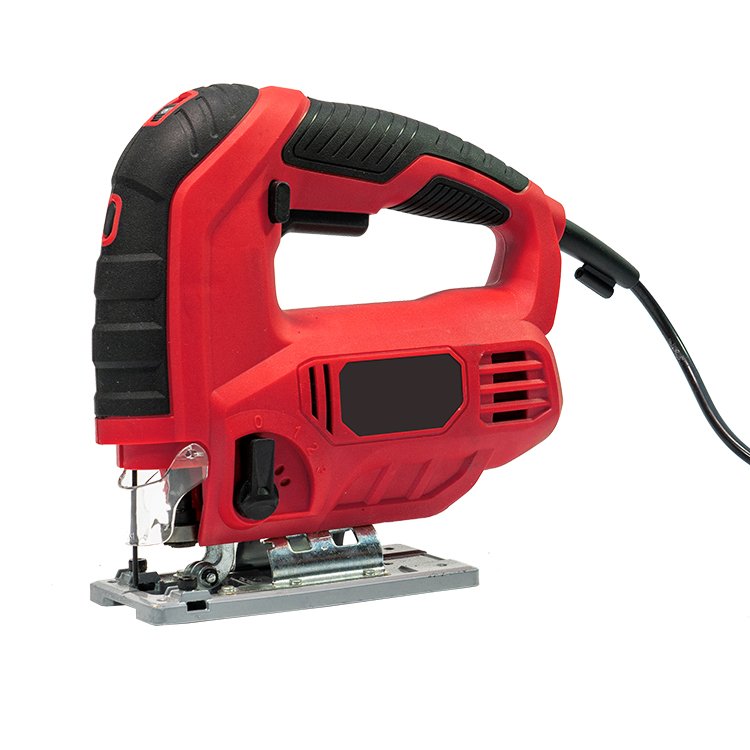
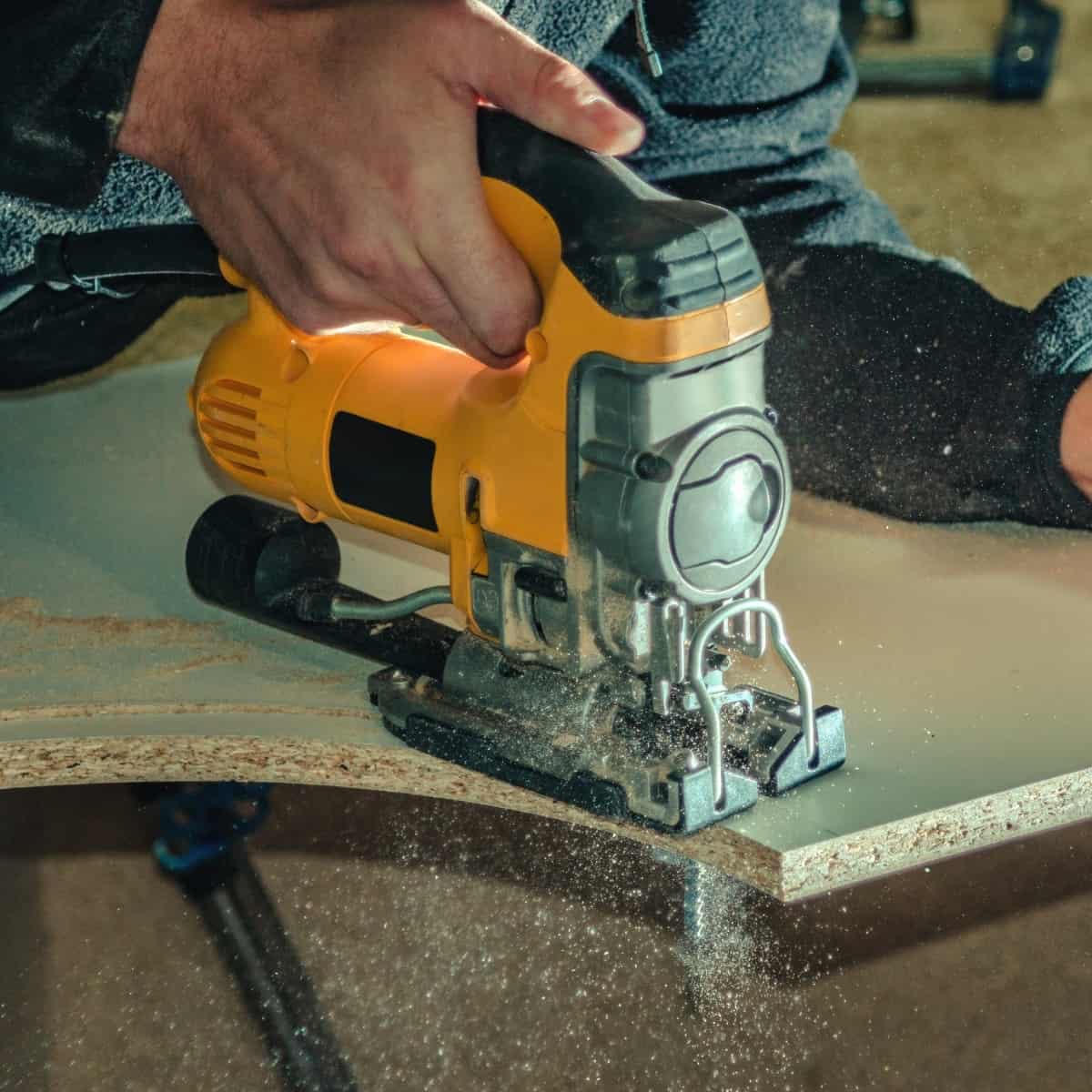
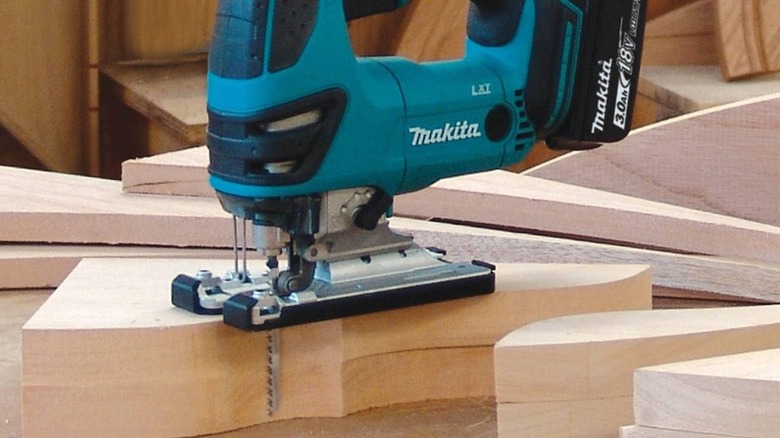
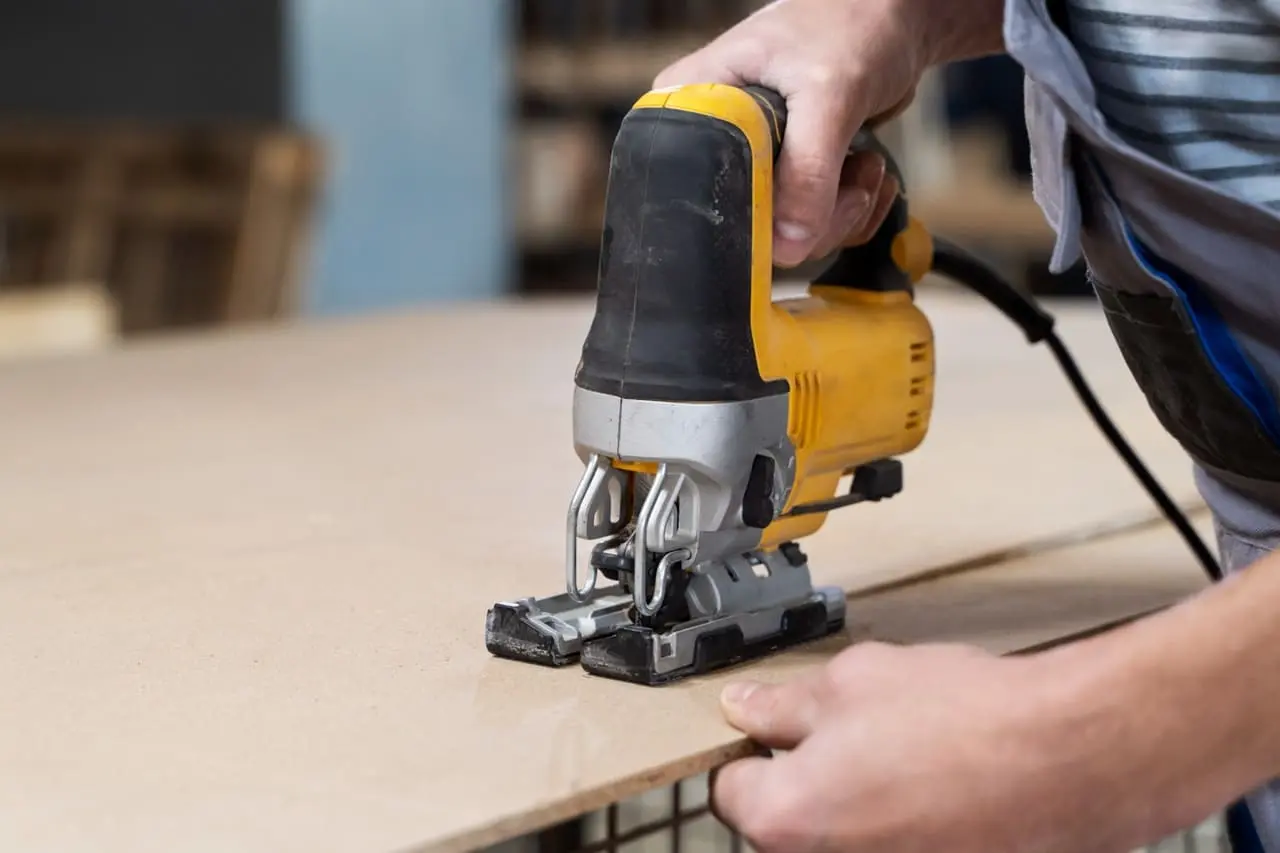
A jigsaw tool is used to cut curves, circles, straight lines, and custom shapes in wood, plastic, metal, and other suitable materials. Its narrow moving blade makes it useful for detailed cuts that many larger saws cannot make easily.
In American homes, workshops, and job sites, a jigsaw is a handy power tool for many repair and building tasks. A homeowner might use one to cut a curved shelf, trim a plywood panel, shape a piece of wood for a craft project, or make an opening in a countertop. Its small blade can follow a marked line with care, even when that line bends or changes direction.
A jigsaw is not just a tool for curved cuts. With the right blade, a steady hand, and a well-supported workpiece, it can also make straight cuts, bevel cuts, and rough openings. The type of material, blade design, cutting speed, and tool settings all affect the result.
The main benefit is control over the shape of a cut. A circular saw is often more suitable for long, straight cuts, while a jigsaw offers more freedom when a project calls for curves, corners, or irregular outlines. Knowing where it works well, and where another saw is a better fit, helps you get cleaner results and avoid damage.
Source: howguide.net
What Is a Jigsaw Tool?
A jigsaw is a handheld electric saw with a short, narrow blade that moves up and down at high speed. The blade passes through the material as you guide the tool along a marked line. Most modern models have a flat base, called a shoe or sole plate, that rests on the work surface.
The tool may run on a cord or a rechargeable battery. Many models also have a trigger, speed control, blade clamp, and a setting for changing how the blade moves. Some include a built-in light or a dust blower to help keep the cutting line visible.
Unlike a large table saw, a jigsaw moves across the workpiece instead of requiring the user to feed the material into a fixed blade. This makes it useful for cutting large panels that are hard to move, as well as small parts that need a shaped edge.
Source: toptiertool.com
Blade
The thin cutting part that moves up and down. Its tooth shape and material determine what it can cut.
Shoe
The flat base that rests on the material and helps keep the saw stable.
Trigger and speed control
These control when the motor runs and, on adjustable models, how fast the blade moves.
Blade clamp
This holds the blade in place. Many current tools use a tool-free clamp, while some use a screw.
Orbital setting
This changes the blade’s cutting motion on models that offer it. A more aggressive setting can cut faster but may leave a rougher edge.
How Does a Jigsaw Work?
A motor drives a mechanism that moves the blade up and down. As the teeth pass through the workpiece, they remove small pieces of material and create a narrow cut called a kerf. The user guides the shoe along the planned path while the blade does the cutting.
The blade is supported by the tool, but its narrow shape can bend if you force the saw sideways. This is why slow, steady movement matters. Let the teeth cut at their own pace instead of pushing hard to make the job go faster.
Up-and-down action
The blade moves vertically to cut through the material.
Guided movement
The user moves the saw along a marked line to create the required shape.
What Is a Jigsaw Tool Used For?
A jigsaw is used when a project needs a shaped cut rather than only a simple straight edge. It can follow a curve, turn around a corner, cut an opening, or trim a panel to fit a space. This makes it useful for home repairs, furniture work, crafts, and some light construction tasks.
The tool’s main strength is flexibility. A person can use it to cut a wide range of shapes without needing a large stationary saw. However, the result depends on the blade, the material, and the skill of the person guiding the tool.
Source: thehandymansdaughter.com
Cutting curves
A jigsaw can follow curved lines for rounded shelves, decorative panels, furniture parts, and craft shapes.
Making straight cuts
It can trim boards and panels along a straight guide, although a circular saw or track saw is usually better for long, precise cuts.
Cutting circles
With a suitable layout or circle-cutting guide, it can make round openings in wood and other compatible materials.
Creating cutouts
It can make openings for vents, access panels, sinks, and other fitted parts when the material and work area are suitable.
Trimming materials
It can remove excess material from panels, shelves, flooring pieces, and other parts that need a custom fit.
Bevel cutting
Some jigsaws allow the shoe to tilt for angled cuts, often used for trim and decorative edges.
Cutting Curves and Decorative Shapes
Curved cutting is one of the main reasons people choose a jigsaw. Its narrow blade can turn gradually as the saw moves along a curved line. This is useful when making rounded table corners, curved shelf ends, signs, wooden toys, and decorative wall panels.
For a smooth curve, draw the shape clearly and choose a blade suited to the material. A narrow blade is generally easier to turn through tight curves than a wide blade. Avoid twisting the tool sharply, because the blade may bend and leave an angled or rough edge.
Best approach
Use gradual turns, support the material, and keep the saw moving at a controlled pace.
Common problem
Forcing a tight turn can bend the blade or cause the cut to wander away from the marked line.
Making Straight Cuts in Boards and Panels
A jigsaw can cut straight lines in plywood, lumber, plastic sheet, and other suitable stock. This is helpful when trimming a shelf, shortening a small panel, or cutting a piece to fit a cabinet. A straightedge clamped to the workpiece can help guide the saw.
A jigsaw is not usually the first choice for long, highly accurate straight cuts. Its blade can flex, and the cut may drift even when the top edge looks straight. For cabinet panels or repeated long cuts, a circular saw with a guide rail is often a better option.
Use a guide
Clamp a straight board or suitable guide in place and check the saw’s offset before cutting.
Watch the blade
Check that the blade remains aligned with the cut rather than relying only on the shoe’s position.
Cutting Openings and Interior Shapes
A jigsaw can create an opening inside a panel when the blade needs to enter the material away from an outside edge. This is useful for certain countertop, cabinet, plywood, and craft projects. The method often starts with a drilled entry hole large enough for the blade.
Before cutting a fitted opening, check what lies below or behind the surface. A wall, floor, or countertop may contain wiring, pipes, fasteners, or other hidden parts. Do not cut until you have confirmed that the blade path is clear and that the workpiece can be cut safely.
Entry hole
Use a drill and a suitable bit to make a hole large enough for the jigsaw blade, when the cut requires an internal starting point.
Clearance check
Confirm that no hidden service, support, or object sits in the blade’s path.
What Materials Can a Jigsaw Cut?
A jigsaw can cut several materials, but the blade must match the job. A wood blade is not the right choice for steel, and a metal blade may cut wood slowly or leave a poor edge. Always check the tool and blade maker’s instructions for material limits and thickness.
The table below gives a practical overview. These are general uses, not a promise that every jigsaw can cut every listed material. Tool power, blade length, tooth design, and workpiece thickness all matter.
Source: slashgear.com
Wood and plywood
Common uses include shelves, panels, furniture parts, craft pieces, and rough openings.
Plastic
Suitable blades can cut some plastic sheets and panels. Control heat and speed to reduce melting.
Metal
A fine-tooth metal-cutting blade can handle certain thin metal sheets and profiles within the tool’s stated capacity.
Laminate
A suitable fine-tooth or reverse-tooth blade can help reduce surface chipping, depending on the material and cutting direction.
Wood, Plywood, and MDF
Wood is one of the most common materials cut with a jigsaw. It can shape solid boards, plywood, MDF, and some other wood-based panels. The right blade depends on the desired edge, the material’s thickness, and whether speed or a clean finish matters more.
For a smooth visible edge, use a blade designed for fine wood cutting and avoid rushing. MDF creates fine dust, so use suitable dust extraction and respiratory protection based on the work and product guidance.
Coarse wood blade
Often useful when speed matters more than a very smooth edge.
Fine wood blade
Better suited to cleaner cuts in visible surfaces and thinner stock.
Plastic, Laminate, and Metal
Some plastics can be cut with a suitable fine-tooth blade and a controlled speed. If the blade moves too fast or stays in one place, friction can soften the plastic and cause melting. Test on an offcut when the material is unfamiliar.
Thin metal may also be cut with a jigsaw if the tool maker permits it and the blade is made for that metal. Secure the sheet well, support it close to the cutting line, and follow the blade maker’s limits. Thick steel, masonry, concrete, and tile are not ordinary jigsaw jobs; use a tool designed for those materials.
Plastic blade
Choose a blade intended for the type and thickness of plastic being cut.
Metal blade
Use a fine-tooth blade rated for the metal and thickness, with secure workpiece support.
Common Jigsaw Projects Around the Home
A jigsaw can help with many small and medium home projects where a custom shape is needed. It is especially useful for one-off cuts that would be awkward to make with a larger saw. The material must still be suitable for the blade and the tool.
For example, a homeowner may need to trim a shelf around a pipe, cut a curved piece for a bench, or shape a panel for a storage unit. In each case, careful measuring and a stable workpiece matter as much as the saw itself.
Source: blog.builders.co.za
Furniture repair
Trim a damaged or oversized panel, shape a replacement part, or round sharp corners on a suitable wooden piece.
Shelving
Cut a curved shelf end or make a small notch so a panel fits around an obstacle.
Flooring work
Shape compatible flooring pieces around door frames or other fixed features, following the flooring maker’s cutting advice.
Craft projects
Make signs, simple wooden shapes, templates, and decorative parts from suitable stock.
Cabinet work
Create some panel openings and custom edge shapes after checking measurements and hidden hazards.
Example: Shaping a Curved Wooden Shelf
Start by measuring the shelf space and marking the curve on the board. Check the line from several angles so the shape will fit the wall or furniture. Place the board on a stable work surface and support the section that will remain after the cut.
Fit a suitable wood blade and check that it is locked in place. Keep the shoe flat on the board, start the saw before the blade touches the material, and guide it slowly along the curve. After the cut, switch off the tool and wait for the blade to stop before setting it down.
Check the shelf against the intended space. If the edge needs refinement, use a suitable sanding block or sander after the tool is off and the workpiece is secure. Do not try to correct a wandering cut by twisting the running saw sideways.
Before cutting
Measure, mark, inspect, and clamp the board.
During cutting
Keep the shoe flat and move at a pace that lets the blade cut without force.
After cutting
Wait for the blade to stop, inspect the edge, and sand only when the workpiece is secure.
How to Choose the Right Jigsaw Blade
The blade has a major effect on the cut. A jigsaw body may be suitable for many tasks, but the wrong blade can cause rough edges, slow cutting, overheating, or damage. Check the blade package for its intended material and cutting direction before fitting it.
Blade teeth per inch, often shortened to TPI, describe how many teeth fit within one inch of the blade. A lower TPI often cuts faster in wood, while a higher TPI can provide a finer cut in suitable materials. This is a general guide; tooth shape and blade design also matter.
Source: bunnings.co.nz
Wood blades
Available in different tooth patterns for fast cuts, clean cuts, and curved work.
Metal blades
Usually have finer teeth to cut metal without taking overly large bites.
Plastic blades
Designed to help cut certain plastics while managing heat and edge quality.
Laminate blades
Made for laminate and coated panels where surface chipping can be a concern.
Specialty blades
Some blades are made for specific materials or tasks. Confirm compatibility before use.
T-Shank and U-Shank Blades
T-shank and U-shank describe common blade mounting shapes. Many newer jigsaws use a T-shank system with a tool-free blade clamp, while some older tools use U-shank blades held by a screw. These systems are not automatically interchangeable.
Check the jigsaw manual and blade clamp before buying replacement blades. A blade that does not fit securely can loosen during use and create a serious hazard.
T-shank
Common on many current jigsaws and often allows quick blade changes.
U-shank
Found on some older or specific models and may require a different clamp system.
When Should You Replace a Blade?
Replace a blade when it becomes dull, bent, cracked, or damaged. A worn blade may cut slowly, burn the material, vibrate more than usual, or drift away from the line. Continuing with a damaged blade can reduce control and increase the chance of a poor cut.
Disconnect a corded saw or remove its battery before changing the blade. Follow the maker’s instructions, let a hot blade cool, and make sure the replacement is locked in place before restoring power.
Dull teeth
The saw needs more pressure or takes much longer to cut.
Bent blade
The cut may drift or the blade may no longer track correctly.
Damaged teeth
Missing or chipped teeth can cause rough cutting and poor control.
Jigsaw Settings That Affect the Cut
Jigsaw settings affect cutting speed, control, and edge quality. Not every model has the same controls, so read the manual before changing them. Start with a conservative setting on scrap material when you are unsure how the tool will behave.
Two common controls are variable speed and orbital action. Speed changes how quickly the blade moves, while orbital action changes the blade’s path so it can cut more aggressively on certain materials.
Source: mrpowertools.com
Variable speed
Allows the user to adjust blade speed for the material and task.
Orbital action
Adds a forward movement to the blade stroke on models with this feature, often improving speed in wood but leaving a rougher edge.
Bevel adjustment
Allows the shoe to tilt for angled cuts when the model supports it.
Dust control
A dust blower or extraction connection can help keep the cut line visible and reduce airborne debris.
When to Use Orbital Action
Orbital action is often useful for faster cutting in wood when a very smooth edge is not the main goal. The blade moves slightly forward as it rises and falls, helping it remove material more quickly. This can make rough cuts easier, but it may also increase splintering.
For metal, plastic, and delicate finish work, use the setting recommended by the tool and blade makers. A low or zero orbital setting is often the more controlled starting point, but the correct choice depends on the material.
Faster rough wood cuts
A higher orbital setting may help when speed matters more than edge finish.
Fine finish cuts
A low or zero setting can help reduce aggressive cutting and improve control.
Jigsaw vs. Other Common Saws
A jigsaw is not a replacement for every saw. The best tool depends on the shape, material, cut length, and finish you need. Choosing the right saw can save time and reduce the chance of damaging the workpiece.
The comparison below focuses on typical uses. Actual capacity and performance vary by tool, blade, setup, and material.
Source: housedigest.com
Jigsaw
Useful for curves, cutouts, short straight cuts, and custom shapes.
Circular saw
Often better for long, straight cuts through boards and sheet goods.
Band saw
Useful for controlled curved cuts and resawing on a stationary machine.
Scroll saw
Useful for detailed, delicate shapes in smaller workpieces.
Reciprocating saw
Often used for rough demolition and cutting in tight repair spaces rather than fine shaping.
Which Saw Should You Use?
Choose a jigsaw when the line curves, turns, or forms an opening. Choose a circular saw when you need a long, straight cut and can support the material properly. For very fine internal shapes in small wood pieces, a scroll saw may offer better control.
A jigsaw can make straight cuts, but that does not mean it is the most accurate or efficient option for every straight cut. Match the tool to the shape and required finish rather than trying to make one saw do every job.
For a curved shelf
A jigsaw is usually a practical option.
For a long plywood rip
A circular saw with a suitable guide is often more suitable.
For delicate small shapes
A scroll saw may provide finer control when the workpiece fits the machine.
How to Use a Jigsaw Safely
Safe jigsaw use starts before the motor runs. Read the tool manual, inspect the blade, check the work area, and secure the material. Wear suitable eye protection and hearing protection, and use dust controls appropriate to the material being cut.
Never hold a small workpiece in one hand while guiding the saw with the other. Clamp it to a stable surface so both hands can control the tool as the manual directs. Keep hands, cords, and loose clothing away from the blade and its path.
Source: safatcotrading.com
Wear protection
Use safety glasses or goggles and hearing protection. Select respiratory protection when dust exposure requires it.
Secure the workpiece
Use clamps or another stable setup to stop the material from shifting.
Check the blade
Make sure it is suitable, undamaged, and locked into the clamp.
Inspect the cutting path
Look for screws, nails, wires, pipes, and other hidden hazards before cutting.
Keep the shoe flat
Rest the base on the workpiece and maintain control as you guide the cut.
Wait for the blade to stop
Do not lift or set down the saw while the blade is still moving.
A Basic Cutting Sequence
First, unplug the corded tool or remove its battery while fitting the blade and making adjustments. Mark the cut line, check the underside of the material, and clamp the workpiece so it cannot move. Set the blade and speed according to the material and the manual.
Place the shoe on the workpiece with the blade clear of the edge. Start the saw, allow it to reach its working speed, and guide it along the line without forcing it. Keep the base stable and watch the blade’s path as you move.
When the cut is complete, release the trigger and wait until the blade stops fully. Switch off or disconnect the tool before clearing waste, changing the blade, or making adjustments. Check the finished edge only after the workpiece and blade are safe to handle.
Good result
The cut follows the marked line, the workpiece stays stable, and the blade does not bind or bend.
If the cut wanders
Stop safely and inspect the blade, support, and guide setup. Do not twist or force the running saw back onto the line.
Dust, Noise, and Material Hazards
Cutting wood and manufactured panels can create airborne dust. Some materials, coatings, and older building products may pose added health risks when cut. Identify the material before starting and follow its safety information and applicable workplace rules.
Do not cut material that may contain asbestos or other hazardous substances unless the work has been properly assessed and handled by qualified people. If a project involves a wall, floor, or built-in surface with unknown services or hazardous contents, stop and get the right inspection before cutting.
Dust extraction
Use a compatible extraction system where possible and avoid letting dust build up around the work area.
Ventilation
Work in a suitable, well-ventilated area while following material-specific safety guidance.
Hidden services
Do not cut into a wall, floor, or counter until you have checked for wires, pipes, and other concealed parts.
Common Jigsaw Problems and How to Fix Them
A poor cut does not always mean the jigsaw is faulty. A dull blade, weak support, incorrect blade choice, or excessive pressure can cause problems. Stop the tool before checking the blade or changing the setup.
Use the symptoms below to guide a safe first check. If the saw makes unusual noises, smells hot, sparks abnormally, or has a damaged power cord or battery, stop using it and follow the manufacturer’s service guidance.
Source: cancutters.com
The cut drifts
Check for a bent or dull blade, excessive speed, poor support, and sideways pressure.
The edge is rough
Try a blade suited to the material and finish, reduce aggressive settings, and test the setup on scrap.
The material splinters
Use a suitable fine-cut blade, support the surface, and consider a compatible splinter guard or cutting method.
The blade gets hot
Check blade suitability, cutting speed, material thickness, and whether the blade is dull or binding.
The saw vibrates too much
Stop and check that the blade is correctly fitted, the workpiece is secure, and the tool is not damaged.
Why Does a Jigsaw Cut at an Angle?
A jigsaw can leave an angled edge when its blade bends during the cut. This can happen in thick material, during tight curves, or when the user pushes the saw too hard. A blade may also drift if it is worn or unsuitable for the material.
Check the blade condition and the tool’s stated cutting capacity. Use a suitable sharp blade, keep the workpiece stable, and let the saw cut at a controlled pace. For work that needs a very square edge through thick stock, another saw may be a better choice.
Reduce side pressure
Guide the saw along the line without twisting the body to steer the blade.
Check thickness limits
Use the tool manual to confirm that the material is within the saw’s cutting capacity.
When a Jigsaw Is Not the Right Tool
A jigsaw is versatile, but it has clear limits. It may be a poor choice for very long, precise straight cuts, thick stock beyond the tool’s rated capacity, heavy demolition, or materials that need a specialist cutting method. Using the wrong saw can waste time and create an unsafe setup.
The blade can flex, especially when the material is thick or the cut requires a lot of force. The shoe also needs a stable surface to rest on. If the workpiece is too small, too loose, or too awkward to support, choose a safer cutting method.
Source: industrydiy.com
Long precision cuts
Use a suitable circular saw and guide system when a long, straight edge must be accurate.
Heavy demolition
A reciprocating saw may be more appropriate for rough removal, provided the material and hidden hazards are assessed.
Masonry and concrete
Use equipment designed for the material. A standard jigsaw blade is not made for ordinary masonry cutting.
Very thick material
Check the tool’s rated capacity and choose a saw with suitable depth and blade support when needed.
Tiny or unstable pieces
Do not attempt a cut if the workpiece cannot be secured and supported safely.
How to Decide Before Starting
Look at the shape first. If the cut curves or forms a custom opening, a jigsaw may be suitable. If the cut is long and straight, compare the jigsaw with a circular saw or track saw.
Next, identify the material and thickness. Check the tool manual and blade label, then consider how clean the finished edge must be. If you cannot secure the workpiece or confirm that the cutting path is clear, do not start.
Shape
Curves and irregular outlines often favor a jigsaw.
Material
Choose a blade and tool rated for the material.
Finish
Use a finer blade or a different saw when edge quality is critical.
Safety
Proceed only when the workpiece and cutting path can be controlled.
What to Check Before Buying or Using One
Before choosing a jigsaw, think about the jobs you expect to do. A basic model may be enough for occasional home repairs, while frequent work may call for better speed control, a more stable shoe, easier blade changes, and dust extraction. No single feature makes a tool suitable for every user.
If you already own a jigsaw, check its manual before buying blades or accessories. Blade fitting, bevel adjustment, cutting capacity, and dust extraction connections can vary between models.
Source: kafuwell.com
Power source
A corded model provides a steady power connection, while a cordless model offers more freedom of movement but depends on battery charge and compatibility.
Speed control
Variable speed can help match the blade movement to the material and task.
Blade system
Confirm the blade mount and the availability of suitable blades.
Cutting capacity
Check the rated capacity for the materials you plan to cut.
Dust collection
Look for a compatible port or dust-control feature if you often work with wood or panel products.
Comfort and balance
A comfortable grip and manageable weight can make controlled cutting easier.
Useful Accessories
A few simple accessories can make jigsaw work easier. A straightedge or guide helps with straight cuts, clamps hold the material still, and a suitable splinter guard may improve the finish on some models. A circle-cutting guide can help when a project needs a round shape.
Accessories must fit the specific tool. Check the maker’s compatibility information rather than assuming that a guide, guard, or dust adapter will fit every jigsaw.
Clamps
Hold the workpiece firmly to a stable surface.
Straightedge guide
Helps guide the tool along a straight marked path.
Splinter guard
Can help limit chipping when it is compatible with the tool and blade.
Circle guide
Helps create round cuts within its stated range.
Research Notes and Useful Next Questions
This guide treats a jigsaw as a general-purpose cutting tool, not as a substitute for every saw. The main reader need is to understand which jobs suit its narrow reciprocating blade, what materials require different blades, and when another tool is safer or more accurate.
The practical questions addressed here include curved cutting, straight cuts, internal openings, blade choice, material limits, basic settings, and safe setup. These are inferred next needs based on the steps a new user must take before making a cut; they are not presented as verified search-volume findings.
No first-hand cutting tests are claimed in this article. Exact cutting capacity, blade compatibility, speed settings, and accessory fit must be checked against the manual for the specific jigsaw and the instructions supplied with the blade.
Primary question
What is a jigsaw tool used for? Answered through its main cutting tasks and common project examples.
Preparation question
Which blade should I use? Answered through material-specific blade guidance and mounting checks.
Safety question
How can I reduce cutting risks? Answered through workpiece support, inspection, protective equipment, and safe stopping.
Tool choice question
When should I use another saw? Answered through a practical comparison of cut shape, accuracy, and material limits.
Next-Question Gap Map
The following map separates practical follow-up needs from verified search observations. No live People Also Ask results, Search Console records, customer support records, or community discussions were supplied for this assignment, so no question is labeled as an observed search query.
Can a jigsaw cut a straight line?
Basis: Inferred next need. Coverage: Answered. Benefit: Helps readers decide when a guide or circular saw is more suitable. Evidence: General tool function and model-specific manuals. Priority: High. Placement: Straight-cut section.
Which jigsaw blade cuts metal?
Basis: Inferred next need. Coverage: Answered. Benefit: Reduces wrong-blade use. Evidence: Blade maker specifications and tool manuals should govern exact material limits. Priority: High. Placement: Material and blade sections.
Why does a jigsaw blade bend?
Basis: Inferred next need. Coverage: Answered. Benefit: Helps prevent drifting and angled cuts. Evidence: Blade geometry, material thickness, and tool setup. Priority: High. Placement: Troubleshooting section.
Can a jigsaw cut tile or concrete?
Basis: Inferred next need. Coverage: Answered at a general level. Benefit: Prevents use of an unsuitable standard blade. Evidence: Tool and blade material ratings. Priority: Medium. Placement: Tool limitations section.
Which accessories fit my jigsaw?
Basis: Inferred next need. Coverage: Shallow without a named model. Benefit: Prevents incompatible purchases. Evidence: The exact model manual and accessory compatibility list are needed. Priority: Medium. Placement: Buying and accessories section.
Frequently Asked Questions
Q
What is the main purpose of a jigsaw?
The main purpose of a jigsaw is to cut curves, custom shapes, and openings in suitable materials. It can also make straight and angled cuts when the blade, guide, and workpiece setup are appropriate. Its narrow blade makes it more flexible for shaped cuts than many larger saws.
Q
Can a jigsaw cut a straight line?
Yes. A jigsaw can cut straight lines in wood, plywood, plastic, and other materials that match the blade and tool ratings. Use a clamped straightedge when suitable, and guide the saw without forcing it. For long, highly accurate cuts, a circular saw with a guide may work better.
Q
Can a jigsaw cut metal?
Yes, some jigsaws can cut certain metal sheets and profiles with a suitable metal-cutting blade. Check the tool’s rated capacity and the blade instructions first. Secure the material, control the speed as directed, and wear suitable eye and hearing protection.
Q
Can a jigsaw cut a circle?
Yes. A jigsaw can cut circles in suitable sheet materials. A circle-cutting guide can help keep the blade on a steady path. For an internal opening, the job may require a drilled entry hole large enough for the blade, along with a check for hidden hazards.
Q
Is a jigsaw good for beginners?
A jigsaw can be a useful first power saw because it is handheld and can perform several types of cuts. Beginners should practice on scrap material, use the correct blade, clamp the workpiece, and read the manual before starting. Simple cuts should come before tight curves or complex openings.
Q
What is the difference between a jigsaw and a circular saw?
A jigsaw uses a narrow blade that moves up and down, making it useful for curves, cutouts, and custom shapes. A circular saw uses a round blade and is generally better for long, straight cuts through boards and sheet materials. The right choice depends on the cut and the required finish.
Q
Can a jigsaw cut thick wood?
It can cut some thicker wood, but the safe and practical limit depends on the specific saw, blade length, blade design, and material. Check the manufacturer’s stated cutting capacity. Thick stock can make the blade flex, so a different saw may be more suitable when a square, accurate edge is required.
Q
Why does my jigsaw leave a rough edge?
A rough edge may result from a dull or unsuitable blade, excessive speed, aggressive orbital action, poor workpiece support, or a cut made too quickly. Try a suitable fine-cut blade and test the settings on scrap. If the edge is visible, allow time for careful sanding after cutting.
✦ Wrapping Up
Conclusion
A jigsaw tool is used for more than cutting curves. It can trim boards, shape shelves, make circles, create openings, and cut several types of wood, plastic, laminate, and suitable metal. Its narrow blade gives it the freedom to follow shapes that are difficult to make with many other power saws.
The best results come from matching the blade to the material, securing the workpiece, and guiding the tool without force. A jigsaw is a practical choice for custom cuts and home projects, but a circular saw, band saw, or other specialist tool may be better for some jobs. Always check the manual and the blade rating before cutting.
💡 Key Takeaway
Before your next project, identify the material and cut shape, choose a compatible blade, check the cutting path, and practice on a secured scrap piece. Let the saw do the work instead of pushing it.
A metric tap and drill set saves you from juggling separate taps, dies, and drill bits when you need a clean internal thread. The right set matches your drill…