A hammer drill is used to drill holes in concrete, brick, stone, and other masonry by combining rotation with rapid hammering action.
In American homes, a hammer drill is useful for jobs such as mounting shelves on brick walls, attaching handrails to concrete, and installing anchors in a garage or basement. Unlike a standard drill, it adds short, rapid impacts to the turning motion of the bit. This helps the bit break through hard masonry while it cuts a hole.
You can also use many hammer drills as regular drills when you turn off the hammer setting. That makes them useful for a range of home improvement and construction tasks. However, the right drill bit, tool setting, and drilling method depend on the material. A hammer drill is not the same as an impact driver or a rotary hammer, and using the wrong tool can waste time or damage the work surface.
Source: Bing
What Do You Use a Hammer Drill For?
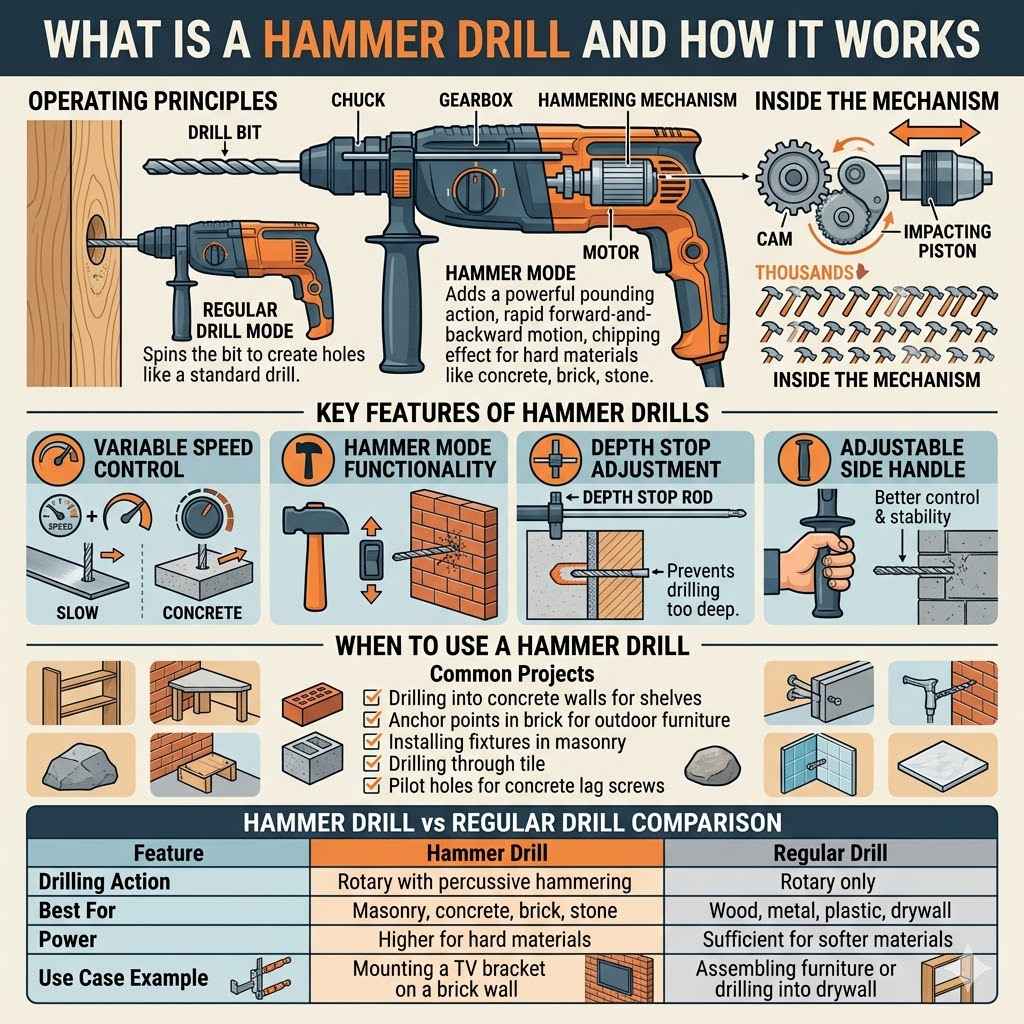
A hammer drill is primarily used to drill holes in hard materials that are difficult to penetrate with a standard drill. It combines a rotating drill bit with a rapid forward hammering motion. The rotation cuts the hole, while the impacts help break up the material in front of the bit.
This combination is especially useful when you need to install fasteners in masonry. For example, you might use a hammer drill to attach a storage rack to a concrete garage wall, secure a bracket to a brick exterior, or make holes for approved masonry anchors.
Hammer drills are also useful for many general drilling jobs when the hammer function is turned off. The key is to match the tool, bit, and operating mode to the material and the size of the hole.
Source: Bing
Concrete drilling
Make holes for compatible concrete anchors, mounting hardware, and other approved fasteners. Reinforced concrete may require a more powerful rotary hammer or specialized equipment.
Brick and block
Drill holes for brackets, wall-mounted fixtures, and suitable masonry fasteners. Choose the drilling location carefully to reduce the risk of cracking the brick.
Stone and other masonry
Drill suitable holes in masonry stone and similar materials when the bit and tool are rated for the job. Natural stone varies in hardness and brittleness.
Wood and metal
Use a suitable wood or metal bit with hammer mode disabled. Check the drill’s manual for chuck capacity, speed settings, and material limits.
Home repairs and installation
Install appropriate anchors for shelves, curtain hardware, handrails, cable supports, and other fixtures when the wall material and load requirements permit.
Why a Hammer Drill Works Better on Masonry
Concrete and brick resist ordinary cutting because they contain hard mineral particles and dense cement-based material. A standard drill turns a bit, but it does not provide the same repeated forward impacts as a hammer drill. As a result, a regular drill may work slowly or struggle when used on hard masonry.
A hammer drill adds rapid, short impacts along the drilling axis. These impacts help the masonry bit chip away at the material while its cutting edges and flutes help clear debris. The exact mechanism and impact strength depend on the drill design.
Hammer action does not remove the need for a suitable bit or steady technique. A worn bit, excessive pressure, the wrong mode, or a drill that lacks sufficient capacity can still cause slow progress.
When a Hammer Drill Is Worth Using
A hammer drill is especially helpful when a job requires several holes in brick, block, or concrete. If you only need one small hole in soft masonry, a suitable regular drill may sometimes work, depending on the material and bit. Hard concrete, however, usually calls for a hammer drill or rotary hammer.
For example, if you are installing a wall-mounted tool rack in a concrete basement, a hammer drill can help you create the holes needed for compatible anchors. If the same rack attaches to wood studs behind drywall, a standard drill is generally the better choice.
How Does a Hammer Drill Work?
A hammer drill works by combining two actions: rotation and repeated impact. The motor turns the bit, while the hammer mechanism delivers rapid blows along the bit’s axis. This helps the bit break up hard material as it advances into the surface.
Many conventional hammer drills use a mechanical system that creates vibration and impact when hammer mode is selected. Some advanced designs use different mechanisms, so the precise operation varies by model. In normal drill mode, the hammer action is disabled.
The bit also plays a major role. Masonry bits have cutting tips designed for hard mineral-based materials, and their flutes carry dust and fragments out of the hole. A wood bit or metal bit is not a substitute for a masonry-rated bit when drilling concrete.
Source: Bing
Rotation
Turns the cutting tip and helps it remove material from the hole.
Hammering action
Delivers repeated impacts that help break up masonry in front of the bit.
Masonry bit
Uses a suitable cutting tip and flute design to work with concrete, brick, or other specified masonry.
Depth stop
Helps limit drilling depth when the drill includes an adjustable stop and the stop is correctly set.
Hammer Mode Versus Standard Drill Mode
Hammer mode is generally intended for masonry drilling. Standard drill mode is used for common holes in wood, metal, plastic, and other materials permitted by the manufacturer. Selecting the right mode helps avoid unnecessary vibration, material damage, and poor drilling results.
Before changing modes, follow the tool manual. Some drills require the motor to stop before the mode selector is moved. Do not force a selector that will not engage, and remove the battery or unplug the tool before changing accessories when the manufacturer directs you to do so.
Use hammer mode
When drilling suitable masonry with a compatible masonry bit.
Use drill mode
When making ordinary holes in wood or metal with the correct bit.
Use the tool’s approved settings
When drilling delicate materials or working near edges, where vibration and excess force can cause damage.
Common Jobs You Can Do With a Hammer Drill
A hammer drill is useful for many residential and light construction projects that involve masonry. The best application is usually a hole for a compatible fastener, anchor, or installation system. Always check the fastener manufacturer’s requirements for hole diameter, depth, cleaning, and base material.
The following examples show where a hammer drill may help. They are not a guarantee that every drill can handle every hole size or material. Check the drill’s capacity and the anchor instructions before starting.
Source: Bing
Mounting shelves and brackets
Drill suitable holes in a masonry wall for anchors and brackets rated for the intended load. Confirm the wall material and anchor capacity before mounting heavy items.
Installing handrails
Create holes for approved mounting hardware in suitable concrete or masonry. Because handrails affect fall safety, use the specified anchors and seek qualified help if the substrate or load is uncertain.
Securing garage storage
Install compatible fasteners for racks, hooks, and storage supports in concrete or masonry walls, provided the wall and anchor system can safely carry the load.
Attaching exterior fixtures
Make holes for suitable brackets and fixtures on brick or block walls. Use weather-appropriate fasteners and seal penetrations as needed.
Installing masonry screws
Drill pilot holes to the specified diameter and depth for the selected masonry screw. Follow the fastener instructions rather than guessing the hole size.
Light renovation work
Drill selected holes in block or concrete during repairs and remodeling. For structural work, reinforcement, or large penetrations, confirm that the method is suitable before drilling.
Drilling Holes for Concrete Anchors
Concrete anchors often require a hole with a specific diameter and depth. The instructions may also specify how to clean the hole before installation. Dust left in the hole can affect the performance of some anchor systems, so follow the anchor manufacturer’s cleaning method.
For a small home project, first identify the concrete surface and the required anchor. Choose a hammer drill and masonry bit that meet the specified dimensions. Keep the hole away from edges and avoid cutting reinforcement or embedded services.
If the concrete is heavily reinforced, the hole is unusually large, or the fastener supports a critical load, stop and get advice from a qualified professional. A basic hammer drill is not suitable for every concrete drilling task.
Drilling Into Brick Without Cracking It
Brick can crack or chip if you apply too much force or drill too close to an edge. Inspect the brick and mortar before choosing the hole location. When the fixture and anchor instructions permit it, drilling into the brick body may provide a different fixing result than drilling into the mortar joint, so follow the fastener requirements and assess the condition of the masonry.
Start with a suitable bit and controlled pressure. Keep the drill aligned with the intended hole and avoid pushing hard enough to make the tool bind. If the brick begins to crumble, the bit wanders, or a crack develops, stop and reassess the location and fastening method.
What Materials Can a Hammer Drill Handle?
A hammer drill is designed mainly for masonry, but many models can also drill other materials in standard mode. The material, hole size, bit type, and drill specifications determine what is suitable. A tool that can make a small hole in concrete may not be rated for a large or deep hole in the same material.
Use the table below as a general guide, not a replacement for the tool manual or the fastener instructions. Some materials, especially brittle tile and natural stone, need extra care and may require a different tool or drilling method.
Source: Bing
Material and Mode Guide
Choose the operating mode and bit for the material rather than relying on the drill’s name alone. A hammer drill may be versatile, but hammer action is not appropriate for every surface.
Concrete
Use hammer mode and a masonry bit rated for the job. For deep or large holes, consider whether a rotary hammer is more suitable.
Brick
Use a suitable masonry bit and controlled hammer action when appropriate. Watch for brittle, damaged, or hollow brick.
Concrete block
Use a masonry bit and the method recommended for the block and fastener. Hollow sections can behave differently from solid concrete.
Natural stone
Check the stone type and bit requirements. Hardness and brittleness vary, and some stone may need specialized equipment.
Wood
Turn hammer mode off and use a suitable wood bit. Secure the workpiece to prevent movement.
Metal
Turn hammer mode off and use a metal-cutting bit suitable for the metal. Use appropriate speed, lubrication where required, and workpiece clamping.
Ceramic tile
Do not begin with hammer mode. Use a tile-rated bit and the manufacturer’s recommended method. Many tiles require slow, controlled drilling to prevent cracking.
Glass
A conventional hammer drill is generally not the right choice. Glass needs a suitable glass-drilling method and specialized bit, with careful support and protection.
Hammer Drill vs. Regular Drill vs. Impact Driver
A hammer drill, standard drill, and impact driver serve different purposes. A hammer drill adds forward impacts to help drill masonry. A standard drill turns a bit for ordinary holes and often offers better control for common wood and metal tasks. An impact driver delivers rotational impacts that help turn screws and other fasteners.
These tools can look similar, but their mechanisms and accessory systems differ. Choosing the correct tool reduces the chance of damaging the workpiece, bit, fastener, or tool.
Source: Bing
Hammer drill
Best suited to many small and medium masonry holes when paired with the correct bit and operating mode. Many models also support standard drilling.
Regular drill
Best for general drilling in wood, metal, and plastic. It may work on some softer masonry, but hard concrete often demands a hammering action.
Impact driver
Best suited to driving compatible screws and fasteners. It is not a direct substitute for a hammer drill when making ordinary holes in concrete.
Rotary hammer
Often preferred for frequent, demanding concrete work and larger holes. Many models use an SDS-style accessory system and a different impact mechanism.
When Should You Choose a Rotary Hammer?
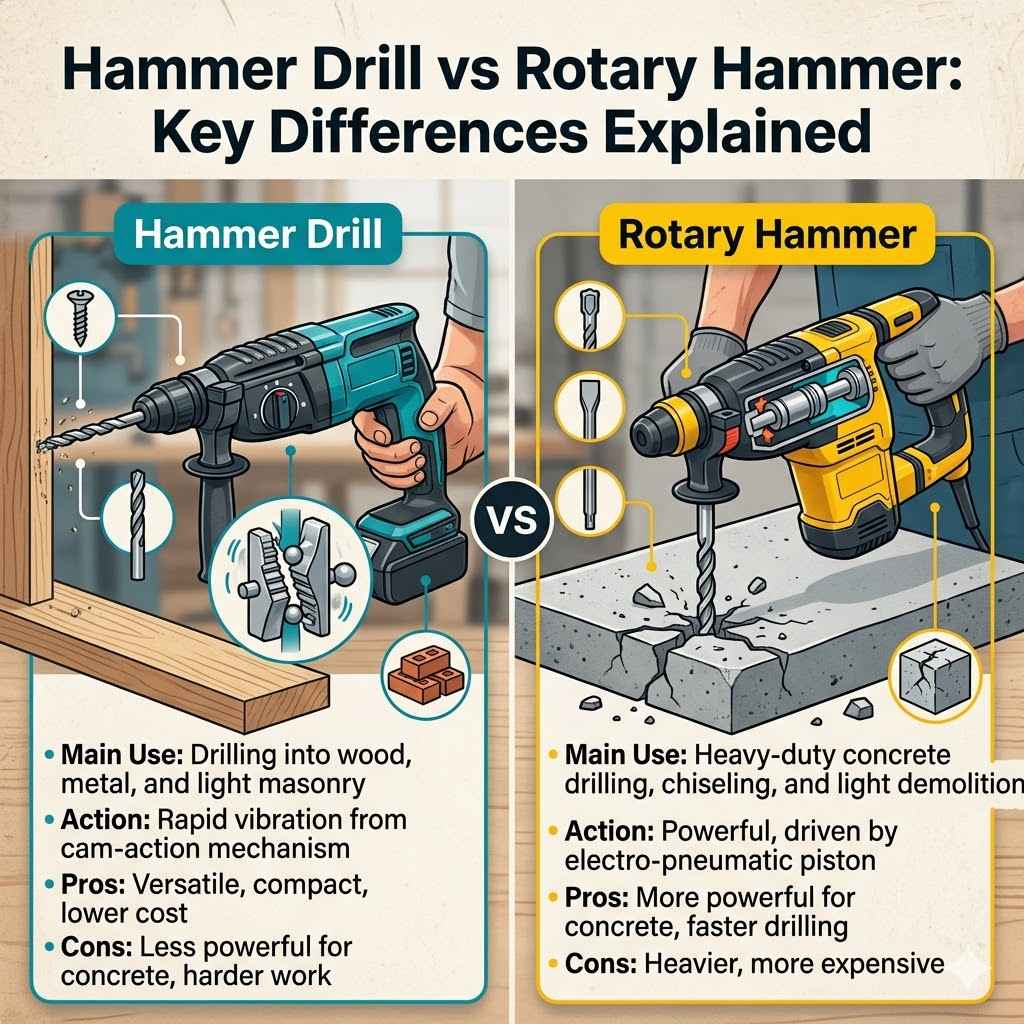
A rotary hammer is often the better choice when you need to drill many holes in hard concrete, make larger holes, or perform demanding masonry work. Its impact mechanism is designed for more forceful drilling than many conventional hammer drills provide.
Rotary hammers commonly use SDS-Plus or SDS-Max accessories, while many standard hammer drills use a conventional keyed or keyless chuck. Bits are not automatically interchangeable between these systems. Confirm the chuck and bit connection before buying or installing an accessory.
For occasional small anchor holes, a suitable hammer drill may be enough. For extensive concrete drilling or work that requires chiseling, a rotary hammer with the right mode and accessory may be more practical.
Can You Use a Hammer Drill as a Regular Drill?
Yes, if the model offers a standard drilling mode. Turn off the hammer action and install the correct bit for the material. This is useful when one tool must handle both masonry holes and ordinary drilling during a home improvement project.
For wood, use a wood-rated bit. For metal, use a suitable metal bit and the recommended speed. Keep the workpiece secure and do not use hammer mode on materials that could crack or be damaged by repeated impacts.
How to Use a Hammer Drill Safely and Correctly
Using a hammer drill correctly starts before the motor runs. Identify the material, choose a compatible bit, check the drilling location, and wear suitable protective equipment. The drill manual and the instructions for any anchor or fastener take priority over general advice.
For a typical small hole in sound concrete or masonry, the following steps provide a practical starting point. Stop if the tool binds, the surface cracks, you encounter unexpected metal, or you suspect a hidden service.
Source: Bing
1. Inspect the work area
Check both sides of the wall when possible. Identify electrical cables, pipes, gas lines, heating systems, and other embedded services before drilling.
2. Select the correct bit
Use a masonry bit compatible with the material, hole diameter, depth, and drill chuck. Check the bit for damage or wear.
3. Set the operating mode
Select hammer mode for suitable masonry drilling. Confirm that the tool is configured according to its manual.
4. Mark the hole
Mark the intended center and confirm the location will meet the anchor instructions and avoid vulnerable edges or joints.
5. Hold the drill securely
Use the auxiliary handle when supplied or required. Keep a stable stance and align the bit with the intended hole.
6. Start with controlled pressure
Start the drill as directed by the manufacturer and allow the bit to work. Do not lean excessively on the tool or force a stalled bit.
7. Clear dust as needed
Follow the bit, tool, and anchor instructions for clearing dust. Use suitable dust extraction or other specified controls instead of blowing dust toward your face.
8. Check the hole
Stop the tool, wait for the bit to stop moving, and verify the hole’s depth and condition before installing the fastener.
Safety Equipment You Should Wear
Concrete and masonry drilling can create airborne dust, flying fragments, noise, and vibration. Eye protection and hearing protection are basic precautions. Use respiratory protection and dust controls appropriate to the material and the work environment.
Concrete, mortar, brick, and some stone may contain crystalline silica. Breathing respirable crystalline silica can cause serious lung disease. Use effective dust-control methods, such as a suitable on-tool extraction system or another approved method for the task, and follow applicable workplace requirements. A simple disposable mask should not be assumed to provide adequate protection for every drilling job.
Wear snug work clothing and remove jewelry that could catch in rotating parts. Keep hands away from the bit, and avoid loose gloves or clothing near a rotating chuck. Disconnect the power source before changing bits or making adjustments when required by the manual.
Eye protection
Wear safety glasses with suitable side protection, or other eye protection specified for the task.
Hearing protection
Use suitable earplugs or earmuffs when noise levels warrant them.
Dust controls
Use effective dust extraction or another suitable control method, especially when drilling concrete or masonry.
Stable handling
Use the auxiliary handle when supplied, keep a balanced stance, and hold the tool with both hands when the manual calls for it.
How to Know You Are Drilling Correctly
A correctly used hammer drill should make steady progress appropriate to the material and the bit. The tool should remain controllable, and the hole should stay close to the intended position. Some vibration is normal in hammer mode, but sudden changes in vibration, unusual sounds, smoke, or a burning smell are reasons to stop.
If drilling slows sharply, first stop the motor and inspect the setup. Check for a worn or unsuitable bit, incorrect mode, excessive drilling depth, or debris blocking the hole. Never reach toward a moving bit or attempt to clear a jam while the tool is powered.
Common Hammer Drill Problems and How to Fix Them
Slow drilling, wandering holes, overheating, and sudden binding are common problems that may arise during masonry work. The safest approach is to stop the tool and check the likely causes in order, rather than pushing harder. Always disconnect the battery or unplug the drill before inspecting the bit or chuck when the manual directs you to do so.
Source: Bing
The drill makes little progress
Check whether hammer mode is selected, the bit is designed for the material, and the bit is sharp and undamaged. Hard concrete or a hole beyond the tool’s capacity may call for a rotary hammer.
The bit slips or wanders
Check that the bit is properly secured and compatible with the chuck. Reassess the starting mark, tool alignment, and surface condition before continuing.
The drill becomes hot
Stop and let the tool cool according to the manual. Excessive pressure, prolonged use, a dull bit, or work beyond the tool’s rating may contribute to overheating.
The bit becomes stuck
Release the trigger and wait for all movement to stop. Disconnect the power source before attempting the removal method described by the manufacturer. Do not twist the tool forcefully or put your body in a position where a sudden release could cause injury.
The masonry chips or cracks
Stop and reassess the hole location, material condition, bit, and drilling method. The surface may be too brittle, damaged, or close to an edge for the planned hole.
The tool produces unusual noise or vibration
Stop using it and inspect for a damaged bit, loose accessory, or tool fault. If the problem remains or the tool appears damaged, arrange qualified service.
Should You Push Harder When Drilling Concrete?
No. Excessive force is not a reliable way to speed up masonry drilling. The bit and impact mechanism need room to work, and heavy pressure can increase heat, wear, binding, and loss of control.
Apply firm, controlled pressure that keeps the bit engaged without straining the motor. If progress stops, inspect the bit and drilling mode after stopping the tool. If the material is too hard or the hole is too large for the drill, choose suitable equipment instead of forcing it.
What If You Hit Metal Inside Concrete?
Stop drilling if the bit unexpectedly encounters metal. It may be reinforcement, a conduit, a pipe, or another embedded item. Do not assume that the obstruction is harmless rebar, and do not continue until the material and the safety implications have been assessed.
For structural concrete, cutting reinforcement can affect structural performance. If the drilling location is not confirmed as safe, consult a qualified professional or the responsible building specialist before proceeding.
How to Choose the Right Hammer Drill Bit
The correct bit depends on the material, hole size, required depth, and chuck system. A masonry bit is designed for concrete and brick, while wood and metal need their own suitable cutting tools. Using the wrong bit can cause poor results, premature wear, or damage to the workpiece.
Check the manufacturer’s recommendations for the drill and the bit. Also confirm that the bit’s shank fits the chuck and that the tool can handle the required diameter and drilling depth.
Source: Bing
Carbide-tipped masonry bits
Commonly used for drilling brick, concrete, and block when the bit is rated for the material and the drill type.
SDS-Plus or SDS-Max bits
Designed for compatible rotary hammers and related tools. These shanks do not automatically fit standard hammer-drill chucks.
Twist drill bits for metal
Used in standard drilling mode for suitable metals. Choose a bit material and geometry rated for the metal and drilling conditions.
Wood bits
Designed for drilling wood. Switch off hammer mode and secure the workpiece before drilling.
Tile bits
Designed for suitable tile materials and typically used without hammer action. Follow the tile and bit manufacturer’s instructions.
Does Bit Size Matter?
Yes. The bit diameter must match the hole requirements for the fastener or anchor. A hole that is too small may prevent proper installation, while a hole that is too large can reduce holding performance.
Depth also matters. Follow the anchor instructions and account for the required hole depth and any space needed for dust or debris. If the drill has a depth stop, set it carefully and confirm that the stop does not interfere with the work.
What a Hammer Drill Cannot Do Well
A hammer drill is versatile, but it is not suitable for every drilling task. Its hammer mechanism is meant for appropriate masonry work, and it can damage fragile materials or make ordinary drilling harder to control when used incorrectly.
A conventional hammer drill is also not the best tool for every large concrete hole, heavy demolition job, or repeated deep drilling task. Tool selection should reflect the size and frequency of the work, the material, and the manufacturer’s stated capacity.
Source: Bing
Large concrete holes
A suitable rotary hammer or specialized drilling system may be needed for larger diameters or deeper holes.
Heavy demolition
A hammer drill is not a substitute for a demolition hammer or a rotary hammer with a suitable chisel function.
Fragile tile and glass
Hammering can crack or break these materials. Use a suitable tool, bit, and method for the specific surface.
Driving every type of screw
A hammer drill is not primarily designed to replace an impact driver. Use a suitable driver bit and setting for ordinary fastening, and keep hammer action off.
Cutting structural reinforcement
Do not cut reinforcing steel or drill into uncertain structural components without confirming the approved method.
Can a Hammer Drill Break Concrete?
A conventional hammer drill can chip or break some masonry during drilling, but it is not generally designed for efficient concrete demolition. Its primary purpose is to make holes rather than remove large amounts of material.
For removing concrete, breaking a slab, or chiseling masonry, use equipment specifically designed for that task. Before working on a slab, wall, or foundation, confirm that demolition will not affect structural stability or hidden services.
Can a Hammer Drill Be Used to Drive Screws?
Some hammer drills can drive screws when hammer action is disabled and the tool offers a suitable speed or clutch setting. Use a compatible driver bit and begin with a low setting to reduce the risk of stripping the screw or damaging the material.
An impact driver is often more suitable for repeated screw driving, while a drill-driver may offer better control for delicate fastening. Never assume that the hammer setting should be used to drive screws.
Frequently Asked Questions
Q
What is the main purpose of a hammer drill?
The main purpose of a hammer drill is to make holes in concrete, brick, block, and other suitable masonry. It combines rotation with rapid forward impacts to help break up hard material. Many models can also drill wood and metal when hammer mode is switched off.
Q
Do I need a hammer drill to drill into concrete?
For most hard concrete drilling, a hammer drill or rotary hammer is the practical choice. A standard drill may work in some softer materials or with certain small holes, but it can struggle in dense concrete. The right choice depends on the concrete, bit, hole size, and tool capacity.
Q
Can I use a hammer drill on brick?
Yes. A suitable hammer drill and masonry bit can make holes in many brick surfaces. Use controlled pressure and choose a location that reduces the risk of cracking. If the brick is old, loose, hollow, or damaged, assess the surface and anchor requirements before drilling.
Q
Is a hammer drill the same as an impact driver?
No. A hammer drill delivers forward impacts along the bit to help drill masonry. An impact driver delivers rotational impacts to help drive screws and fasteners. They are designed for different tasks, although their appearance and accessory options can sometimes cause confusion.
Q
Should I use hammer mode on wood or metal?
No. For ordinary drilling in wood or metal, switch hammer mode off and use a bit designed for that material. Hammering can damage the workpiece, increase vibration, and reduce control. Follow the drill manufacturer’s instructions for speed and accessory selection.
Q
What is the difference between a hammer drill and a rotary hammer?
A hammer drill is commonly used for small and medium masonry holes and general drilling when hammer mode is disabled. A rotary hammer typically uses a more forceful impact mechanism and is often better for frequent, heavy-duty concrete drilling or larger holes. Rotary hammers may also offer a dedicated chiseling mode.
Q
Can I use a hammer drill to drill through concrete with rebar?
Do not continue drilling if you unexpectedly hit metal in concrete. The metal may be reinforcing steel or an embedded service. Cutting reinforcement can affect structural performance, and drilling into a hidden pipe or cable can be dangerous. Confirm the obstruction and get qualified guidance before proceeding.
Q
How can I keep a hammer drill from overheating?
Use a sharp, suitable bit, apply controlled pressure, and stay within the drill’s rated capacity. Allow the tool to cool according to its manual, especially during prolonged drilling. If it repeatedly overheats, stops, smells burnt, or makes unusual noises, discontinue use and have it inspected.
✦ Wrapping Up
Conclusion
A hammer drill is mainly used to drill holes in concrete, brick, block, and other suitable masonry. Its combination of rotation and rapid hammering helps the bit penetrate hard surfaces, making the tool useful for installing anchors, mounting fixtures, and completing many home improvement projects.
The best results come from matching the tool and bit to the material. Use hammer mode for suitable masonry, switch it off for ordinary drilling in wood or metal, and consider a rotary hammer for demanding concrete work. Always check for hidden services, control dust, wear appropriate protective equipment, and follow the instructions for both the drill and the fastener.
💡 Key Takeaway
Before drilling, identify the material, check the location for hidden wires and pipes, select a compatible bit, and confirm the required hole size and depth. For a few small masonry holes, a suitable hammer drill may be enough; for extensive or heavy-duty concrete work, assess whether a rotary hammer is the better tool.