A jigsaw saw is used to cut curves, circles, straight lines, angles, and custom shapes in wood, plastic, metal, laminate, and other suitable materials with the correct blade.
In American homes, a jigsaw is a useful tool for many repair and building jobs. You might use one to cut a hole for a kitchen sink, shape a plywood shelf, trim a floor panel, or make a curved piece for a woodworking project. Its small blade can follow shapes that are hard to cut with larger power saws.
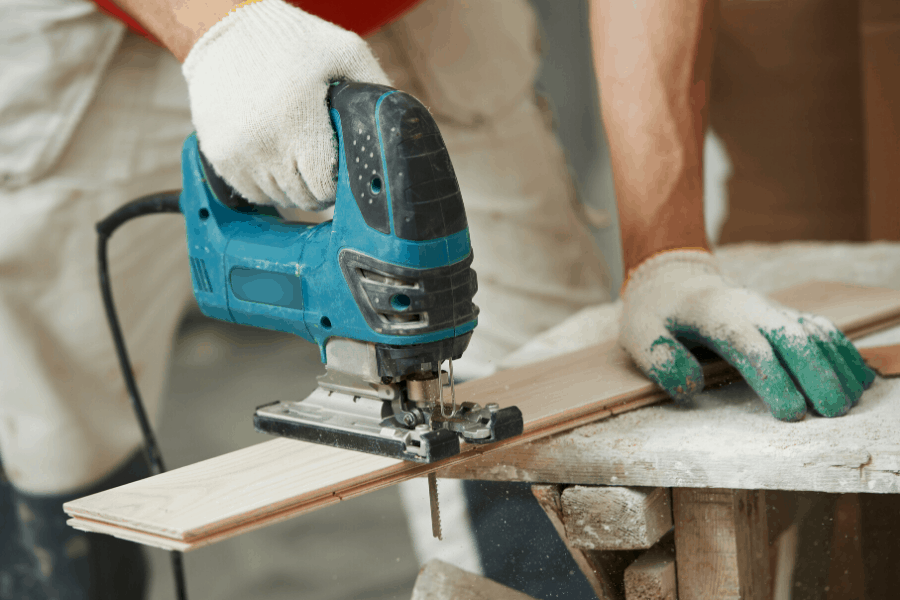
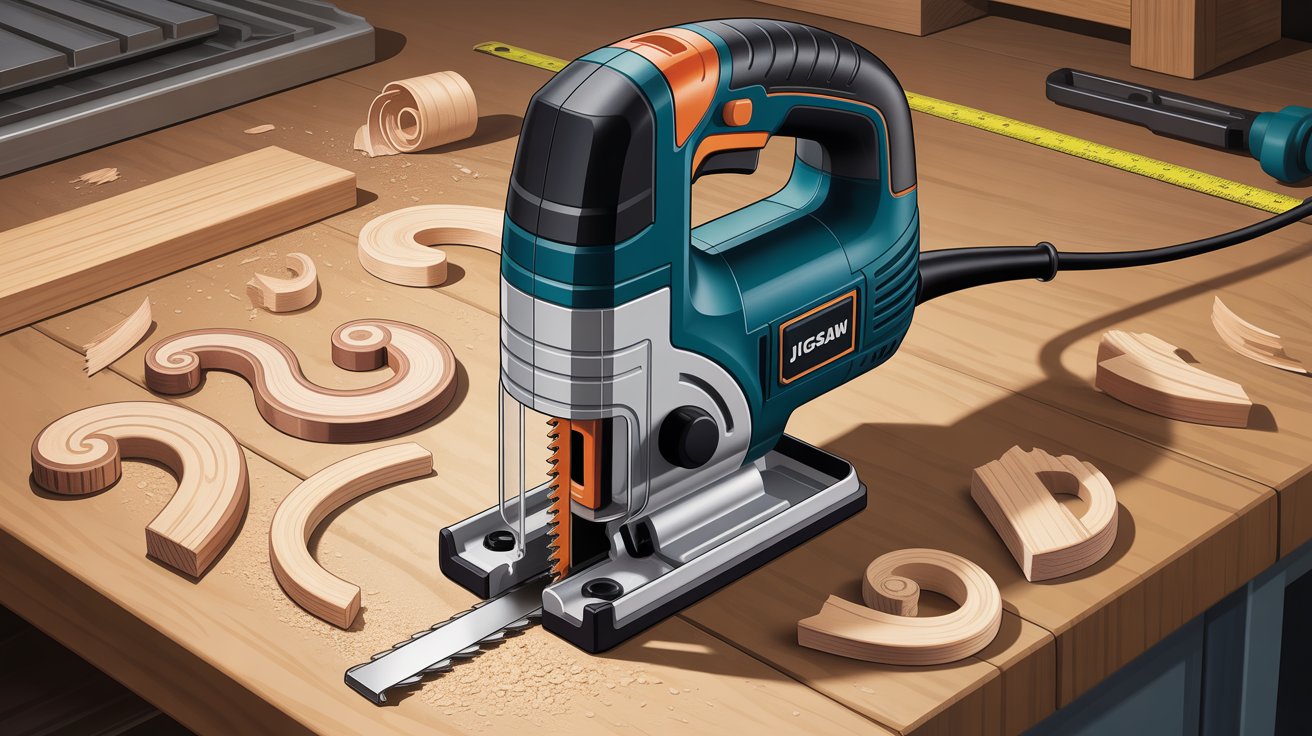
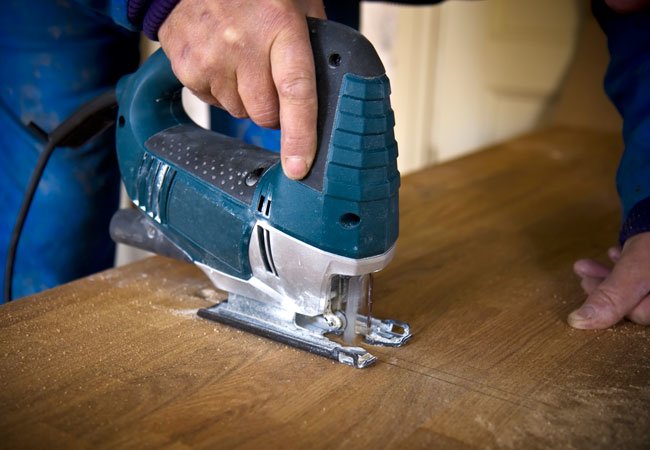
A jigsaw is a handheld power saw with a thin blade that moves up and down at high speed. The blade passes through a flat metal base called the shoe. You guide the shoe across the material while the blade follows your marked cutting line.
Wood is the most common material for jigsaw work, but the tool can do much more. With a blade made for the job, many jigsaws can also cut thin metal, plastic, laminate, and certain tile products. The material, its thickness, and the blade type all affect the result.
The main strength of a jigsaw is its ability to make shaped cuts. It can also make short straight cuts and angled cuts, but it is not the best tool for every job. Knowing where it works well helps you save time, avoid damaged materials, and make safer cuts.
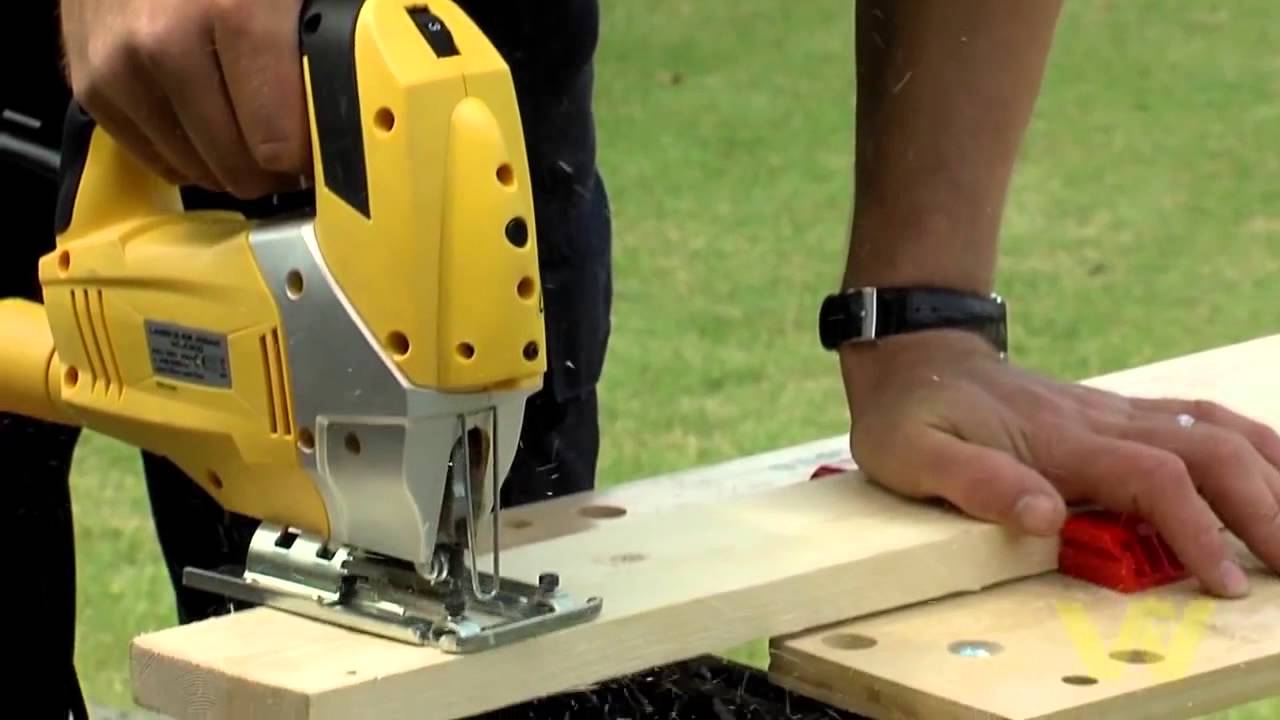
Source: YouTube > Woodie’s
What Is a Jigsaw Saw?
A jigsaw is a portable electric saw designed to cut different shapes in a workpiece. It uses a narrow blade that moves up and down in a fast, repeated motion. This movement is called reciprocating action.
Unlike a circular saw, a jigsaw does not use a large spinning blade. Its thin blade can turn along a curved path, making it useful for detailed cutting jobs. You can guide it by hand along a pencil line or a pattern marked on the material.
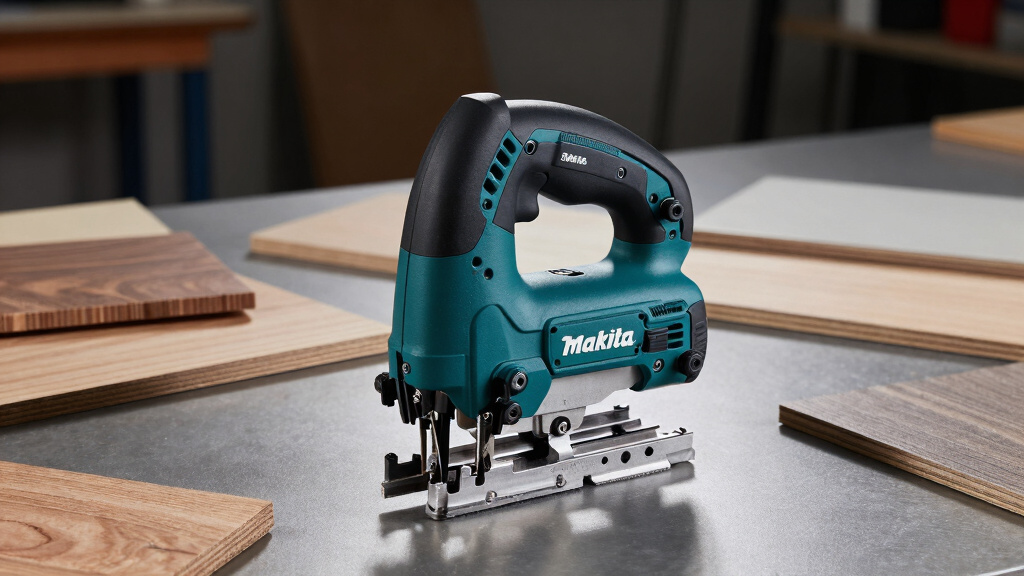
Most modern jigsaws have a handle, trigger, blade clamp, base plate, and motor. Some models also have variable speed controls, orbital settings, and adjustable shoes for angled cuts.
Source: woodhandy.com
Handle and trigger
The handle gives you control while the trigger starts the motor. Some models include a trigger lock or speed control.
Saw blade
The narrow blade moves up and down to cut through the workpiece. Different blades are made for different materials and cutting tasks.
Base plate or shoe
The flat metal base rests on the work surface and helps keep the saw stable as you guide it.
Blade clamp
This part holds the blade in place. Many modern models use a tool-free blade change system.
Speed control
This feature lets you adjust blade speed to suit the material and the type of cut.
Orbital action control
On equipped models, this setting changes how the blade moves during its cutting stroke. More orbital action can make faster but rougher cuts in suitable materials.
How Does a Jigsaw Work?
A motor inside the tool turns rotary motion into repeated up-and-down blade movement. The blade teeth remove small pieces of material as the saw moves forward. This creates a narrow cut called a kerf.
The shoe rests on the surface while you move the saw along the marked line. The blade follows the direction you guide it, which allows you to make curves, corners, and unusual shapes.
The blade must match the material. A wood blade may cut quickly through plywood, but it is not the right choice for steel. Using the wrong blade can cause poor cuts, overheating, or blade damage.
Corded and Cordless Jigsaws
A corded jigsaw runs from an electrical outlet. It can work for long periods without a battery change, but the power cord must stay clear of the blade and cutting path.
A cordless jigsaw runs on a rechargeable battery. It is useful for outdoor repairs, work on a ladder-free jobsite, and areas where an outlet is not easy to reach. Its working time depends on the battery, material, and cutting load.
What Is a Jigsaw Saw Used For?
A jigsaw is mainly used for cutting shapes that are difficult to make with a straight-cutting saw. Its narrow blade can turn around corners and follow curved lines. It is also useful for making openings in the middle of a board or panel.
Homeowners, woodworkers, furniture makers, and DIY users can use a jigsaw for many small and medium cutting tasks. It is especially helpful when a project needs a custom shape rather than a simple straight edge.
The following are some of its most common uses.
Source: homebuilding.co.uk
Cutting curves
A jigsaw can follow curved pencil lines in plywood, boards, and other suitable materials. This is useful for rounded shelves, decorative panels, and furniture parts.
Making circular cuts
It can cut circles for wooden signs, game boards, speaker openings, and other projects. A suitable guide can help improve the shape.
Making interior cutouts
It can cut openings inside a panel for sinks, vents, pipes, and electrical boxes. A starter hole usually gives the blade a safe entry point.
Trimming wood
A jigsaw can shorten boards, trim plywood, and remove unwanted sections from wooden pieces.
Cutting angled edges
A jigsaw with an adjustable shoe can make bevel cuts, often up to 45 degrees depending on the model.
Cutting metal
A suitable fine-tooth metal blade can cut certain thin metal sheets, aluminum, and other materials within the saw’s rated capacity.
Cutting plastic
A blade designed for plastic can cut suitable PVC, acrylic, and other plastic products. A controlled speed helps limit melting and rough edges.
1. Cutting Curved Shapes in Wood
Cutting curves is one of the main reasons people choose a jigsaw. Its thin blade can turn as you guide the tool around a marked shape. This makes it useful for decorative woodworking and custom furniture parts.
For example, you can use a jigsaw to make rounded table corners, curved shelf edges, wooden signs, and shaped pieces for a small cabinet. A narrow blade can handle tighter curves than a wide blade.
Mark the shape before cutting and keep the workpiece firmly supported. Avoid turning the saw too sharply, as forcing the blade can cause it to bend or break.
2. Cutting Straight Lines in Wood
A jigsaw can cut straight lines through plywood, lumber, MDF, and other wood products. It is useful for short cuts, trimming a board, or cutting a sheet to a rough size.
However, keeping a jigsaw perfectly straight over a long distance can be difficult. The narrow blade may bend during the cut, especially when you push too hard or use a blade that is not suited to the material.
For better results, attach a straightedge or use a compatible guide. For long, accurate cuts through large plywood sheets, a circular saw with a suitable guide is usually a better option.
3. Cutting Holes and Interior Openings
A jigsaw can make an opening in the middle of a board without cutting through an outside edge. This is useful for sink openings in countertops, vents in panels, and holes for speakers or other fittings.
For a standard interior cut, mark the opening and drill a starter hole inside the waste area. Make sure the hole is large enough for the blade to pass through. Insert the stopped blade into the hole, then start the saw according to its manual and follow the marked line.
Some experienced users make plunge cuts without a starter hole. This method requires a compatible blade, suitable material, and a technique approved by the tool manufacturer. Beginners should use the starter-hole method because it gives better control.
4. Making Bevel and Angled Cuts
Some jigsaws allow you to tilt the shoe so the blade cuts at an angle. This is called a bevel cut. Many models support angles up to 45 degrees, but the exact adjustment range depends on the tool.
Bevel cuts are useful for trim work, decorative edges, and angled joints. They can also help create shaped wooden parts for furniture and craft projects.
Check the angle setting before cutting. A loose or poorly locked shoe can shift during use and create an uneven edge. Test the setting on a scrap piece first.
5. Cutting Laminate Countertops
A jigsaw is often used to cut openings in laminate countertops for kitchen sinks and other fixtures. Its narrow blade can follow a marked opening that would be difficult to make with a circular saw.
The top surface of laminate can chip as the blade teeth pass through it. A fine-tooth blade or a suitable reverse-tooth blade can help protect the finished face. The correct cutting direction depends on the blade design.
Support the countertop, follow the manufacturer’s cutting instructions, and use the correct blade. Check the sink template and required clearance before making the opening. A mistake can damage an expensive countertop.
6. Cutting Custom Furniture Parts
Furniture projects often need shapes that are not easy to create with a standard straight-cutting saw. A jigsaw can help make rounded chair parts, curved cabinet panels, decorative table edges, and shaped plywood components.
You can trace a paper or cardboard template onto the workpiece before cutting. This helps you repeat the same shape on several pieces. For a smoother finish, leave a small amount of extra material and sand the edge to the final line.
What Materials Can a Jigsaw Cut?
A jigsaw can cut several types of material, but the blade must be designed for the job. The same saw may handle plywood, plastic, or thin metal when fitted with the correct blade. That does not mean every jigsaw can cut every material or thickness.
Before starting, check the tool manual for its rated cutting capacity. Also check the blade package for compatible materials and thickness limits. The following table gives a general guide, not a promise that every model can handle each task.
Source: cutterzone.com
Common Jigsaw Materials and Their Uses
Wood and wood-based panels are the most common materials for jigsaw cutting. Other materials need more care because they may chip, melt, bend, or produce harmful dust.
Plywood
Used for shelves, cabinets, signs, and craft projects. Choose a blade that suits the thickness and desired finish.
Solid wood
Used for curved furniture parts, trim, and short cuts. The blade must have enough cutting depth for the board.
MDF
Used for panels, decorative pieces, and furniture components. Control dust carefully and use suitable respiratory protection.
Plastic
Suitable plastics can be cut for panels, covers, and craft parts. Use a blade made for plastic and avoid excessive heat.
Thin metal
A metal-cutting blade can handle certain thin sheets and metal profiles within the tool’s capacity. Secure the material and protect against sharp edges.
Laminate
Used for countertop openings and panel trimming. A suitable fine-tooth or reverse-tooth blade can help reduce surface chipping.
Ceramic tile
Some jigsaws can cut certain tile products with a compatible carbide-grit or specialty blade. Ordinary wood blades are not suitable, and many tile jobs need a dedicated tile saw.
Materials That Need Extra Care
A jigsaw is not automatically suitable for every building material. Glass, thick stone, concrete, and very hard materials generally require other tools and methods. Even when a specialty blade exists, the saw manufacturer must approve the intended use.
Avoid cutting materials that may contain asbestos or other hazardous substances unless they have been properly identified and the work is handled under the right safety controls. Old building panels, flooring, and insulation can contain hazardous materials.
How to Choose the Right Jigsaw Blade
The right blade has a major effect on the quality, speed, and safety of a jigsaw cut. A suitable blade cuts with less strain and gives you better control. A poor blade choice can cause rough edges, slow progress, or damage to the material.
Jigsaw blades differ in material, tooth shape, length, width, and teeth per inch. Teeth per inch is often shortened to TPI. It describes how many teeth appear along one inch of the blade.
Source: YouTube > Training Hands Academy
Wood-cutting blades
These usually have larger, more widely spaced teeth. They are designed to remove wood quickly.
Metal-cutting blades
These generally have finer teeth that can cut thin metal without aggressive grabbing.
Plastic-cutting blades
These are designed to reduce rough edges and help control heat while cutting suitable plastics.
Laminate blades
Fine-tooth and reverse-tooth designs can help reduce chipping on finished surfaces.
Carbide-grit blades
These are used for certain abrasive or hard materials when the blade and saw are rated for the application.
Understanding Teeth Per Inch
TPI affects how quickly a blade cuts and how smooth the edge may look. A lower TPI blade usually removes material faster but can leave a rougher edge. A higher TPI blade usually cuts more slowly and can provide a finer finish.
There is no single TPI value that works for every project. Check the blade manufacturer’s material and thickness recommendations before choosing.
Lower TPI
Often useful for faster, rougher cuts in thicker wood.
Higher TPI
Often useful for thinner materials and cleaner cuts, including suitable metal work.
Straight Blades and Narrow Blades
A wider blade is generally more stable for straight cutting. A narrow blade can turn more easily around tight curves. However, a narrow blade may be more likely to bend if you force it through the material.
Blade length also matters. The blade must have enough usable cutting length to pass through the full thickness of the workpiece without contacting the support below.
T-Shank and U-Shank Blades
T-shank and U-shank describe common blade mounting styles. Many newer jigsaws use T-shank blades, while some older tools use U-shank designs. Compatibility is not universal, so check the tool manual before buying replacement blades.
How to Use a Jigsaw Saw for Better Results
Using a jigsaw starts with choosing the correct blade and securing the material. A clear cutting line and stable work surface help you guide the saw without forcing it. Good preparation is often more important than cutting speed.
If you are new to the tool, practice on a scrap piece of the same material before working on the final project. This helps you learn how the saw moves and how much pressure to use.
Source: Bob Vila
Step 1: Prepare the Work Area
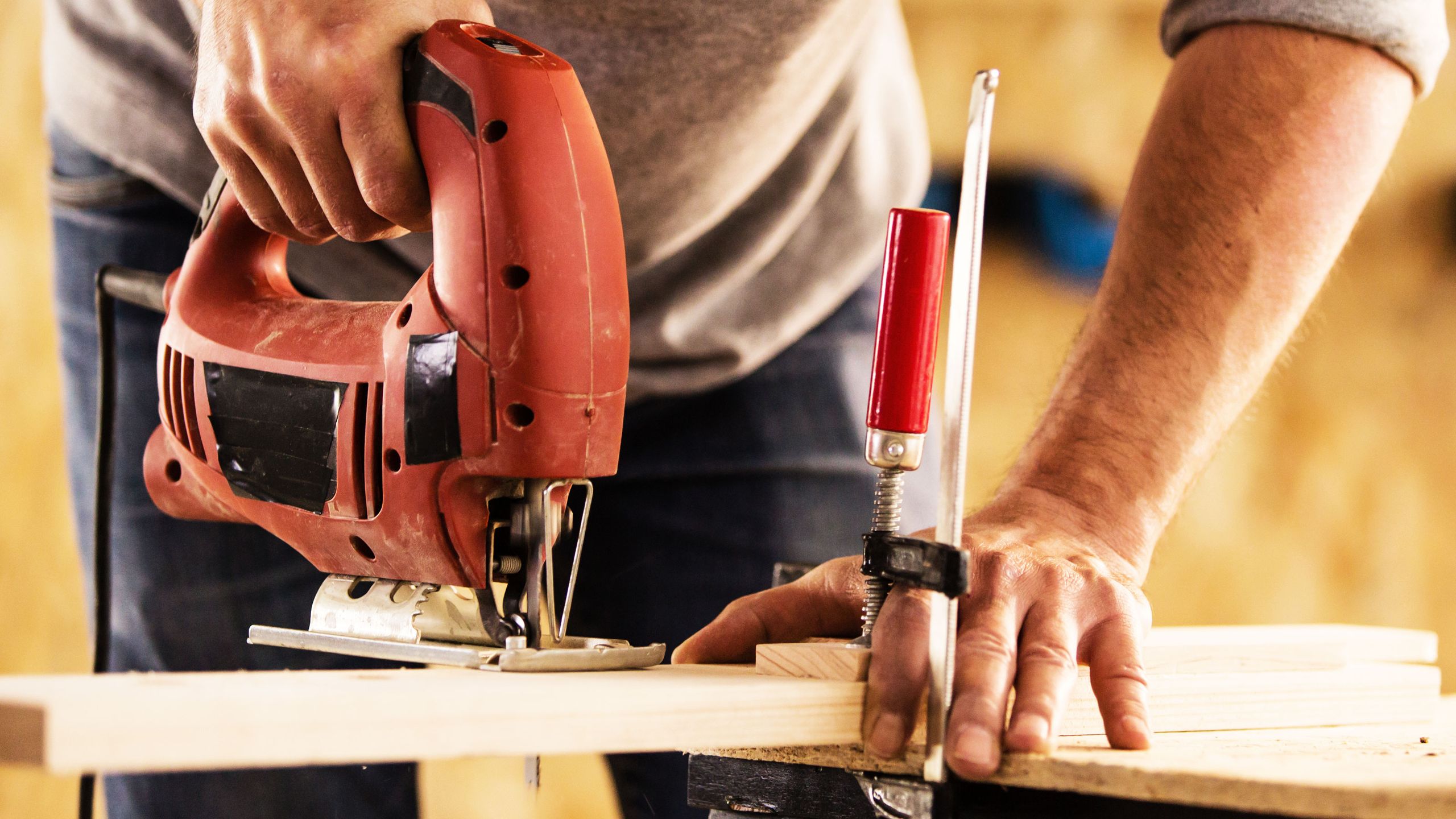
Set up the workpiece on a stable bench or suitable supports. Make sure the section you plan to cut can move freely without falling or pinching the blade. Keep children, pets, and other people away from the cutting area.
Check that the work surface is clear. If you use a corded saw, place the cable away from the blade and your path of movement. For cordless models, check that the battery is properly fitted.
Secure the material
Use suitable clamps to prevent the workpiece from moving during cutting.
Wear protection
Use safety glasses and suitable hearing protection. Add respiratory protection when the material and dust hazard require it.
Check the tool
Look for a damaged cord, loose parts, a bent blade, or a damaged shoe before use.
Step 2: Mark the Cutting Line
Use a pencil, ruler, square, or template to mark the desired shape. For curved cuts, draw the complete curve so you can see where the blade needs to travel.
If the finished surface must remain clean, consider the blade’s cutting direction. Many standard jigsaw blades cut on the upstroke and may splinter the top face. A suitable reverse-tooth blade can help protect that face, but follow its instructions.
Step 3: Install the Correct Blade
Disconnect the power or remove the battery before changing the blade. Follow the manufacturer’s instructions to release the blade clamp and fit the new blade.
Make sure the blade is fully seated and locked. Never use a bent, cracked, or damaged blade. Check that the blade is long enough for the material thickness.
Step 4: Set the Speed and Cutting Action
Choose a speed that matches the material and blade. Some materials need slower, more controlled cutting. Others can handle a faster setting.
If your jigsaw has orbital action, use the manufacturer’s guidance. A low or zero setting is often useful for cleaner cuts, metal, and tight curves. A higher setting may help speed up rough cuts in suitable wood.
Step 5: Start the Cut
Place the shoe flat against the workpiece with the blade clear of the material. Hold the saw firmly and start it before guiding the blade into the cutting line, unless the approved technique for the specific cut requires another method.
Move the saw forward at a steady pace. Let the teeth do the cutting. Do not push hard to make the saw move faster, because this can bend the blade and create an uneven cut.
Step 6: Follow the Cutting Line
Keep your eyes on the marked line and guide the saw with steady movements. For curves, turn the tool gradually instead of twisting the blade sharply. If the blade begins to bind, stop and check the material support and cutting path.
Do not lift the saw while the blade is still moving through the workpiece. Wait until the blade stops before removing or repositioning the tool.
Step 7: Finish and Inspect the Cut
Release the trigger and wait for the blade to stop completely. Disconnect the power or remove the battery before handling the blade or making adjustments.
Check the cut for rough edges, splinters, or areas that need sanding. If the edge is uneven, identify the cause before repeating the cut. A suitable guide, sharper blade, or slower feed may improve the next attempt.
When Should You Use a Jigsaw Instead of Another Saw?
A jigsaw is the better option when the job needs a curve, an interior opening, or a custom shape. Other saws are often better when the main goal is a long, straight, or highly precise cut.
Choosing the right saw can make a project easier. It can also reduce wasted material and the amount of sanding needed after cutting.
Source: sawshub.com
Jigsaw vs. Circular Saw
A jigsaw uses a narrow reciprocating blade and can follow curves. A circular saw uses a rotating circular blade and is better suited to long, straight cuts through lumber and sheet materials.
Choose a jigsaw for a rounded shelf, sink opening, or irregular plywood shape. Choose a circular saw for cutting a large plywood sheet into straight sections.
Jigsaw vs. Band Saw
A band saw uses a continuous moving blade and is often used for curved cuts in wood. It is a stationary machine in many workshop setups, so the workpiece is moved through the blade.
A jigsaw is portable and can be used on larger panels or materials that are difficult to move to a stationary machine. A band saw may offer better control for repeated curves in smaller workpieces.
Jigsaw vs. Scroll Saw
A scroll saw is designed for fine, detailed work and intricate patterns. It can handle small shapes and delicate cuts that require close control.
A jigsaw is better suited to larger workpieces and general DIY cutting. It is not usually the first choice for very small decorative patterns.
Jigsaw vs. Reciprocating Saw
A reciprocating saw is often used for demolition, rough cutting, and work in tight spaces. Its blade moves back and forth in a longer stroke and is designed for a different type of job.
A jigsaw offers more control for shaped cuts and finished edges. A reciprocating saw is usually better for rough removal work, such as cutting old framing or removing sections of pipe when the task and material allow it.
Common Jigsaw Problems and How to Fix Them
A jigsaw may produce rough edges, wander away from the cutting line, or struggle to pass through thick material. These problems often come from the wrong blade, poor support, excessive pressure, or an unsuitable cutting speed.
Stop the tool before inspecting the blade or workpiece. Never try to correct a moving blade with your hands.
Source: topwoodworkingadvice.com
The blade bends during cutting
Possible causes include pushing too hard, using a narrow blade for a long straight cut, or cutting material that is too thick. Use a suitable blade, reduce pressure, and check the tool’s cutting capacity.
The cut is rough or splintered
A coarse blade, incorrect cutting direction, or excessive orbital action may cause a rough finish. Try a suitable fine-tooth or reverse-tooth blade and test it on scrap material.
The saw moves away from the line
The blade may be dull or bent, or you may be turning too quickly. Replace a damaged blade and guide the tool at a steady pace.
The blade gets hot
Excessive pressure, a dull blade, or an unsuitable speed may cause overheating. Stop the saw, allow the blade to cool, and check the material and blade instructions.
The material vibrates
The workpiece may not be clamped firmly or supported correctly. Stop cutting and secure it before continuing.
The blade gets stuck
The cut may be closing around the blade, the material may be poorly supported, or the blade may be unsuitable. Switch off the saw and wait for the blade to stop before investigating.
How to Get a Cleaner Jigsaw Cut
A clean cut starts with the right blade. Use a blade made for the material and choose a tooth pattern that matches the thickness and finish you need.
Keep the shoe flat on the workpiece and avoid forcing the saw. A straightedge can help with short straight cuts, while a template can help guide repeated curved shapes.
If the finished edge needs to be very smooth, leave a small amount of extra material and sand carefully to the final line. This is often easier than trying to make a perfect edge in one fast cut.
Use a sharp blade
A worn blade may cut slowly, heat up, and leave rough edges.
Support the workpiece
Stable support reduces vibration and helps prevent the material from moving.
Use a guide when needed
A compatible guide or straightedge can improve control during straight cuts.
Test before the final cut
A scrap piece helps you check the blade, speed, and cutting direction.
Jigsaw Safety Tips Every User Should Follow
A jigsaw is a useful power tool, but its moving blade can cause serious cuts. Safe operation starts before the motor runs. Read the tool manual and follow the safety instructions for your exact model.
Never hold a small workpiece close to the blade with your fingers. Use clamps and proper supports instead. Keep your hands outside the cutting path and do not reach under the material while the blade is moving.
Wood dust, metal fragments, and flying chips can also cause harm. Use suitable protective equipment and keep the work area clean.
Source: lowes.com
Wear safety glasses
Eye protection helps guard against flying chips, dust, and broken blade fragments.
Use hearing protection
A jigsaw can produce enough noise to make hearing protection useful, especially during longer jobs.
Control dust
Use suitable dust extraction or respiratory protection when the material creates hazardous or irritating dust.
Secure the workpiece
Use clamps or an appropriate work support so the material cannot shift during cutting.
Keep the blade path clear
Check for nails, screws, hidden wires, pipes, and other objects before cutting.
Disconnect before changing blades
Unplug corded models or remove the battery before changing blades, cleaning, or adjusting the tool.
Wait for the blade to stop
Do not lift the saw or touch the blade while it is still moving.
Keep the cable away
For corded tools, keep the power cable behind and away from the cutting area.
Can Beginners Use a Jigsaw?
A beginner can learn to use a jigsaw with proper instruction, preparation, and supervision where needed. Its small blade and handheld design make it useful for many basic DIY tasks, but it is still a powered cutting tool.
Start with a simple straight cut in a securely clamped scrap board. Learn how the trigger, speed control, and blade behave before trying curves or interior openings.
Do not attempt difficult cuts in expensive materials until you have practiced. If a job involves hidden electrical wiring, plumbing, hazardous materials, or an unfamiliar structural component, get qualified help.
What Should You Never Do With a Jigsaw?
Never force the blade through a workpiece, operate the saw with a damaged blade, or cut material that exceeds the tool’s rated capacity. Do not use a jigsaw for a task that the manufacturer does not approve.
Never make adjustments while the blade is moving. Avoid loose clothing, jewelry, and unsecured hair that could come near the blade. Keep bystanders away from the work area.
Is a Jigsaw Saw Worth Having in a Home Workshop?
A jigsaw can be a useful addition to a home workshop if you often work with wood panels, furniture parts, or DIY repairs. It handles many shaped cuts without requiring a large stationary machine.
For homeowners in the United States, common projects include trimming cabinet panels, cutting plywood shelves, shaping wooden signs, and making openings for fixtures. A jigsaw can also help with small repair jobs involving suitable plastic or thin metal.
However, it should not replace every other saw. If most of your work involves long, straight cuts through lumber or large plywood sheets, a circular saw may be a more useful first purchase.
Source: onevantool.com
Useful for DIY projects
It can handle many household cutting jobs, including custom shelves, trim, panels, and decorative pieces.
Easy to move around
Its portable design makes it practical for work in a garage, workshop, or suitable jobsite.
Supports different materials
With compatible blades, many models can cut several materials within their rated limits.
Requires suitable blades
Different jobs may require different blades, so blade selection and maintenance are part of owning the tool.
Has limits on precision
Long straight cuts and very fine decorative work may be easier with other types of saws.
Who Benefits Most From a Jigsaw?
DIY homeowners can use a jigsaw for small repairs and home improvement projects. Woodworkers can use it to shape panels and prepare custom parts. Furniture makers may find it useful for cutting curves and roughing out decorative components.
It is also useful for people who work with different sheet materials and need a portable tool. The value depends on the type of work you do, not simply on how many features the saw has.
When Is Another Saw a Better Choice?
Choose a circular saw for long, straight cuts. Choose a table saw for repeated, controlled cuts in suitable workshop setups. A band saw or scroll saw may be better for specialized curved work, depending on the size and detail of the project.
For tile, masonry, and thick metal, use equipment designed for those materials. The correct tool helps produce a better result and reduces unnecessary risk.
Frequently Asked Questions
Q
What is the main purpose of a jigsaw saw?
The main purpose of a jigsaw is to cut curves, circles, irregular shapes, and interior openings in materials such as wood and suitable sheet products. It can also make short straight cuts and angled cuts.
Q
Can a jigsaw cut a straight line?
Yes. A jigsaw can cut straight lines in wood, plywood, plastic, and other suitable materials. However, its narrow blade can bend, so it may be harder to keep a long cut perfectly straight. A guide can improve control, while a circular saw is often better for long straight cuts.
Q
Can a jigsaw cut metal?
Yes, many jigsaws can cut certain thin metals when fitted with a compatible metal-cutting blade. The blade must match the metal type and thickness, and the material must be securely supported. Always check the saw manufacturer’s cutting limits.
Q
Can a jigsaw cut plywood?
Yes. Plywood is one of the common materials for jigsaw work. You can use it to cut shelves, signs, cabinet parts, curves, and custom shapes. Choose a suitable blade and support the sheet to reduce vibration and splintering.
Q
Can a jigsaw cut thick wood?
A jigsaw can cut wood within its rated cutting capacity, but thick material may be difficult to handle. The blade must be long enough, and the saw must be suitable for the job. For thick lumber, a circular saw or another suitable cutting tool may offer better control.
Q
Can a jigsaw cut a circle?
Yes. A jigsaw can cut circles in suitable wood and sheet materials. Mark the circle, drill a starter hole inside the waste area, and insert the blade. A compatible circle-cutting guide can help produce a more even shape.
Q
What is the difference between a jigsaw and a circular saw?
A jigsaw has a narrow blade that moves up and down. It is useful for curves, openings, and custom shapes. A circular saw has a rotating round blade and is generally better for long, straight cuts through lumber and sheet materials.
Q
Can a jigsaw cut plastic pipes?
Some jigsaws can cut suitable plastic pipes when fitted with the correct blade. Check the pipe material and tool instructions first. Secure the pipe so it cannot roll or move, and use a controlled cutting speed to help prevent melting.
Q
Do you need a drill to use a jigsaw?
No. A drill is not needed for ordinary cuts that start at an outside edge. However, a drill is useful when making an interior opening because a starter hole gives the jigsaw blade a place to enter the material.
Q
Can a jigsaw cut at a 45-degree angle?
Many jigsaws have an adjustable shoe that allows bevel cuts up to 45 degrees. The exact angle range depends on the model. Check the manual and test the setting on scrap material before cutting your final workpiece.
✦ Wrapping Up
Conclusion
A jigsaw saw is used for cutting curves, circles, short straight lines, angled edges, and custom shapes in wood and other suitable materials. It is especially useful for projects that need detailed cuts or interior openings. With the right blade, many models can also cut plastic, laminate, and certain thin metals.
The tool works best when you match the blade to the material, support the workpiece, and guide the saw without forcing it. It is not the best choice for every cutting job, especially long, precise straight cuts or materials outside its rated capacity.
Whether you are making a wooden shelf, trimming a countertop, shaping a furniture part, or working on a home repair, a jigsaw can help you make cuts that are difficult with larger saws. Good preparation and safe operation make the biggest difference.
💡 Key Takeaway
Before your next project, check the material thickness, choose a compatible jigsaw blade, mark the cutting line, and secure the workpiece. Practice on scrap material first, wear suitable protective equipment, and use another saw when the job requires long, precise straight cuts.