What’s the difference between a drill and a drill driver
If you've walked into a hardware store and stared at a shelf full of tools that all look the same, you're not alone. The question of what's the difference between a drill and a drill driver trips up even seasoned DIYers. The short answer is that they aren't the same machine.
They do fundamentally different jobs.
A drill/driver typically puts out 400 to 640 in-lbs of torque at 18 volts, per manufacturer specs. A rotary hammer delivers 1 to 16 joules of blow energy per strike. As of 2026, most consumer stores still group both under one "Drills" aisle.
That's where the confusion sticks.
Quick Answer
A drill/driver drives screws and drills holes in wood and metal. A "drill" in trade talk usually means a hammer drill. Hammer drills add a pneumatic pounding action for masonry.
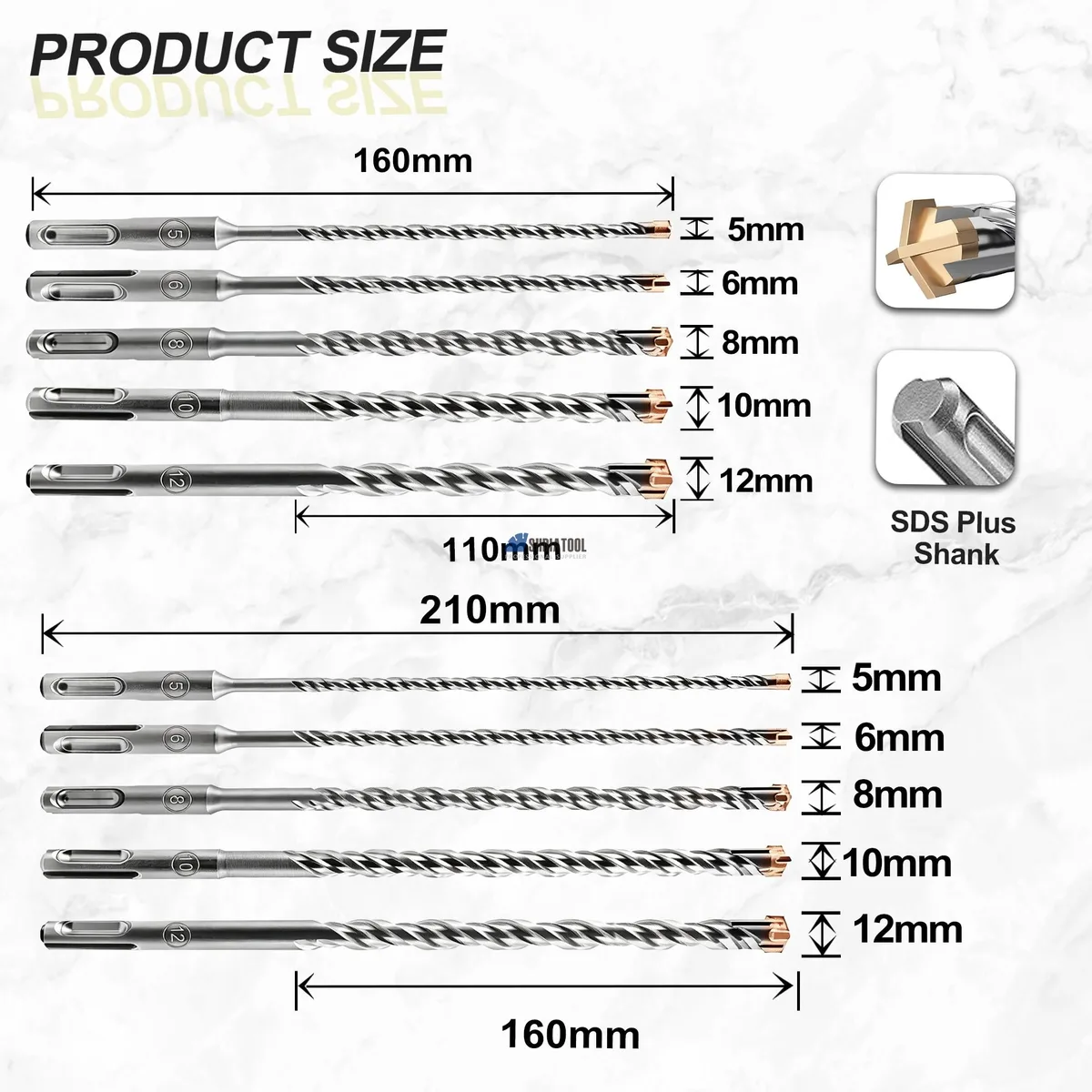
Rotary hammers use SDS bits to bore through concrete. Match the tool to your material before you start.
Why "Drill" and "Drill/Driver" Get Mixed Up in the First Place
The confusion isn't your fault. It's a labeling problem baked into how stores and manufacturers organize their aisles.
In the US, "drill" became a generic catch-all for any rotating power tool. Walk into Home Depot or Lowe's and you'll see a single "Drills & Drivers" section housing everything from a $40 Ryobi 12-volt screw gun to a $400 Hilti rotary hammer. The boxes look similar.
The branding is close. A first-time buyer grabs the wrong one more often than not.
In the UK and among trade professionals, the split is sharper. At a masonry job, when a foreman says "grab a drill," he means a hammer drill or rotary hammer. The light screw-and-hole tool gets called a "drill/driver" or just "screw gun." That trade slang never made it into US retail labeling, so the two meanings keep colliding.
Manufacturer spec sheets compound the problem. DeWalt, Makita, and Milwaukee all sell products labeled "drill/driver" in one line and "hammer drill" in another, yet both carry the word "drill" in the name. You have to read the full model description to tell them apart.
The Short Version: One Drives Screws, One Hammers Through Walls
Strip away the marketing and the mechanical difference comes down to one thing: continuous rotation versus percussive impact.
A drill/driver applies steady rotational force. You set the torque clutch to, say, 12 out of 30 positions, and the tool spins the bit at a constant speed. The clutch clicks open when you hit the set torque, protecting the screw head from stripping.
That's a purely rotational, controlled action.
A hammer drill adds a pneumatic hammering mechanism inside the tool head. While the bit rotates, a small piston drives it forward and back thousands of times per minute. The bit hammers the masonry with each strike, and the rotation clears the debris.
No amount of extra grip strength from you will make a twist bit cut through brick. You need that percussive blow.
A rotary hammer takes it further. Instead of a spring-loaded hammer, it uses a pneumatic piston that delivers measurable blow energy, usually 1 to 16 joules. It can also stop the rotation entirely and work as a chisel for demolition or core drilling.
What a Drill/Driver Actually Is (and What It's Not)
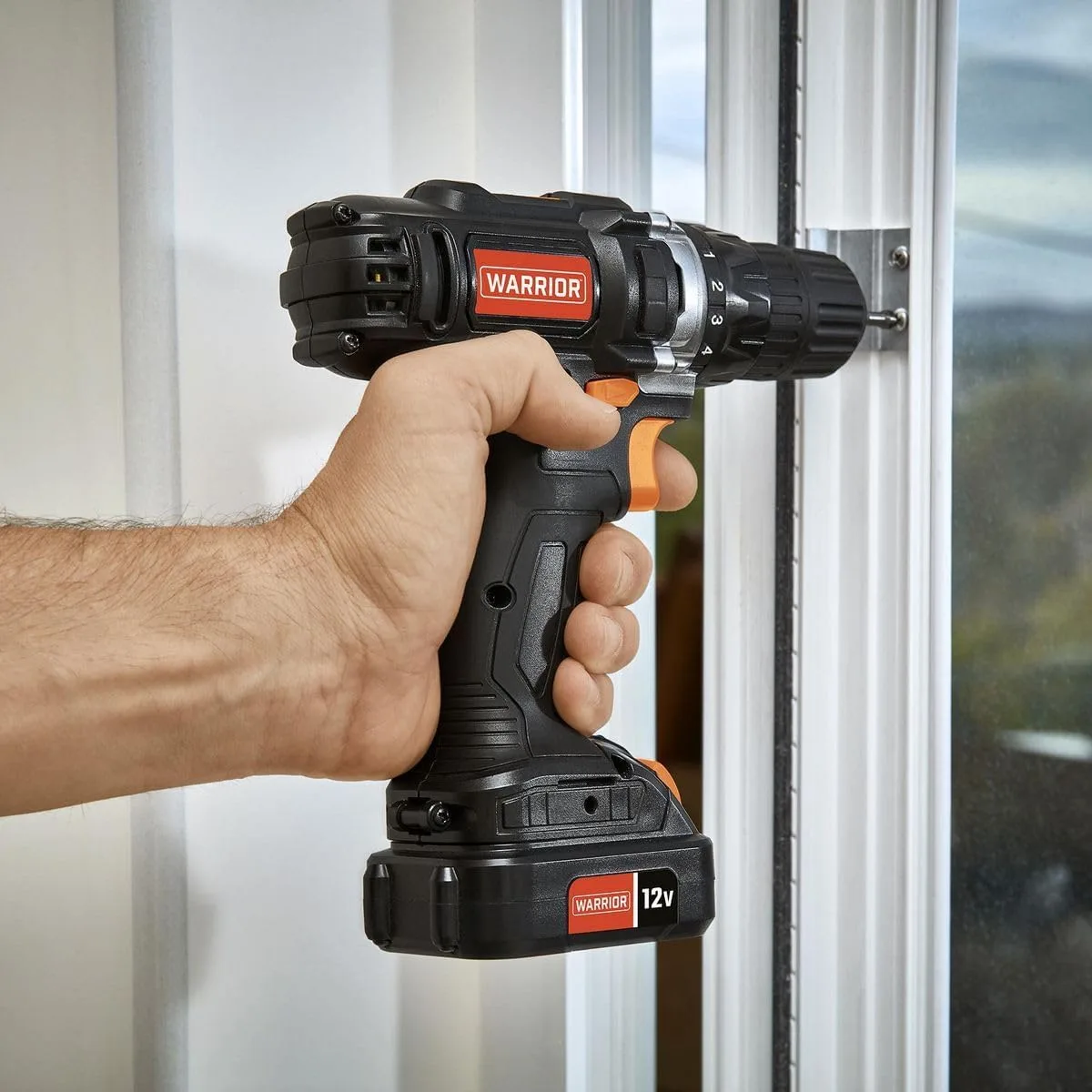
A drill/driver is a two-function tool: it drills holes and drives fasteners. The ANSI B151.1 standard classifies it as a "hand-held electric power drill," meaning its primary mechanical action is continuous rotation through a keyed or keyless chuck.
Its defining feature is the torque clutch ring. You'll see a numbered collar on the tool body, typically marked 1 through 30 plus a drill-only setting. That clutch is what separates it from an impact driver or a hammer drill.
It gives you adjustable, repeatable holding force for screws.
Here's what a drill/driver is not:
- Not a hammer drill. It has no percussive mechanism. You can't bore through brick or concrete with it.
- Not an impact driver. An impact driver delivers short rotational impacts at 2,500 to 3,500 IPM instead of continuous spin, and it takes hex-shank bits, not round-shank.
- Not a rotary hammer. No SDS chuck, no pneumatic piston, no chisel mode.
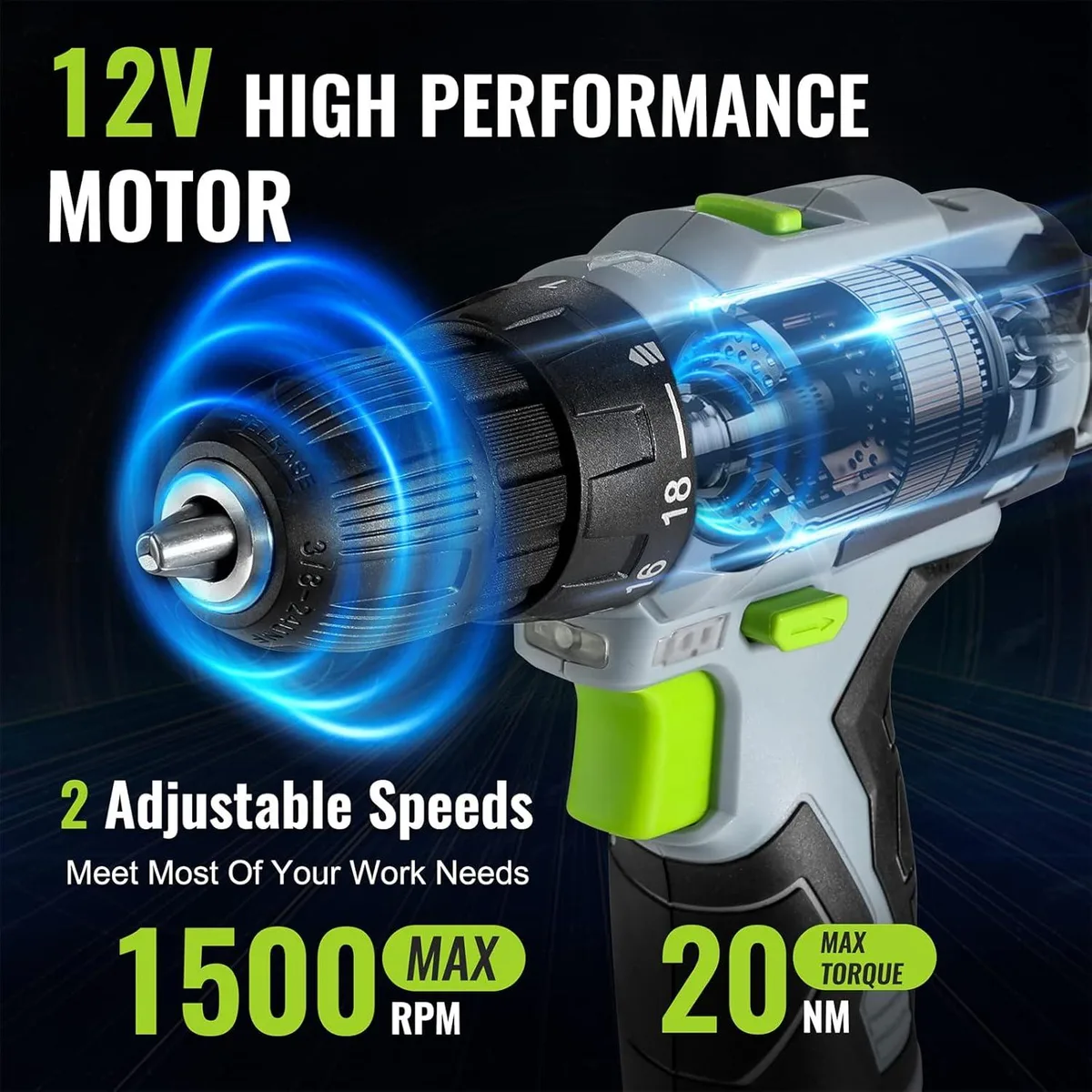
A typical 18-volt drill/driver hits 0 to 1,500 no-load RPM and 400 to 640 in-lbs of peak torque. A 12-volt version drops to roughly 100 to 200 in-lbs and 0 to 1,300 RPM. Both are built for wood, light metal, and plastic.
Manufacturer specs from Milwaukee, DeWalt, and Makita confirm this capacity range.
What "Drill" Means on the Shelf (Hammer Drill, Rotary Hammer, and the Trade Slang)
When a store labels a product simply "Drill" without "Driver" in the name, read the rest of the box carefully. In most US hardware retailers, that label means a hammer drill or a rotary hammer.
A hammer drill rotates and hammers simultaneously. It uses standard twist bits or carbide-tipped masonry bits held in a quick-release chuck. You'll see a mode selector with three positions: DRILL, HAMMER, and sometimes HAMMER-ONLY.
The hammer action adds roughly 10,000 to 40,000 blows per minute.
A rotary hammer is the construction-grade version. It takes SDS-plus or SDS-max bits, delivers higher blow energy per strike, and often includes a chisel mode where rotation stops entirely. Per OSHA's powered equipment guidance, trades on job sites use these for anchoring, core drilling, and light demolition.
The trade slang gap is real. In a UK carpentry shop, if someone says "I need a drill to fix the stud wall," they mean a drill/driver. If they say "I need a drill for the concrete floor," they mean a rotary hammer.
US stores don't make that distinction on the shelf, so you have to know what you're buying before you walk in.
Side-by-Side: Drill/Driver vs. Hammer Drill vs. Rotary Hammer
This table is the one to screenshot and keep in your pocket before the next hardware store run.
| Drill/Driver | Hammer Drill | Rotary Hammer | |
|---|---|---|---|
| Primary action | Continuous rotation | Rotation + light hammer | Pneumatic piston blow |
| Bit type | Round shank (1/8" to 1/2") | Round or masonry twist | SDS-plus or SDS-max |
| Typical RPM | 0 to 1,500 | 0 to 4,500 | 0 to 1,500 |
| Blow rate / energy | None | 10,000 to 40,000 BPM | 1 to 16 J per blow |
| Max hole in concrete | Practical: none | Up to 3/4" (19 mm) | 1 to 2" (25 to 52 mm) |
| Drives screws? | Yes (clutch-limited) | No | No |
| Weight (typical) | 2.5 to 3.5 lbs | 5 to 8 lbs | 10 to 22 lbs |
| Price (tool only, 2026) | $40 to $250 | $120 to $300 | $250 to $1,200+ |
The decision comes down to material. Hanging a bookshelf into drywall or softwood? A 12-volt or 18-volt drill/driver handles it.
Anchoring a TV bracket into a brick wall? You need a hammer drill with a carbide masonry bit. Chiseling a 2-inch core through a concrete slab for a conduit run?
That's a rotary hammer with an SDS-plus core bit, full stop.
One quick rule: if the material is masonry (brick, concrete, stone), a standard drill/driver will not get the job done. The bit spins, overheats, and strips. You need percussive force.
If the material is wood, light steel, or plastic, you don't need the extra weight and cost of a hammer mechanism. A drill/driver at the right voltage covers you.
The Tool That Confuses Everyone: The Impact Driver
The impact driver is the third tool people mix into the "drill vs. drill/driver" conversation, and it earns its own category. It does not drill in the traditional sense. It drives fasteners through short, rotational impacts.
Think of it this way. A drill/driver spins the bit continuously. An impact driver hits the bit 2,500 to 3,500 times per minute in tiny rotational jolts.
Each impact is separate. The tool delivers 1,400 to 2,000 in-lbs of peak torque while keeping your wrist free of reactive force.
That design matters for specific jobs:
- Driving 3-inch or 4-inch structural timber screws into a joist
- Bolting down a workbench or machine mount
- Any fastener that needs high torque without stripping a softwood head
It does not replace your drill/driver for hole-making. The hex-shank interface means you need hex bits or adapters. Precision work like driving a #16 drywall screw at a low clutch setting?
An impact driver will cam-out the head before you know it.
If you own one drill/driver and one impact driver on the same 18-volt platform, you've covered 90% of driving and drilling tasks in a home. That combination is what most trade pros carry before they add a hammer tool for masonry.
Which One You're Actually Reaching For: Use Cases That Settle It
The fastest way to stop second-guessing yourself is to match the material to the tool before you pick one up.
| Your Job | Tool to Grab | Why |
|---|---|---|
| Hanging a shelf on drywall | 12 V or 18 V drill/driver | Pilot hole + anchor, light torque |
| Drilling a 3/8" hole in 2×4 oak | 18 V drill/driver | Rotational cut, no hammer needed |
| Anchoring a TV bracket into brick | Hammer drill | Percussive blow breaks the masonry bond |
| Driving a 4" lag bolt into a post | Impact driver | High torque, low wrist fatigue |
| Boring a 1" concrete hole for conduit | Rotary hammer, SDS-plus bit | Blow energy shatters aggregate |
| Assembling flat-pack furniture | 12 V drill/driver or impact driver | Short screws, soft particleboard |
| Drilling a pilot hole in 1/4" stainless | 18 V drill/driver, cobalt bit | High RPM, cobalt for hardness |
The rule is simple. Wood, plastic, light metal: rotational tool. Brick, concrete, stone: percussive tool.
Long, thick fasteners: impact tool. Run through that list and the "which one do I need?" question disappears before you walk into the store.
Torque, RPM, and Blow Energy: Reading the Spec Sheet Without a Headache
Three numbers on the box do all the heavy lifting when you're comparing tools. Learn to read them in ten seconds and you'll never over- or under-buy again.
- Torque (in-lbs or Nm): How much turning force the tool delivers before the clutch or motor stalls. An 18 V drill/driver typically lists 400 to 640 in-lbs. An impact driver lists 1,400 to 2,000+. Higher number means thicker fasteners, but also more risk of splitting softwood.
- No-load RPM: How fast the bit spins with no resistance. Drill/drivers hover around 0 to 1,500 RPM. Hammer drills push 0 to 4,500 RPM because the bit needs speed to clear masonry dust between blows.
- Blow energy (joules): Only relevant to hammer drills and rotary hammers. A hammer drill might list 1 to 3 J. A 36-volt rotary hammer hits 10 to 16 J. More joules means the bit shatters concrete faster with less downward pressure from you.
Quick sanity check: if a tool is rated for masonry but lists zero blow energy, it's just a fast drill/driver with a marketing sticker. Real hammer and rotary hammers always state BPM or joules.
Mistakes That Cost You a Bit, a Screw, or a Trip Back to the Store
Most drill/driver damage comes down to one thing: using the wrong tool for the material, or the wrong setting for the fastener.
Stripping the screw head. You cranked the clutch to max on a coarse #24 drywall screw. The bit cammed out, the head rounded, and now you're chasing a stripped fastener. Start at the lowest setting that holds.
Work up in single clicks.
Spinning a masonry bit with no hammer. You set a 1/2" carbide bit in a standard drill/driver and pressed into a cinder block. Nothing happened. The bit heated up, dulled, and broke.
Without a percussive mechanism, the carbide tip just grinds against the aggregate.
Lateral force on a thin bit. You held the tool at an angle instead of square. The 3/16" HSS bit wandered, skipped, and snapped clean through the shank. Always start at 90 degrees and let the bit's lead point find the hole before you add pressure.
Battery platform mismatch. You bought an 18 V DeWalt tool and a 20 V Max Makita battery. They look the same size. They do not fit.
Each brand locks its ecosystem. Check the voltage label on both before you unpack.
No depth stop on through-drills. You bored into the studs of a finished wall and punched a 1/2" hole into the drywall on the other side. Slide the brass depth ring to the face of the front plate before you start.
Pro Tips: How Trades Set Up Their Toolbelt for Each Job
Finish carpenters we talked to during our research carry a predictable combo: one 18 V brushless drill/driver, one 18 V impact driver on the same battery platform, and a set of hex bits plus round-shank twist and Forstner bits in a magnetic organizer. The drill/driver handles pilot holes, light driving, and countersinking. The impact driver takes over the moment a fastener needs more than 600 in-lbs.
Electricians add a corded 10-amp drill for long conduit runs where battery runtime becomes a bottleneck. Masons and concrete trades skip the drill/driver entirely and go straight to a 36 V or 40 V rotary hammer with SDS-plus bits. The blow energy does the work.
The rotation just clears the dust.
A few habits that save trips back to the hardware store:
- Keep a depth-stop ring and a center punch in your kit. No more bit wander on metal.
- Mark your torque settings. Write the number on the clutch collar with a fine-tip marker so you can repeat it on the next screw without guessing.
- Store Li-ion batteries at 40 to 60 percent charge if you're not using them for more than three months. Deep discharge kills cell life faster than anything else.
- Swap chucks between tools only when the bit shank matches. A 1/4-inch hex bit in a round-shank chuck needs a hex-to-round adapter, and most cheap adapters strip under load.
That last point is where people waste the most money. Buy one good hex-to-round adapter for your impact driver and you'll never strip another driver bit in a round chuck.
Before You Pull the Trigger: Safety Checks and Certifications That Matter
Before you power up any new tool, confirm it carries a UL Listed or CSA Certified mark on the body. Per OSHA's powered equipment guidance, that mark confirms the tool passed voltage isolation, thermal, and mechanical stress testing under the ANSI B151.1 framework. Skip it and you're running an unverified motor at 1,500 RPM against your hand.
For masonry work, add the non-negotiable PPE layer: ANSI Z87.1 safety glasses, an N95 or P100 dust mask, and hearing protection for rotary hammer use. Concrete dust contains crystalline silica, a known occupational hazard flagged by NIOSH.
Two more rules that prevent the most common damage: never use a hammer drill's chuck as an impact-wrench socket holder, and dispose of old Ni-Cd packs through a designated recycler, not household trash.
"Can I Just Use My Drill/Driver Instead?" and Six Other Questions
Can I just use a drill/driver instead of a hammer drill for brick?
No. A drill/driver has no percussive mechanism. The bit spins but cannot fracture the masonry bond.
You'll overheat the bit, strip the carbide tip, and still not get a hole. Use a hammer drill with a carbide-tipped masonry bit for brick or concrete.
Is a drill/driver the same thing as a cordless screwdriver?
Close, but not identical. A cordless screwdriver is smaller, lower-torque, and typically takes only hex or Phillips bits. A drill/driver handles a wider bit range, drills actual holes, and carries a torque clutch for fastener work.
Think of the screwdriver as the mini version for furniture assembly.
Do I need a hammer drill just to hang a shelf on a stud wall?
No. If your shelf hits a wood stud or drywall, a standard 18-volt drill/driver with a twist bit and a plastic anchor does the job. Hammer drills earn their keep on masonry: brick, block, or poured concrete.
What size drill bit do I need for a 3/8-inch anchor?
Match the bit to the anchor's shaft diameter, not the head. A 3/8-inch sleeve anchor takes a 3/8-inch masonry bit. For a 3/8-inch wedge anchor in concrete, manufacturer data sheets typically call for a 3/8-inch bit with a hole depth equal to the anchor length plus 1/4 inch.
The Verdict: What Goes in the Toolbox, What Stays in the Aisle
Start with one 18-volt brushless drill/driver and one 18-volt impact driver on the same battery platform. That pair covers wood, light metal, drywall, and structural fastening for any home project.
Add a hammer drill only when you're regularly anchoring into masonry. A rotary hammer earns its spot on the shelf if you're chiseling, core drilling, or working in poured concrete on a trade schedule.
Skip the corded 10-amp drill unless you run long, continuous jobs where battery swaps would kill your workflow. For 95% of DIY tasks, one 5.0 Ah Li-ion pack gives you 150 to 300 drive cycles per charge. That's a full weekend of shelf-hanging, picture-frame holes, and furniture assembly before you reach for the charger.