What are masonry drill bits used for: Best Guide
You grab a carbide-tipped bit, jam it into a hammer drill, and press it against a cinder block. The bit bogs, the tip glows, and you're left with a scorch mark and no hole. That's the exact frustration behind "what are masonry drill bits used for." The answer isn't just "hard surfaces." It's a chain of conditions: material, tool, shank, diameter, and the fastener you're ultimately setting.
Per ACI 318-19 anchor design provisions (as of 2026), a 1/2-inch wedge anchor in 4,000-psi concrete with 3 inches of embedment is rated for roughly 3,000 to 4,500 pounds of pull-out. Get the hole size wrong, and that number evaporates. The bit you pick isn't just a tool.
It's the first load-bearing decision in the whole fastening system. Let's walk through what each masonry bit actually does and when you reach for one.
Quick Answer
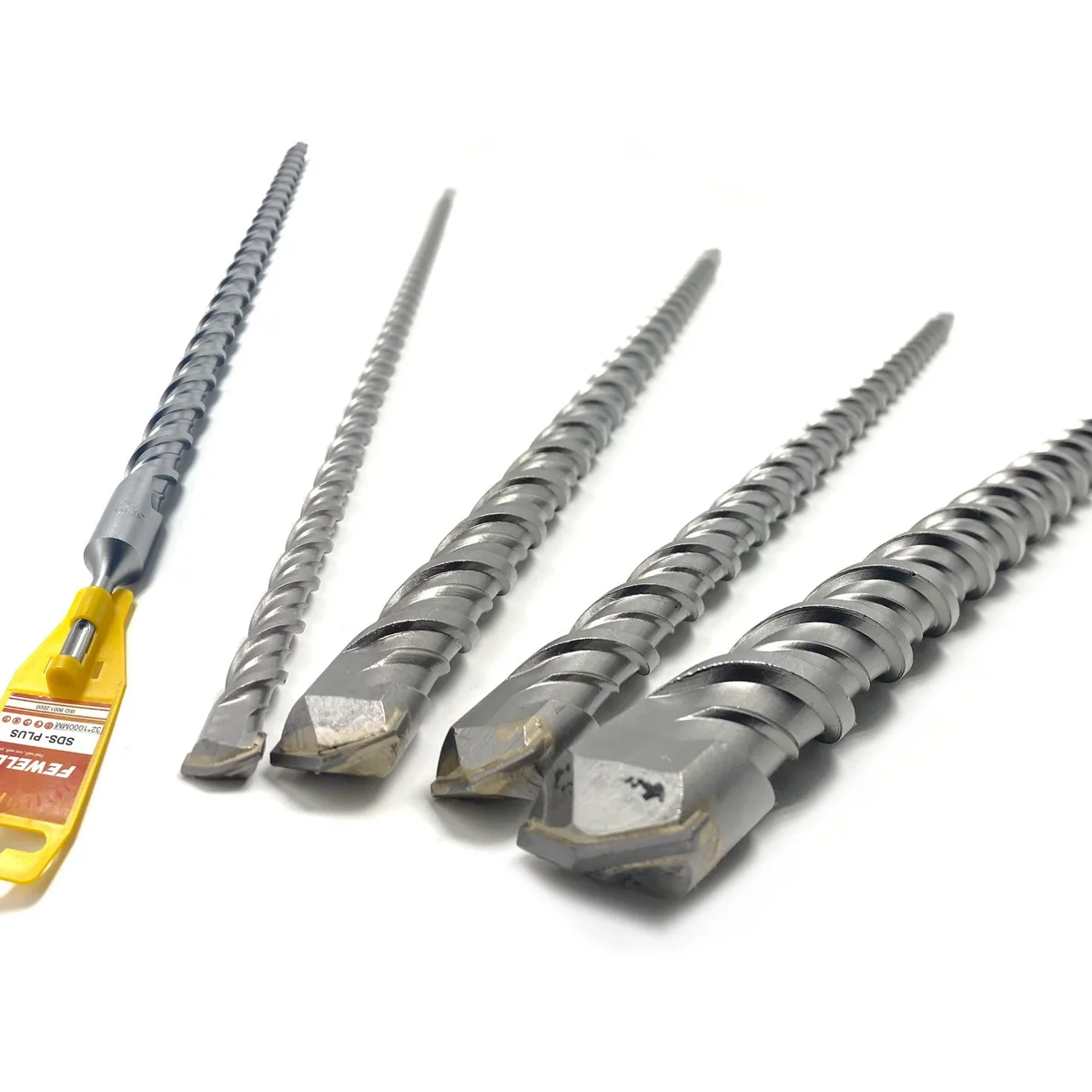
Masonry drill bits bore clean holes in brick, concrete block, and stone. They feature a tungsten carbide tip bonded to a steel body. The bit pairs with a hammer drill or SDS rotary hammer.
You select diameter to match your anchor or sleeve spec. Without the correct bit, the anchor will not develop rated pull-out.
What a Masonry Drill Bit Actually Does (And When You Need One)
A masonry drill bit is a twist bit with a tungsten carbide wedge brazed to its tip. That carbide tip withstands the abrasive minerals in fired clay, aggregate concrete, and natural stone. A plain HSS bit on concrete rounds off in two or three holes.
The carbide tip holds its geometry for 80 to 150 holes in 3-inch CMU before you see measurable diameter growth.
You need one whenever you're boring a hole through a masonry or concrete substrate and inserting a mechanical anchor, sleeve, conduit, or pipe. That covers picture frames on brick, wedge anchors in poured slabs, EMT passes through block walls, and drain sleeves in basement CMU. If the substrate is wood, drywall, or steel, a standard twist bit or hole saw is the right call.
The word "masonry" is broader than most people assume. It includes:
- Fired clay brick (single or double wythe)
- Concrete masonry unit, aka CMU, cinder block, or concrete block
- Poured structural concrete (slabs, footings, columns)
- Natural stone veneer (limestone, sandstone, granite)
- Stucco and thin masonry veneer over a block or stud wall
If your target is glass block or glazed ceramic tile over a masonry wall, you switch to a flat-tip or spade bit in rotary-only mode. Hammer action on those surfaces will shatter the glaze and crack the body behind it.
The Three Conditions That Point You to the Right Masonry Bit
Before you buy or grab a bit from the shop rack, three variables lock in your choice. Get any one wrong and the hole will be the wrong size, the wrong depth, or it simply won't cut at all.
Material: brick, CMU, stone, tile, or poured concrete
Fired brick is softer than concrete. A 3/8-inch bit in a 0.7-Joule cordless hammer drill chews through 4-inch brick in under 20 seconds. Poured concrete with 1-inch aggregate demands more Joule and a larger-diameter bit.
Natural granite or basalt veneer is the hardest surface you'll face in residential or light commercial work.
Tool: cordless hammer drill, SDS rotary hammer, or rotary-only
A cordless hammer drill (1/2-inch chuck, 0.4 to 0.9 Joule) handles brick, thin CMU, and tile in rotary-only mode. An SDS-plus rotary hammer (0.7 to 1.0 Joule) is the workhorse for 3/8 to 1-inch holes in block and light concrete. An SDS-max tool (1.5 to 3.5 Joule) is what you bring to 1-inch-plus holes in dense poured concrete or 8-inch structural walls.
A rotary-only drill with no hammer mechanism can technically bore small holes in soft brick. But on concrete or dense block, the bit bogs, overheats, and the carbide tip spalls off. You're trading twenty minutes of grinding for a ruined bit.
Job: anchor, sleeve, conduit pass-through, or structural fastener
The end use dictates the hole. A 1/4-inch hole for a small screw anchor is a different beast than a 1-inch sleeve for a condensate drain or a 3-inch core for a fence post. The job tells you the diameter.
The diameter tells you the bit. The bit tells you the tool. Work backward from the fastener spec every time.
Which Masonry Bit for Which Job: Decision Branches
Match your scenario to the branch below, then pick the bit and tool that fit.
Hanging a 10-pound picture frame on interior brick. Grab a 3/8-inch round-shank masonry bit. A small cordless hammer drill at 300 to 500 RPM gets through 4-inch brick in about 15 seconds. No SDS needed.
Setting a 1/2-inch wedge anchor in a poured concrete floor. Use a 1/2-inch SDS-plus bit, 4 inches long, in a 2-to-3-Joule rotary hammer. RPM around 200. The anchor's rated pull-out depends on that hole being true, clean, and the right diameter.
Passing 3/4-inch EMT conduit through an 8-inch CMU wall. You need a 1-inch bit (oversized to accept a 3/4-inch steel sleeve) in a 6-inch SDS-plus or SDS-max shank. The extra 1/4 inch gives the sleeve room to compress without pinching the conductor inside.
Drilling through a ceramic tile or brick veneer face. Switch to rotary-only. Use a flat-tip masonry bit or a dedicated tile spade. Run 600 to 800 RPM with a light feed and no hammer. A 3/8-inch pilot through the glaze prevents walk and chip-out.
Mounting a 3-inch fence post sleeve in 8-inch block. SDS-max, 3-inch bit, 10-inch length. A 1.5-to-3.5-Joule tool keeps the bit rigid through the full thickness. Without that rigidity, the hole wanders and the post sets crooked.
Hole bigger than 2 inches through a structural wall. You've outgrown twist bits. A diamond core bit (wet-drilled) is the correct tool here. It cuts a clean annular core with far less flex than a 2-inch masonry twist bit would produce in that thickness.
Matching Bit Diameter to Your Anchor or Fastener (And Why the Cap Size Is a Red Herring)
Here's the rule that saves the most anchors from failing: the hole diameter matches the anchor body, not the cap, head, or washer. A 1/2-inch wedge anchor has a 1/2-inch shank body and a wider flared cap. You drill a 1/2-inch hole, not a 5/8-inch one.
Manufacturer spec sheets from Hilti, Sako, and Ramset list the exact hole size per anchor model and material.
Per ACI 318-19 and ASTM F2506 pull-out testing protocols, the anchor must fill the bore to develop its rated load. An oversized hole means the wedge never spreads against the concrete or block walls. Your 4,500-pound rated pull-out becomes a 1,200-pound reality.
The anchor pulls free at a fraction of design load.
Quick reference for common anchor-to-bit pairings:
| Anchor / Fastener | Body Diameter | Drill Bit | Tool |
|---|---|---|---|
| 1/4-in. hammer-drive anchor | 1/4 in. | 1/4-in. round or SDS-plus | Cordless hammer drill |
| 1/2-in. wedge anchor | 1/2 in. | 1/2-in. SDS-plus | 2-to-3 J rot-hammer |
| 5/8-in. sleeve anchor | 5/8 in. | 5/8-in. SDS-plus | 2-to-3 J rot-hammer |
| 3/4-in. EMT sleeve in CMU | 1 in. (oversized) | 1-in. SDS-max | 3.5 J rot-hammer |
| 2-in. drain sleeve | 2 in. (core) | 2-in. diamond core | Wet core rig |
Always add 1/2 inch of bit length beyond the wall or slab thickness. That clearance lets the anchor seat fully without the tool still pressing against the far face. It also gives you room to vacuum or blow out chips before you set the fastener.
Tool, Shank, and Joule Rating: Getting the Physical Coupling Right
The shank is where your bit meets your tool, and a mismatch here means the tool free-spins while the bit just rattles in the chuck. Three shank families cover masonry work, and confusing them wastes a job stop.
Round shank (1/4 or 1/2 inch): Fits any keyed or keyless drill chuck. Works in hammer drills and rotary-only drills. The weakest coupling for heavy masonry work. At 1/2 inch and above, round-shank bits flex noticeably in the chuck.
SDS-plus (6 mm, four-groove): The standard for cordless and light-duty corded rotary hammers. Accepts bits from 3/16 to 1 inch. The grooves and lugs lock the bit into the tool's chuck while allowing the hammer blow to travel through the bit body.
SDS-max (12.7 mm, six-groove): For heavy-duty and mid-duty rotary hammers. Accepts 3/8 to 1 1/4 inch bits. The longer stroke and bigger grooves transfer more Joule directly to the tip.
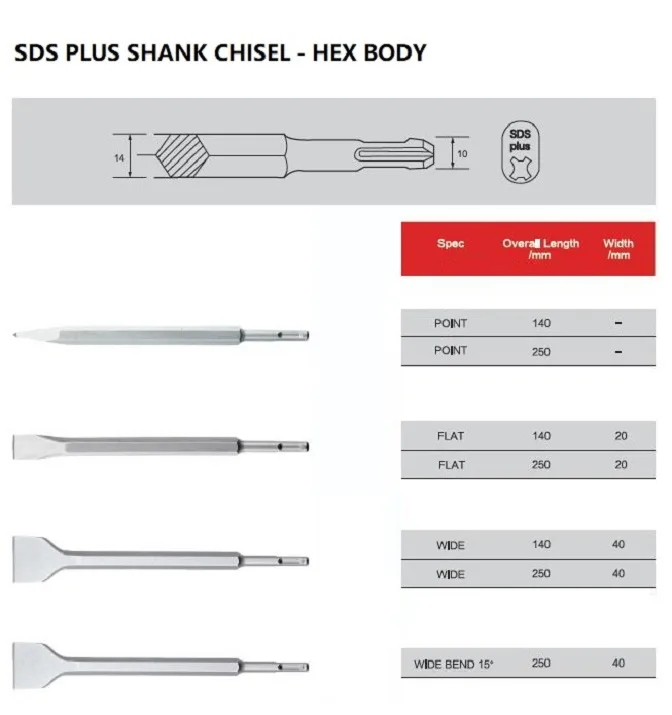
An SDS-plus bit won't seat in an SDS-max tool. The grooves are physically too small. You'd need an adapter, and most pros just buy the correct bit for the tool they own.
Conversely, an SDS-max bit simply won't fit into an SDS-plus tool. Check your tool's spec plate before you walk into the hardware store.
Joule rating tells you the hammer blow energy per strike, and matching it to the job matters more than RPM does. Below 0.4 Joule on dense concrete, you're just grinding the tip against the aggregate. The carbide rounds, the bit heats, and you waste twenty minutes on a hole that a 1-Joule tool cracks open in thirty seconds.
| Joule Range | Tool Class | Good For |
|---|---|---|
| 0.4 to 0.9 J | Cordless hammer drill | Brick, thin tile, 3/8 to 1/2-in. holes |
| 0.7 to 1.0 J | SDS-plus rot-hammer (light) | CMU, 1/2 to 3/4-in. holes |
| 1.5 to 3.5 J | SDS-max rot-hammer (mid/heavy) | Poured concrete, 3/4 to 1 1/4-in. holes |
Drilling Workflow from Mark to Installed Anchor
The sequence below is what separates a clean 1/2-inch wedge anchor hole from a crooked, chipped mess. Follow the steps in order, and the whole job takes under four minutes on a standard CMU wall.
Prep: mark, pilot, tape depth, set RPM
Paint a circle at the hole location. If you're drilling into tile or glazed brick, tape a square of masking tape over the mark and punch a 3/8-inch pilot with a flat-tip bit first. That pilot stops the larger bit from walking and chipping the surface.
Tape a wax-pencil line on the bit at your target depth (wall thickness plus 1/2 inch for anchor seating). Set the hammer drill to the RPM window for your bit size: 300 to 500 RPM for 3/8 inch and under, 150 to 300 for 1/2 to 3/4 inch, 100 to 200 for 1 inch and up.
Feed rhythm: bursts, backing out, clearing chips
Press the bit against the mark with firm, even pressure. Drill in 2-to-3-second bursts, then pull the bit out and let the chips fall. For bits 1 inch and larger, back out fully every four or five bursts.
This clears the flutes, drops heat at the tip, and keeps the hole round. If you grind continuously, the carbide tip glows red, rounds off, and the next hole will be oversized.
Finishing: vacuum, inspect, insert, torque to spec
Vacuum or blow out the bore. Look for hairline cracks radiating from the hole on thin CMU. If you see them, skip that location and drill two inches away.
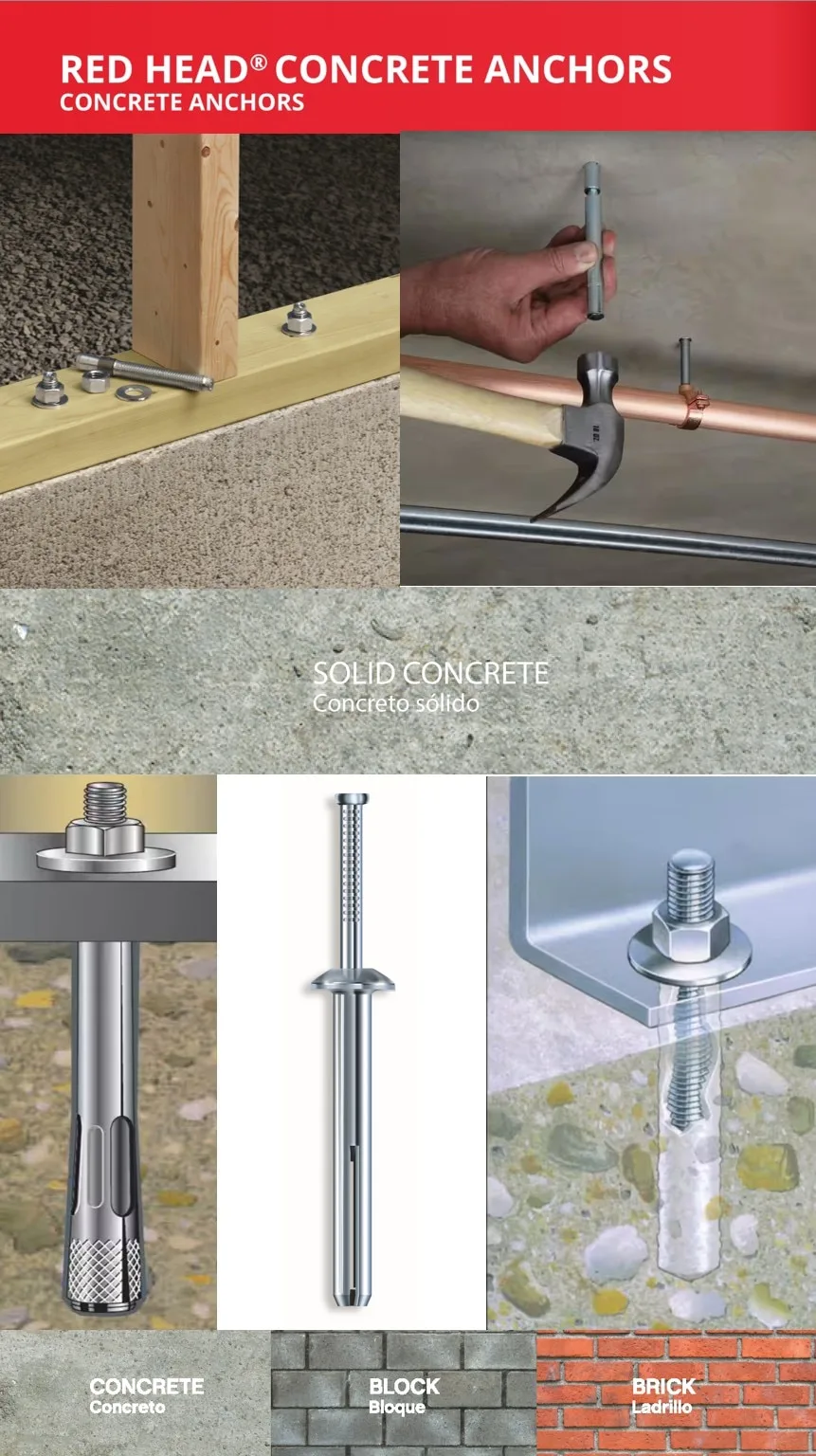
Insert the anchor, drive or torque to the manufacturer's specified depth. For a 1/2-inch wedge in 4,000-psi concrete, that's roughly 3 inches of embedment per ACI 318-19 provisions.
Mistakes That Crack the Wall, Round the Bit, or Fail the Anchor Pull-Out
In our research and editorial review of field reports, five errors account for most masonry drilling failures. None take skill to avoid. They take thirty seconds of checking your work.
- Wrong diameter, wrong anchor. You drill a 3/8-inch hole for a 1/2-inch wedge anchor. The wedge never spreads. Pull-out drops to a fraction of rated load. Always match the bit to the anchor body spec, not the cap.
- Hammer action on tile or glass. One strike and the glaze fractures. The crack runs to the edge and you're patching a hole in a finished surface. Switch to rotary-only, 600 to 800 RPM, light feed.
- SDS-plus bit in an SDS-max tool. The grooves don't engage. The tool free-spins, the bit just wobbles, and you stare at the wall wondering why nothing is happening. Check the shank before you load the bit.
- No depth mark on the bit. You go through a 4-inch block into the cavity on the other side. The bit grabs, the tool kicks, and you get a hole that's 8 inches deep instead of 4. The anchor seats in air, not concrete.
- Hitting embedded rebar or conduit. The bit deflects, sparks, or shears the carbide tip. Fragments can eject. Stop, pull the bit back, reposition two inches away, and re-drill.
The Silica Dust Problem and Other Safety Calls You Can't Skip
Drilling masonry generates respirable crystalline silica. OSHA's action level sits at 0.1 mg/m3 over an 8-hour TWA. In a closed basement or interior room, a single 4-inch CMU drill pass can push local concentrations past 0.5 mg/m3 before the dust settles.
Run a HEPA-equipped dust extractor at the bit face. If you can't get suction that close, wear a NIOSH-approved P100 half-mask. An N95 is not enough for silica.
Before you start any wall or slab penetration, call 811 (in the US) or your local dial-before-you-dig service. It marks gas, electric, and water lines in your jurisdiction. A sheared bit hitting a live conduit is not a bad day.
It's a 240-volt arc flash.
Other quick safety calls:
- Safety glasses (ANSI Z87.1 minimum). The carbide tip can eject fragments at 50+ feet per second.
- Hearing protection on anything above 85 dB. Most SDS-max rotary hammers run 95 to 105 dB at the operator's ear.
- No loose clothing, scarves, or dangling tool straps. A rotating chuck grabs fabric fast.
- Anchor kits in a code-enforced building must carry an ICC-ES evaluated report or ESR number. Check the packaging before you set them.
Quick-Reference: Job, Material, Bit, Tool, and Settings at a Glance
Use this table as your shop-floor cheat sheet. Match the row to your job, grab the right bit, set the tool, and go.
| Job | Material | Bit | Tool | RPM / Joule |
|---|---|---|---|---|
| 10-lb picture hook | 4-in. brick | 3/8-in. round-shank | Cordless hammer drill | 400 rpm, 0.5 J |
| 1/2-in. wedge anchor | Poured concrete (4,000 psi) | 1/2-in. SDS-plus, 4-in. long | 2-to-3 J rot-hammer | 200 rpm, 1.0 J |
| 3/4-in. EMT sleeve | 8-in. CMU | 1-in. SDS-max, 6-in. long | 3.5 J rot-hammer | 150 rpm, 3.5 J |
| Tile / glass face | Ceramic, 3/8-in. thick | Flat-tip 3/8-in., rotary-only | Drill, no hammer | 700 rpm, 0 J |
| 2-in. drain core | 8-in. CMU | 2-in. diamond core (wet) | Core rig or core hammer | 500 rpm, wet feed |
| 3-in. fence post sleeve | 8-in. block | 3-in. SDS-max, 10-in. long | 3.5 J rot-hammer | 120 rpm, 3.5 J |
If your job isn't listed, work backward: fastener body diameter equals bit diameter. Add 1/2 inch to wall thickness for bit length. Pick the smallest tool that clears the Joule requirement for that material.
When a Masonry Bit Is the Wrong Tool and What to Use Instead
Not every hole in a hard wall calls for a carbide twist bit. A few situations where you should put the masonry bit down and grab something else:
- Holes larger than 2 inches through structural concrete or block. A twist bit flexes, wanders, and produces an oval bore. A diamond core bit (wet-drilled) cuts a clean annular core with minimal flex. You also get the core plug, which lets you inspect what's behind the wall.
- Glazed tile, porcelain, or glass block. Hammer action cracks the surface. Use a dedicated tile spade bit or a carbide flat-tip in rotary-only mode at high RPM. For glass block, a glass-specific hole saw with a carbide edge is safer.
- Chemical anchor installation in cracked or damaged concrete. If the substrate is spalled or has delamination, no mechanical anchor will hold to spec. You'll need a ACI 318-19 evaluated repair, epoxy injection, or a structural grout sleeve. Drilling into that and hoping the anchor grips is not a solution.
- Dense granite or basalt over 3/4 inch. Carbide twist bits dull in two or three passes. A diamond-grit core bit or a diamond-tipped masonry bit (grain size under 15 microns) holds edge far longer on those minerals.
The rule is simple: if the bit is heating up, glazing the hole, or taking more than three burst cycles per inch of feed, you're past the tool's sweet spot. Stop, reassess, and swap to the correct bit or method. Forcing the wrong tool through the wrong material is how you end up with a ruined bit, a cracked wall, and a fastener that won't carry load.
Frequently Asked Questions
Can I use a masonry bit in a regular drill?
Yes, for small holes in soft brick or thin block. A rotary-only drill handles 1/4 to 3/8 inch in fired clay. On poured concrete or dense CMU, the bit bogs and the carbide tip spalls off.
Switch to a hammer drill or rotary hammer for anything in concrete.
What size bit do I need for a 5/16-inch wedge anchor?
Drill a 5/16-inch hole. The bit diameter always matches the anchor body, never the flared cap. Manufacturer spec sheets list the exact bore per model.
In 4,000-psi concrete, a 5/16 wedge needs 2 to 3 inches of embedment for full rated pull-out.
Why did my masonry bit walk and chip the brick face?
You likely started without a pilot or center punch. On tile or glazed brick, punch a 3/8-inch pilot through the glaze first. On soft brick, make a small crater with a center punch, then start the bit at low RPM before ramping up to full speed.
How long do carbide masonry bits last?
In 3-inch CMU at 1/2-inch diameter, expect 80 to 150 holes before measurable diameter growth. Dense poured concrete with 3/4-inch aggregate cuts that to roughly 40 to 60 holes. Smaller carbide grain size (under 15 microns) extends life noticeably.