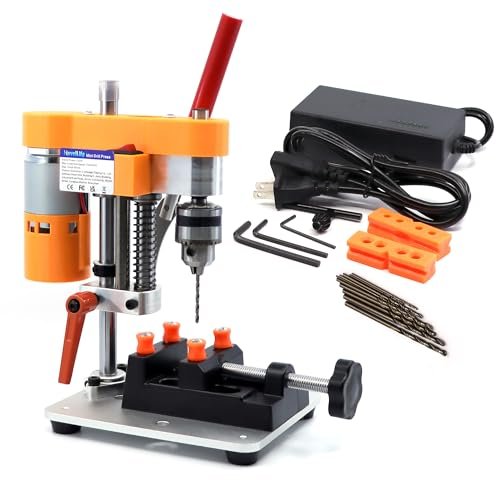
Arthur James Arnot patented an early electric drill in 1889, while William Blanch Brain helped develop a practical portable electric drill in 1895.
If you have ever hung a shelf, fixed a cabinet, or built a workbench in an American home, you have likely used a drill. This common tool has a long history that began long before electricity. Early workers used simple tools to make holes in wood, stone, bone, and other materials. Over time, these tools became more precise and much easier to use.
The answer to who invented the drill depends on which kind of drill you mean. No single person invented every form of the tool. Ancient craftspeople developed early drilling methods, while later inventors improved hand drills, mechanical drilling machines, and electric models. Arthur James Arnot is widely credited with patenting an early electric drill in 1889, and William Blanch Brain is associated with a portable electric drill developed in 1895. Their work helped shape the power tools used in American homes, workshops, and construction sites today.
Source: Bing
Who Invented the Drill?
The drill does not have one inventor because people created drilling tools long before written records could identify their makers. Early tools were simple devices that helped people create holes in wood, bone, stone, and other materials. Their designs changed as people learned to use new materials and mechanical methods.
For the modern electric drill, two names are especially important. Australian inventor Arthur James Arnot is commonly credited with patenting an early electric drill in 1889. William Blanch Brain is associated with a portable electric drill developed in 1895. These milestones refer to different stages of electric drilling, rather than one person inventing every feature of the modern tool.
The distinction matters because a hand drill and an electric drill solve the same basic problem in different ways. Both rotate a cutting tool to make a hole, but one relies on human effort while the other uses a motor. The shift to electric power made drilling faster and reduced the effort needed for many jobs.
Source: Bing
Early drilling tools
Ancient craftspeople used hand-powered tools and rotating devices to make holes. These early designs developed over many generations.
Arthur James Arnot
Arnot is widely associated with an electric drill patent granted in 1889. His work represents an important early stage in powered drilling.
William Blanch Brain
Brain is associated with the development of a portable electric drill in 1895, helping move electric drilling toward more practical use.
Modern tool designers
Later engineers and manufacturers improved the motor, housing, trigger, chuck, gearing, and battery systems.
Why Is There More Than One Answer?
The word drill describes a broad family of tools. It can refer to a simple hand-operated device, a bow drill, a brace and bit, a machine used in a factory, or a powered tool used on a construction site. Each form has its own development history.
An invention can also have several important stages. One person may create an early working design, another may patent a version, and later engineers may make it smaller or more useful. A patent records a specific legal claim at a particular time. It does not always prove that the inventor was the first person ever to use a similar idea.
The earliest tool is unknown
Prehistoric drilling methods existed before written records, so the names of their creators are not known.
The electric drill has documented milestones
Patents and historical accounts provide clearer dates for the development of powered drills.
How Did People Drill Holes Before Electric Power?
People made holes long before motors, power cords, or rechargeable batteries existed. Early drilling tools used hand pressure, twisting motion, friction, and sometimes a bowstring to rotate a narrow point. These methods took effort, but they allowed people to shape materials for tools, homes, furniture, and other objects.
The basic idea remains the same today. A drill holds a pointed or cutting tool and turns it against a surface. The cutting edge removes material as it rotates, leaving a hole. Modern motors make the rotation easier to sustain, but they did not change this central principle.
Source: Bing
Hand-powered drilling
A person turns or twists the tool directly. This method works for many small holes but can require patience and physical effort.
Bow drills
A bow and string can rotate a spindle back and forth. This method helped people produce repeated rotation without turning the spindle by hand alone.
Brace and bit
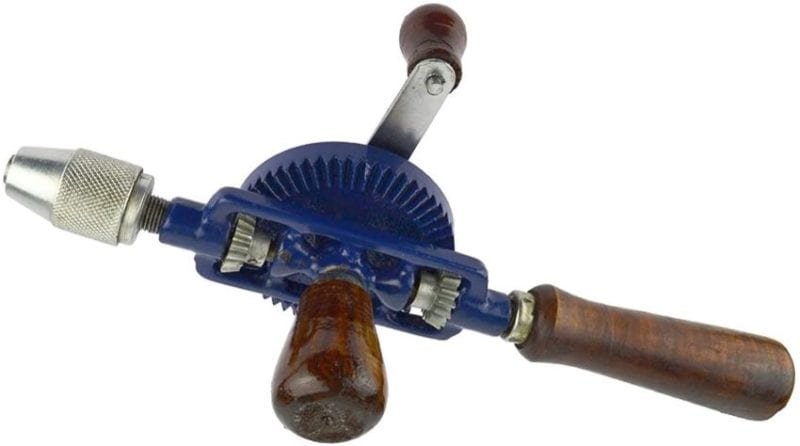
A hand brace uses a crank-like motion to turn a bit. It became useful for woodworking because it gives the user control and leverage.
Mechanical drilling machines
Industrial machines use a powered mechanism to rotate a cutting tool with greater speed, consistency, or force.
The Bow Drill and Early Rotary Tools
The bow drill is one of the best-known early rotary tools. A cord wrapped around a spindle connects to a bow. Moving the bow back and forth turns the spindle, which can hold a point or other working tip. Depending on the design and task, the tool can help make holes or generate friction for other purposes.
Bow-driven tools illustrate a key step in tool development: separating the movement of the user’s hands from the rotation of the working point. This made it possible to sustain a repeated motion and apply pressure while the tool turned. Similar mechanical ideas appear in many later devices.
There is no reliable basis for assigning the first bow drill to one named inventor. The technique arose in ancient societies, and its history stretches beyond the records available to modern researchers.
Main advantage
The bow helps create repeated rotation with a relatively simple mechanism.
Main limitation
The user must still supply the force and control the tool by hand.
The Brace and Bit in Woodworking
The brace and bit became an important hand tool for carpenters and woodworkers. The user turns a crank-shaped brace, which rotates the bit through a central chuck or holder. The design provides leverage and can make a controlled hole in wood.
Before electric drills became common, a brace and bit was useful for furniture making, framing, repairs, and other woodworking tasks. It also offered a quieter way to drill than many powered machines. Even today, some craftspeople value hand tools for their control and simple operation.
A brace and bit is not the same as an electric drill. It uses human power, and the speed depends on how quickly the user turns the handle. Still, it helped establish the familiar arrangement of a rotating bit held by a tool.
Best-known use
Making holes in wood for fasteners, joinery, and general carpentry.
Lasting influence
The tool demonstrates how leverage and a secure bit holder improve drilling control.
When Was the Electric Drill Invented?
The late 19th century marked a major change in drilling technology. Electric motors offered a new way to rotate a drill bit without relying on a hand crank or bow. Arthur James Arnot’s 1889 electric drill patent is an important milestone in this change.
Early electric drilling equipment was not the same as the compact drill found in a home toolbox. The first designs could be heavy, difficult to handle, or suited to industrial work rather than everyday repairs. Improvements in motor design and tool construction were needed before electric drills became widely practical.
The invention of the electric drill also depended on broader changes in engineering. Electric power systems, better insulation, stronger materials, and more reliable motors all helped make powered tools useful. No single patent explains the entire change from early machines to today’s handheld drills.
Source: Bing
1889
Arthur James Arnot is widely credited with patenting an early electric drill.
1895
William Blanch Brain is associated with the development of a portable electric drill.
The following decades
Designers continued to improve size, handling, motor performance, and practical use.
Arthur James Arnot and the 1889 Patent
Arthur James Arnot was an Australian electrical engineer and inventor. Historical accounts commonly connect him with an electric drill patented in 1889. His work is frequently cited when explaining the origins of electric drilling.
The early electric drill was a major step because it used a motor to turn a cutting tool. This reduced the need for continuous manual rotation. However, early powered drills were often designed for demanding work and were not as compact or easy to control as modern consumer tools.
The patent milestone should be understood within its historical context. It identifies a documented stage in the development of an electric drill, but it does not mean that Arnot invented every later feature, such as the modern trigger switch, cordless battery pack, or hammer-drill mechanism.
Historical contribution
Arnot’s 1889 patent is widely cited as an early milestone in electric drill development.
What it does not establish
It does not establish that one person created all forms of drilling tools or every feature of a modern drill.
William Blanch Brain and the Portable Electric Drill
William Blanch Brain is associated with a portable electric drill developed in 1895. This stage matters because portability changes how a tool can be used. A machine that can be carried and positioned more easily is more practical for work in different locations.
The idea of portability was especially important for tradespeople who needed to drill holes on site rather than bring each workpiece to a large machine. Still, the early tools should not be confused with today’s lightweight cordless drill drivers. They belonged to a period when electric motors and compact tool design were still developing.
The story of Brain’s contribution also shows why invention history often involves a sequence of improvements. A design can become more useful as engineers reduce its size, improve its balance, and make its controls easier to operate.
Key development
The portable electric drill helped move powered drilling toward greater mobility.
Practical impact
Portable tools can be brought to a wall, beam, workbench, or other fixed object instead of moving the object to a machine.
How Did the Electric Drill Become a Handheld Tool?
The electric drill became more useful as manufacturers made motors smaller and improved the tool’s grip, balance, and controls. These changes helped workers use a drill directly on a workpiece rather than rely on a large machine. The result was a tool suited to a wider range of tasks.
A handheld drill needs more than a motor. It needs a housing that protects the internal parts, a switch the user can control, a chuck that holds the bit, and a design that allows the user to guide the tool. Good balance also matters because a drill can twist when a bit binds in the material.
Over time, manufacturers developed different models for different jobs. A basic drill can make holes and drive screws when fitted with suitable accessories. Other drills add impact action, higher torque, or specialized features for industrial work.
Source: Bing
Smaller motors
Improved motor designs made it more practical to build tools that users could carry and hold.
Better chucks
A chuck grips the drill bit and allows users to change bits for different materials and hole sizes.
Trigger and speed control
A controllable switch helps users manage rotation for starting holes, driving screws, and working with different materials.
Improved housing
A shaped handle and protective casing help users hold the drill and protect its internal parts.
The Role of Black & Decker
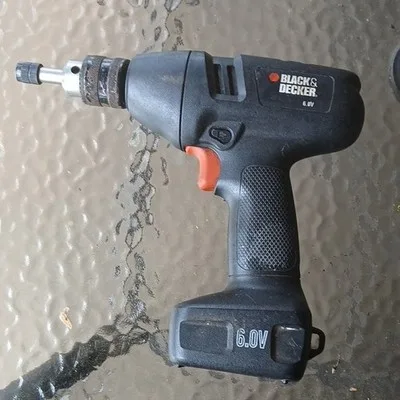
Black & Decker became an important name in the history of handheld electric drills. The company was founded in the United States in 1910 by S. Duncan Black and Alonzo G. Decker. Its later work helped popularize electric drills designed for handheld use.
In 1917, Black & Decker received a patent for a pistol-grip electric drill with a trigger switch. This design is widely recognized as an important milestone in the development of the familiar handheld drill. The grip and switch arrangement made the tool more convenient to control than many earlier designs.
This history is particularly relevant to American readers because the company helped make powered drilling more accessible to workers and consumers in the United States. The modern drill, however, reflects contributions from many inventors and manufacturers rather than one company alone.
1910
Black & Decker was founded in the United States.
1917
A patent for a pistol-grip electric drill with a trigger switch marked a key stage in handheld drill design.
Long-term influence
The familiar pistol-grip layout remains common in modern drills.
Why the Pistol-Grip Design Matters
A pistol-grip drill places the handle below the motor and gives the user a direct way to hold and guide the tool. The trigger sits where the index finger can reach it, allowing the user to start and stop the motor while maintaining a firm grip.
This layout helps users control the drill in many common positions. It does not remove every risk, since a bit can still catch or the tool can twist under load. Users must keep a stable stance, select the right bit, and avoid forcing the motor.
Modern drills build on the same broad idea but add features such as variable speed, reverse rotation, clutch settings, and electronic controls. These features make a drill more adaptable to both drilling and screw driving.
Control
A trigger allows the user to start and stop rotation without changing grip.
Versatility
A reversible motor can help remove screws and back a stuck bit out of a hole.
When Were Cordless Drills Invented?
Cordless drills developed as battery technology improved. Early portable electric drills still depended on power cords or bulky power arrangements, which could limit movement on a worksite. Rechargeable batteries offered a way to use a motor-driven drill without a direct connection to an outlet.
The history of cordless drilling spans several stages rather than one simple invention date. Early battery-powered tools could be heavy, expensive, or limited by their battery capacity. Later improvements in battery chemistry, charging systems, and motor efficiency made cordless tools more useful for home repairs and professional work.
Today, cordless drill drivers are common in American garages, workshops, and construction sites. They allow users to work in places where a power outlet is not close by, although battery life, charging time, and available power still depend on the specific tool and battery.
Source: Bing
Mobility
A cordless drill can be used away from a wall outlet, provided its battery has enough charge.
Battery limits
Runtime and power depend on battery capacity, motor design, material, bit size, and workload.
Modern battery systems
Lithium-ion batteries helped make many cordless drills lighter and more practical than older battery-powered designs.
How Battery Technology Changed Drilling
A battery-powered drill uses stored electrical energy to run its motor. When the trigger is pressed, the battery supplies current to the motor and the motor turns the chuck. The battery’s capacity, often measured in amp-hours, gives one indication of how much charge it stores, but it does not alone determine drilling power.
Battery voltage is also part of the tool’s design. Higher voltage does not automatically make every drill better for every task. Motor efficiency, gearing, torque control, heat management, and the battery’s ability to supply current all affect performance.
For a homeowner, the most useful choice depends on the work planned. Hanging pictures and assembling furniture require different levels of power from drilling many large holes through thick lumber or masonry.
For light home tasks
A compact cordless drill driver is often convenient for furniture assembly, small pilot holes, and routine repairs.
For demanding work
Check the manufacturer’s specifications and use a tool designed for the bit size, material, and expected workload.
How Did Modern Drills Evolve?
Modern drills combine a long history of mechanical ideas with improvements in electric motors, materials, electronics, and battery systems. Manufacturers now design tools for specific tasks instead of expecting one drill to handle every material and job. This specialization can improve control and reduce unnecessary wear.
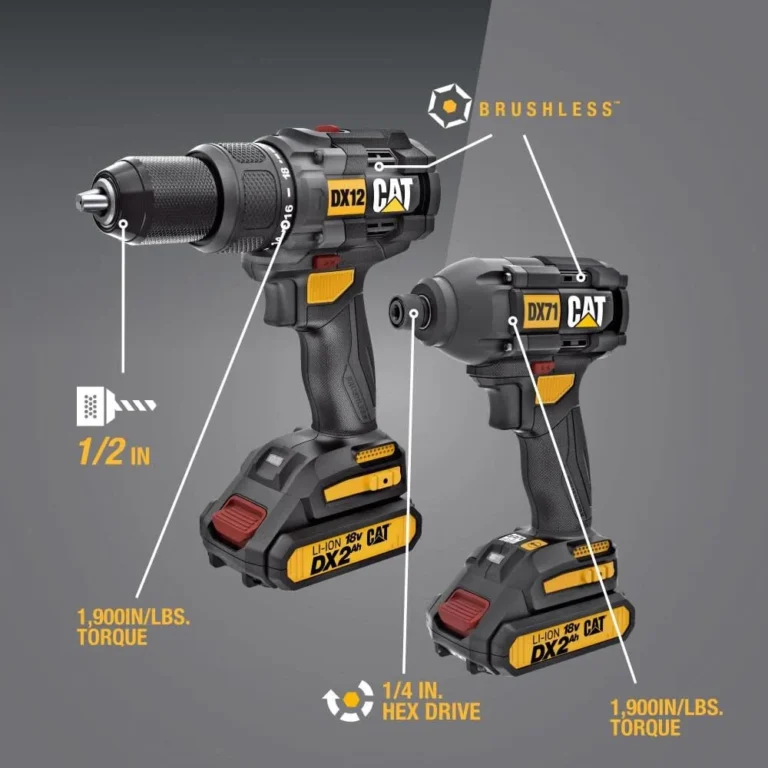
A standard drill driver is designed to rotate a bit or drive a screw. A hammer drill adds a rapid impact action along the drilling axis, which can help when drilling certain masonry materials. A rotary hammer uses a different impact mechanism and is generally intended for more demanding concrete work.
Other drill types serve industrial, construction, medical, or manufacturing needs. A drill press holds the work and tool in a fixed arrangement, while specialized machines may drill deep holes or use particular cutting systems. These tools share the basic idea of making a hole, but their mechanisms and uses can differ substantially.
Source: Bing
Drill driver
Used for general drilling and screw driving with suitable bits and settings.
Hammer drill
Combines rotation with a hammering action for certain masonry drilling tasks.
Rotary hammer
Uses a more substantial impact mechanism for suitable concrete and masonry work.
Drill press
Holds the drilling assembly in a fixed position to help make controlled holes in supported workpieces.
The Difference Between a Drill and a Hammer Drill
A standard drill rotates a bit to cut material. A hammer drill also produces rapid impacts along the axis of the bit, which can help the bit work through suitable brick or masonry. Many hammer drills let the user turn the hammer action off for ordinary drilling.
A hammer drill is not the best choice for every hole. For wood and metal, a standard drill setting and the correct bit are usually more suitable. For repeated or demanding holes in concrete, a rotary hammer may offer a more effective mechanism, depending on the task and the tool’s rated capacity.
Users should check the tool manual and the bit manufacturer’s instructions before drilling masonry. The correct bit, speed, impact mode, and protective equipment depend on the material and the drill design.
Use a standard drill mode
Choose ordinary rotation for wood, metal, plastic, and screw driving when the tool and accessory are suitable.
Use hammer mode when specified
Enable hammer action only when the tool, bit, and material call for it.
Choose a rotary hammer when needed
For heavier concrete work, select equipment rated for the required hole diameter and depth.
Why Drill Bits Also Matter
A drill is only part of the drilling system. The bit must suit the material, hole size, and task. A wood bit is designed differently from a metal bit or a masonry bit, and using the wrong one can lead to poor results, excess heat, or damage.
For example, a masonry bit often has a hard cutting tip designed for brick or similar materials. A high-speed steel bit is commonly used for many metal-drilling jobs, while wood bits may have a point or geometry that helps them start a hole cleanly. Specialized materials and coatings can change the suitable speed and operating conditions.
The chuck must also grip the bit securely. Before starting, remove the battery or unplug the tool while changing accessories, following the manufacturer’s instructions. Confirm that the bit is centered and tight before restoring power.
Match the bit to the material
Use an accessory designed for the surface being drilled.
Check the rated speed
Follow the bit and tool instructions, since suitable speed depends on material and diameter.
Secure the workpiece
Use a clamp or suitable fixture when needed instead of holding a small workpiece by hand.
A Simple Timeline of Drill Invention
The history of the drill is easier to understand when viewed as a series of changes. The earliest tools relied on human power, later designs used mechanical leverage, and electric motors eventually made sustained rotation easier. Portable designs and improved batteries then expanded where and how people could drill.
The dates below describe broad historical milestones. They should not be read as proof that a single inventor created the whole drill or that every modern feature appeared at once. The development of the tool involved many people, patents, workshops, and manufacturers.
Source: Bing
Prehistoric times
People use simple rotating tools to make holes in materials such as wood, bone, and stone. The original inventors are unknown.
Ancient and early historical periods
Hand-powered drilling methods, including bow-driven tools, appear in different forms across cultures.
Development of the brace and bit
Mechanical leverage improves control and makes hand drilling useful for carpentry and woodworking.
1889
Arthur James Arnot is widely credited with patenting an early electric drill.
1895
William Blanch Brain is associated with a portable electric drill.
1917
Black & Decker’s pistol-grip electric drill patent helps shape the familiar handheld layout.
Cordless battery systems, electronic controls, and task-specific designs make drills useful across many trades and home projects.
What the Timeline Tells Us
The main lesson is that the drill evolved through a series of useful improvements. The earliest tools solved the basic problem of making a hole, while later tools made the process faster, more repeatable, or easier to control. Electric power changed how the tool was driven, and portable designs changed where it could be used.
A patent date is useful because it gives a documented reference point. However, the first patent for a particular design is not always the same as the first working example, the first commercial product, or the start of widespread use. Those milestones can occur at different times.
This is why a careful answer to who invented the drill should identify the type of drill in question. For the early electric drill, Arnot is a key name. For the familiar handheld form, later developments, including Black & Decker’s work, are also important.
One tool, many milestones
The history includes early manual tools, powered machinery, portable electric models, and cordless designs.
Patents have limits
A patent documents a particular invention or design, not the full history of every related tool.
Why the Invention of the Drill Matters Today
The drill remains one of the most useful tools in home repair, construction, manufacturing, and woodworking. It can create holes for fasteners, prepare materials for assembly, and drive screws when fitted with the right accessory. These tasks appear simple, but they are central to building and maintaining homes, furniture, and equipment.
For a homeowner in the United States, a drill may be used to install curtain rods, assemble a bookcase, build a deck, or repair a cabinet. A professional may use a drill for framing, metal fabrication, electrical work, or specialized construction. The right tool depends on the job rather than on the age or popularity of a particular design.
The tool’s long history also shows how engineering improvements can turn a demanding task into a routine one. A modern cordless drill combines a motor, gearing, a battery, a chuck, and controls in a compact package. Each part reflects decades of refinement, even though the basic purpose remains unchanged.
Source: Bing
Home repairs
A drill driver helps make pilot holes and drive suitable screws during routine household projects.
Construction
Tradespeople use drills and specialized drilling tools to prepare holes in approved materials and work conditions.
Manufacturing
Industrial drilling systems make repeatable holes as part of production and assembly processes.
Craft and restoration
Hand drills and other manual tools still offer useful control for delicate or traditional work.
Basic Safety When Using a Modern Drill
Safe drilling begins with the correct tool, a suitable bit, and a stable workpiece. Read the manufacturer’s instructions before using an unfamiliar drill, and wear eye protection suited to the task. Tie back long hair, avoid loose clothing, and keep hands away from the rotating bit.
Before drilling into a wall, check for hidden electrical wires, plumbing, and other services. A wall’s appearance does not reliably show what lies behind it. Use suitable detection tools and follow local requirements, and get qualified help if you cannot confirm that the area is safe to drill.
A drill can twist suddenly if the bit binds. Keep a firm grip, use the appropriate clutch or side handle where supplied, and avoid applying excessive force. If the bit overheats, smokes, catches repeatedly, or produces an unusual sound, stop and investigate the cause rather than continuing.
Protect your eyes
Wear appropriate safety glasses to guard against chips, dust, and fragments.
Inspect the work area
Check for hidden wires, pipes, and other hazards before drilling into walls or floors.
Secure the material
Use clamps or a suitable fixture when needed to prevent the workpiece from shifting.
Disconnect before changing bits
Remove the battery or unplug the drill before changing the bit or making adjustments, as directed by the manual.
Stop when something seems wrong
Switch off the tool if the bit binds, the motor overheats, or the drill behaves unexpectedly.
Frequently Asked Questions
Q
Who invented the first electric drill?
Arthur James Arnot is widely credited with patenting an early electric drill in 1889. His invention was an important milestone in the move from manual drilling to motor-powered drilling. The modern electric drill, however, developed through many later improvements.
Q
Who invented the handheld electric drill?
The handheld electric drill evolved through several stages. William Blanch Brain is associated with a portable electric drill developed in 1895, while Black & Decker’s 1917 pistol-grip drill patent helped shape the familiar handheld design. No single person created every feature of the modern tool.
Q
When was the drill first invented?
Drilling tools existed in prehistoric times, long before written records. Early people used simple rotating devices to make holes in materials such as wood, bone, and stone. Since the original inventors are unknown, there is no single confirmed date for the invention of the drill.
Q
Did Black & Decker invent the electric drill?
No. Electric drills existed before Black & Decker’s work. The company was founded in the United States in 1910 and received a patent in 1917 for a pistol-grip electric drill with a trigger switch. Its contribution helped develop the familiar handheld format rather than mark the first invention of an electric drill.
Q
When were cordless drills invented?
Cordless drills emerged as battery-powered tools became practical, and their development took place over several stages. Early models faced limits in weight, battery life, and power. Improvements in rechargeable batteries and motor technology later made cordless drills widely useful for home projects and professional work.
Q
What did people use before electric drills?
People used hand-powered tools such as bow drills, hand drills, and braces with bits. These tools relied on human effort to rotate a cutting point. They could make useful holes, but drilling often took more time and effort than it does with a suitable modern power tool.
Q
What is the difference between a drill and a drill driver?
A drill is a broad term for a tool that rotates a cutting bit to make holes. A drill driver is designed to drill holes and drive screws, often with adjustable clutch settings to help control screw depth and reduce overtightening. The exact functions depend on the model.
Q
Why did the electric drill become so popular?
Electric drills reduce the need for manual rotation and can make many drilling tasks faster and less tiring. Improvements in motor design, tool balance, switches, chucks, and batteries also made them easier to use. Their broad range of compatible bits and accessories allows one tool to serve many jobs.
✦ Wrapping Up
Conclusion
The answer to who invented the drill depends on the type of tool. Ancient craftspeople created early drilling methods whose original inventors remain unknown. Arthur James Arnot is widely credited with patenting an early electric drill in 1889, while William Blanch Brain is associated with a portable electric drill developed in 1895. Black & Decker’s 1917 pistol-grip drill patent later helped shape the familiar handheld form.
The drill’s history is a story of gradual progress rather than one sudden invention. Hand-powered tools established the basic method, electric motors reduced the effort required, and improvements in portability and batteries made drills useful in more places. Modern models continue to build on those earlier ideas through better controls and designs tailored to different materials.
For practical use, choose a drill based on the material, hole size, and task. Match the bit to the job, secure the workpiece, and follow the tool’s safety instructions. Understanding the tool’s history is useful, but choosing and using the right drill is what helps you get a clean, safe result.
💡 Key Takeaway
Remember the key names: Arthur James Arnot for the early electric drill patent, William Blanch Brain for an early portable electric drill, and Black & Decker for an influential pistol-grip design. If you plan to drill today, select the right tool and bit for your material and check the work area for hidden hazards before starting.
The question “when was the cordless drill invented” has one clean answer and three messy ones, depending on what you mean by “invented.” Most people land on…
You’ve probably stared at a cordless drill, flipped the mode switch to the hammer icon, and wondered: is a hammer drill the same as an impact drill? The short…