When did the first cordless drill come out: Easy guide
If you've typed "when did the first cordless drill come out" into a search engine, you probably want a single clean date. Not a vague "sometime in the '70s." Not a patent number buried in a database. Just the year and the product that actually hit a store shelf.
Here's that answer: 1977, Makita, model DF0330.
But the "why it took two decades to get there" story is where the real interest lives. The DF0330 ran on an 8.4-volt NiCd pack with roughly 1.3 Ah of usable capacity. That sounds tiny next to the 18-volt Li-ion platforms you'd grab off a hardware store rack as of 2026.
The gap between the first patent filing and that shelf-ready product is what I'll walk you through, year by year, below.
Quick Answer
The first cordless drill you could buy was the Makita DF0330. It launched in Japan in 1977. It ran on an 8.4-volt NiCd battery pack.
The tool delivered roughly 25 N·m of torque. U.S. retail counters carried it by early 1978.
1977, Makita, DF0330: The Short Answer You Can Quote
The DF0330 is the one every serious source points to as the first cordless drill a regular person could walk into a store and purchase. Makita, based in Ageo, Saitama Prefecture, Japan, released it as a compact two-speed drill with a 10 mm keyed chuck and a clip-on NiCd battery pack at the base.
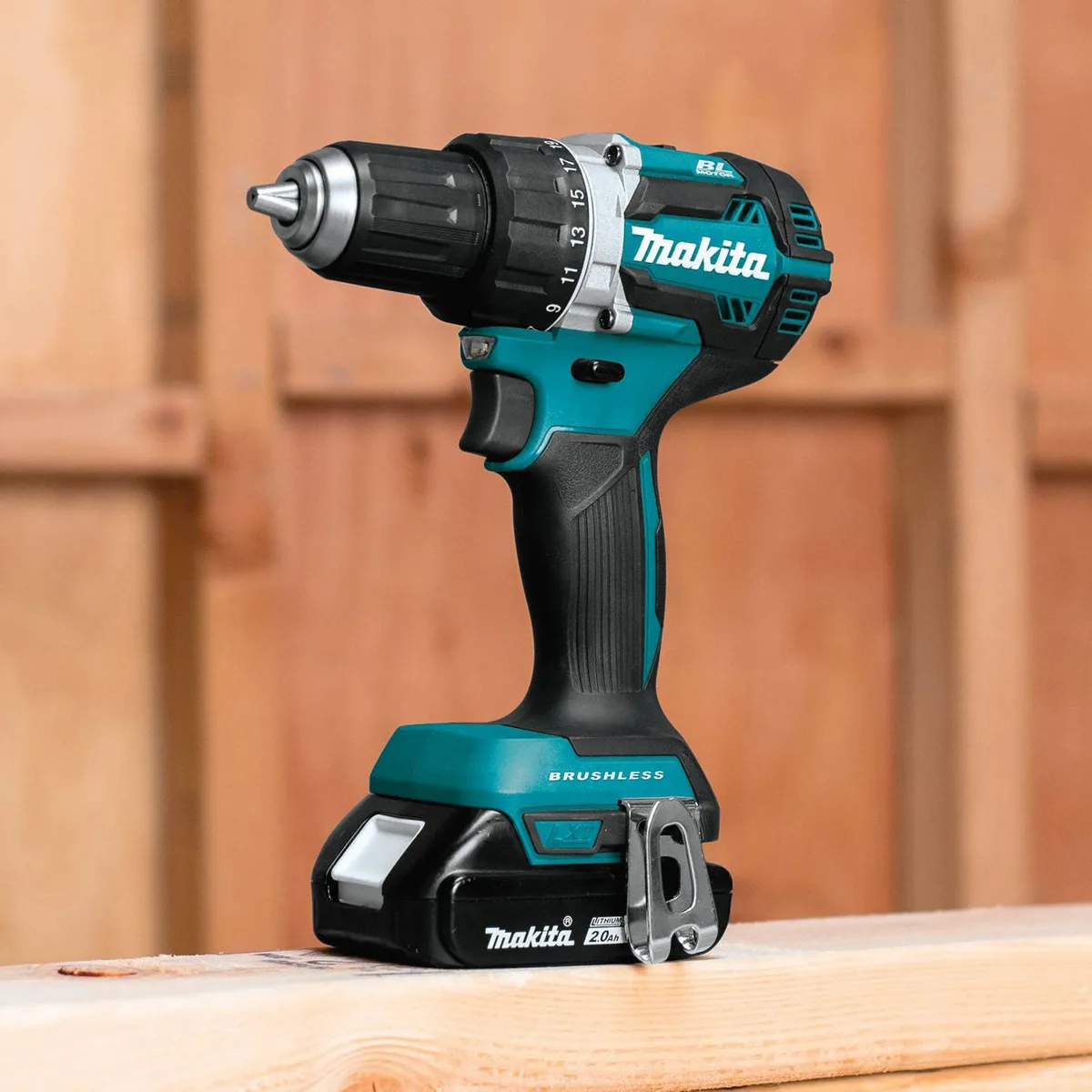
The tool wasn't a lab demo or a limited prototype. It carried a retail price tag, a warranty, and a parts channel. That distinction matters.
You'll find earlier patent filings and internal R&D sketches, but the DF0330 was the first unit sold as a finished product to tradespeople and hobbyists alike.
Makita's corporate history page confirms the 1977 Japanese launch. U.S. distribution followed 12 to 18 months later, which means most American craftsmen first encountered a cordless drill around late 1978 or early 1979. The "Japan-first, West-second" release pattern was standard for Japanese power-tool brands at the time, and it held here.
Why "First Cordless Drill" Trips People Up (Patent vs. Product)
You'll see "1954" or "the 1950s" cited in some places as the invention date. Those dates trace back to patent filings, not products. U.S.
Patent 2,711,129, filed by W. G. Johnson, describes a battery-powered electric hand tool and was granted in 1954.
You can pull the full document from the USPTO patent database.
But a patent is a legal claim, not a thing on a shelf. Johnson's design used early storage cells that were heavy, weak, and expensive to manufacture at scale. Bosch and Philips ran internal NiCd research through the late '50s and into the '60s, but nothing left their labs as a retail unit.
The practical dividing line is this: could you buy it, use it on a job, and expect it to last a shift? For the 1954 patent, the answer is no. For the 1977 DF0330, the answer is yes.
That's why "first cordless drill" in any honest conversation means 1977, not 1954.
The Cord Problem That Made Battery Power Worth Pursuing
Here's the practical pain that kept engineers filing battery-tool patents for two decades. A 120-volt corded drill needs an outlet within reach of your work surface. On a job site, that often means:
- Unspooling a 25-foot extension cord across a dusty floor
- Finding the nearest junction box on a commercial building's second floor
- Negotiating a cord drop from a ladder perch 12 feet up
- Stopping every time a cord trips a coworker or a swinging tool
For a carpenter driving 40 drywall screws in a room with no accessible outlet, that cord hunt could eat 10 to 15 minutes a day. Multiply that across a crew and a week, and you've lost an entire shift to power management instead of actual drilling.
The DF0330 didn't eliminate the cord problem forever. You still needed to recharge packs on a bench. But it removed the tether from the tool to the wall, and that single change reshaped how trades planned their workflow.
Patent-to-Shelf: 1954 to 1977, Year by Year
The 23-year gap between the first relevant patent and the first retail product wasn't idle. It was a waiting game for battery chemistry to catch up. Here's the timeline that actually matters:
| Year | Milestone |
|---|---|
| 1954 | U.S. Patent 2,711,129 granted (Johnson). Battery hand tool described, not built for sale. |
| 1958 | Bosch and Philips internal labs begin NiCd cell testing for portable tools. |
| 1965 to 70 | NiCd cell energy density climbs past roughly 60 Wh/kg. Still too heavy for a practical drill. |
| 1974 | Cell-level density crosses about 90 Wh/kg. Tool-body integration becomes feasible. |
| 1977 | Makita ships DF0330 (8.4 V, 1.3 Ah NiCd). First retail cordless drill. |
| Early 1978 | U.S. retail availability via Makita's North American distributor. |
The bottleneck was purely electrochemical. You could bolt a motor to a battery pack in 1960, but the pack would weigh more than the motor and deliver under 10 N·m of torque. By 1974, the same pack size delivered enough energy to spin a 10 mm chuck through softwood.
That threshold is what let Makita tool the DF0330 for mass production.
Inside the DF0330: 8.4 V, 1.3 Ah, 25 N·m, and What You Could Actually Drill
Let's open the spec sheet on what you'd actually be holding in your hands in 1977. The DF0330 wasn't a workhorse by modern standards. It was a purpose-built light-duty tool.
- Voltage: 8.4 V nominal (six NiCd cells in series, 1.4 V each)
- Battery capacity: approximately 1.3 Ah
- Peak torque: around 25 N·m
- Chuck: 10 mm (roughly 3/8 in.) keyed, two-speed gearbox
- Weight: roughly 1.4 to 1.6 kg (pack included)
- Continuous runtime: 15 to 20 minutes at moderate load before a pack swap
- Cycle life: 300 to 500 full charge/discharge cycles per pack
What could you actually do with it? Pilot holes in pine and other softwoods. Driving #8 and #10 wood screws.
Small drywall anchor holes. Light assembly work on particleboard. It was a genuinely useful tool for those jobs.
What it couldn't do: drive lag screws into masonry, churn through 2×4 framing lumber, or run a 1/2-inch masonry bit. Torque simply wasn't there. And without a torque clutch (those arrived in the mid-'80s), you had to modulate speed by feathering the trigger.
No electronic governor, no gear selection beyond the two-speed switch.
The memory effect also showed up early. If you recharged a pack at 70% discharge instead of running it flat, usable capacity shrank over a few weeks. By the 200-cycle mark, you might be getting half your original runtime.
That operational quirk defined the NiCd era and is one of the main reasons the industry migrated to Li-ion platforms starting around 2001.
The 20-Year Bottleneck: Why NiCd Energy Density Held Everything Up
The core constraint was simple physics. NiCd cells in the early '60s stored maybe 50 to 60 Wh/kg. That meant a pack light enough to grip in one hand couldn't push enough current to spin a motor through hardwood.
You'd get 8 to 10 N·m of torque at best. Not enough for anything beyond soft pine.
By 1974, cell-level density crossed 90 Wh/kg. That single number changed everything. A 1.3 Ah pack could now deliver sustained current for 15 to 20 minutes at useful torque.
Makita's engineers had their threshold. The DF0330 followed within three years.
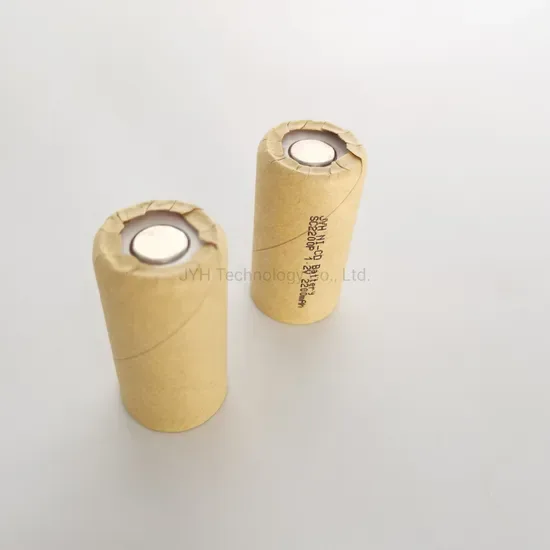
The gap between 60 Wh/kg and 90 Wh/kg sounds small on paper. In practice, it was the difference between a lab curiosity and a tool a carpenter would carry up a ladder all day.
The 1980s Arms Race: Voltage Platforms, Torque Clutches, and Impact Drivers
Once the DF0330 proved the concept, the industry sprinted. Voltage climbed in steps: 8.4 V gave way to 12 V, then 14.4 V by 1988. Each jump meant more torque and longer runtime without doubling pack weight.
Black & Decker entered the U.S. market with 8 V and 12 V cordless lines in the early '80s. Milwaukee, still a relative newcomer to battery tools, followed with 14.4 V platforms by mid-decade. Torque clutches became standard around the same time.
You could set the clutch to 20 N·m and the tool would stall instead of stripping a screw head. That was a quality-of-life change for anyone driving drywall screws all shift.
Impact drivers split off as their own category in the early '90s. The mechanism worked differently. A small hammer piston struck an anvil inside the tool, delivering torque in short bursts rather than continuous rotation.
You could drive long lag screws into 2×4 lumber without the bit walking off the screw head.
2001 to 2005: Li-ion, Brushless Motors, and the Platform Standardization Shift
The biggest leap in cordless drill history wasn't another voltage jump. It was swapping the battery chemistry entirely. Li-ion cells delivered roughly 250 to 300 Wh/kg at the pack level by the early 2000s.
That's triple the energy density of mature NiCd packs.
Makita, Milwaukee, and Bosch all launched 18 V Li-ion platforms between 2001 and 2004. The key feature wasn't just raw power. It was the battery management system inside each pack.
No more memory effect. No more "run it flat before charging" rituals. You plugged in a pack at 40% and recharged it to 100% without losing usable capacity.
Brushless motors followed in 2006 to 2008. They eliminated carbon brush wear, cut heat output, and stretched runtime by 15 to 20% over equivalent brushed tools. The platform idea locked in too.
One 18 V battery now fit your drill, your impact driver, your angle grinder, and your circular saw. You bought the battery once and ran it across the whole garage.
1977 NiCd vs. Modern 18 V Li-ion vs. Corded 120 V: Side-by-Side Numbers
Here's the comparison that actually matters if you're trying to see how far the technology has come:
| Spec | 1977 Makita DF0330 (8.4 V NiCd) | Modern 18 V Li-ion drill | 120 V corded drill |
|---|---|---|---|
| Peak torque | ~25 N·m | 60 to 80 N·m | 40 to 55 N·m |
| Pack weight | ~0.8 kg | ~0.5 kg | N/A (cord) |
| Runtime per charge | 15 to 20 min | 40 to 60 min | Unlimited |
| Cycle life | 300 to 500 | 1,000+ | N/A |
| Torque clutch | No | Yes, multi-stage | Yes |
| Memory effect | Yes | No | No |
Read that table and the "cordless is weaker" argument basically evaporates. A modern 18 V Li-ion drill out-torques most corded 120 V tools you'd find in a home garage. The gap is closed.
What remains is a preference question. Some people still like unlimited runtime for sustained masonry or metal work.
Five Misconceptions About Cordless Drill History (and Where They Come From)
Here are the claims that show up in forum threads and older blog posts. None of them hold up under scrutiny.
- "The first cordless drill was an impact driver." No. Impact drivers arrived in the early '90s. The 1977 DF0330 was a straight-rotation drill/driver with a keyed chuck.
- "Makita invented the idea." They commercialized it first. The patent trail goes back to the '50s, and Mabuchi Motor ran early micro-battery motor experiments in the '60s. "First on the shelf" and "first to file a patent" aren't the same thing.
- "Cordless tools are permanently inferior to corded." True in 1977. False by 2010. Li-ion energy density erased the torque gap. The only remaining limitation is battery runtime, which you solve by buying a second pack.
- "NiCd packs were just 'older Li-ion.'" Not even close. NiCd cells max out around 140 Wh/kg at the cell level. Li-ion sits at 250 to 300 Wh/kg. Different chemistry, different failure modes, different weight.
- "The 1977 tool was basically the same as what you buy today." The 25 N·m torque, keyed chuck, and two-speed gearbox of the DF0330 are a different category from an 18 V brushless drill with a 1/4-inch hex collet and a 12-stage clutch.
What the Timeline Actually Tells You About Picking a Tool Today
The history of the cordless drill isn't just trivia. It maps directly onto decisions you'd make at a hardware store counter right now. Here's the practical read:
- If your job is light drilling and short screws (drywall anchors, particleboard, small pilot holes), a 12 V Li-ion drill from any major brand will overkill it. The 8.4 V "light" platforms still in production today handle that range fine and weigh less.
- If you drive long structural screws or work in hardwood, you want the 18 V or 20 V platform with a multi-stage torque clutch. The 1977 tool stalled at 25 N·m. Modern 18 V drills hit 60 to 80 N·m. That's the entire difference between a tool that fights you and one that doesn't.
- If runtime matters more than torque (sustained masonry, metal fabrication, long reach from a ladder), a corded 120 V tool still wins on one axis: it never dies mid-job. No pack swap, no 40-minute recharge.
- If you're building a garage ecosystem, the platform standardization shift of 2001 to 2005 is the one to remember. One 18 V or 20 V Li-ion pack now runs a drill, an impact driver, an angle grinder, and a circular saw. You buy the battery once. That's a direct descendant of Makita's original "one pack, one tool" concept from 1977, scaled up by about a factor of three.
The takeaway: the 1977 DF0330 solved a real problem (the tether) but at a low performance ceiling. Every subsequent decade raised that ceiling. As of 2026, the "cordless is weaker" argument is basically dead for anything under heavy industrial use.
Questions People Keep Asking (and the Straight Answers)
Who made the first cordless drill?
Makita, a Japanese manufacturer based in Ageo, Saitama Prefecture. The DF0330, released in 1977, was the first battery-powered drill sold as a retail product. Earlier patent filings from the 1950s described the concept, but no other company put a finished unit on a shelf before Makita.
Was the first cordless drill available in the United States in 1977?
Not quite. The DF0330 launched in Japan in 1977. U.S. retail availability came 12 to 18 months later, so most American tradespeople first encountered it in late 1978 or early 1979.
The Japan-first, West-second release pattern was standard for Japanese tool brands at the time.
What battery did the first cordless drill use?
Nickel-cadmium (NiCd). The DF0330 ran on a clip-on pack of six 1.4 V NiCd cells, giving 8.4 V nominal. Capacity was roughly 1.3 Ah.
Those packs lasted 300 to 500 charge cycles before capacity degraded noticeably, and they carried the well-known memory effect that limited usable runtime if you recharged before full discharge.
How much torque did the 1977 Makita drill produce?
Around 25 N·m at the chuck. For context, a modern 18 V Li-ion drill typically delivers 60 to 80 N·m. That 1977 figure meant the tool handled softwood pilot holes and short wood screws comfortably, but it struggled with anything above a #10 driver bit or any masonry application.
Did Black & Decker make an earlier cordless drill than Makita?
No. Black & Decker entered the cordless category in the early 1980s with 8 V and 12 V lines. That's roughly four to six years after the DF0330.
Their contribution was bringing the category to mass U.S. retail visibility, but the "first" credit goes to Makita's 1977 product.
Is "cordless drill" the same as "battery drill"?
In everyday use, yes. Retailers and manufacturers use "cordless" as the category name. Technically, "cordless" just means no power cord.
The power source is always a rechargeable battery pack, whether NiCd, Li-ion, or (in rare specialty tools) LiFePO4. The term "battery drill" appears in some older patent filings but never stuck as consumer language.