Best Small Gas Chainsaw: Top Compact Picks
The Husqvarna 120 Mark III 14-inch is my top choice for a compact, capable gas chainsaw for home use.
A small tree falls after a storm, thick branches block your driveway, or your backyard needs a quick cleanup before the weekend. You need a saw that can handle real wood without feeling too large or heavy. That is where a small gas chainsaw can help. It offers freedom from power cords and battery charging. I compared five options, from a compact 12-inch VEVOR saw to larger 18-inch and 20-inch models. My goal is to help you find the best small gas chainsaw for your yard, farm, or home without paying for more power than you need.
🏆 Top 3 Products

Husqvarna 120 Mark III 14-Inch Gas Chainsaw
Its 38cc engine and 14-inch bar offer a useful balance of size and cutting reach for regular home tasks.

VEVOR 25.4cc 12-Inch Gas Chainsaw
Its small engine and short bar make it a compact option for light trimming and small wood jobs.
Husqvarna 120 Mark III 16-Inch Gas Chainsaw
It keeps the same 38cc engine platform while offering a longer bar for homeowners who need more reach.
VEVOR 25.4cc 12-Inch Gas Chainsaw Review
The VEVOR 25.4cc gas chainsaw is the smallest model in this group. It pairs a 25.4cc two-cycle engine with a 12-inch cutting bar. The listed engine output is 1.2 horsepower. This setup makes it a compact choice for light yard work, small branches, and basic wood cutting.
I like the idea of a short-bar gas saw for jobs where a full-size chainsaw feels too large. The 12-inch bar can be easier to manage than a long bar, but it still demands careful handling and proper safety gear. Its top-handle design also deserves special attention. A top-handle chainsaw is not a casual substitute for a standard rear-handle saw. This model is best considered for suitable ground-level work by a trained user who understands its design and limits.
✅ Pros
- ✔ Compact 12-inch bar suits small cutting jobs.
- ✔ 25.4cc engine keeps the power class below larger homeowner saws.
- ✔ Listed 1.2 HP output provides a useful power reference.
- ✔ Gas operation does not depend on a power outlet.
- ✔ No battery charging time between jobs.
- ✔ Short bar can be easier to store than a long-bar saw.
- ✔ Useful for users who need a compact saw for limited tasks.
⚠️ Cons
- ✖ Small engine may struggle with thick hardwood and large logs.
- ✖ Top-handle design requires specific training and careful use.
- ✖ Gas engines need fuel mixing and regular maintenance.
- ✖ A 12-inch bar limits the size of wood it can cut in one pass.
- ✖ The supplied listing does not establish long-term durability or repair support.
My Recommendation
I would consider this VEVOR for a buyer who wants a compact gas chainsaw for light, limited work. Its 12-inch bar and 25.4cc engine give it a smaller profile than the other VEVOR models in this list. However, I would not choose it as a first chainsaw for general homeowner use because its top-handle layout has a specific safety role. Top-handle saws are designed mainly for trained arborists working in controlled tree-care situations. They can be harder to control during kickback. For normal yard cleanup, I would favor a conventional rear-handle model. If you are trained to use this design and have a clear need for it, the small size may make sense.
| Best For | Why |
|---|---|
| Light branch work | The 12-inch bar is suited to smaller branches and limited cutting tasks. |
| Compact storage | Its short bar takes up less room than larger chainsaw models. |
| Trained tree-care users | The top-handle layout is intended for specialized work, not casual ground use. |
VEVOR 52cc 18-Inch Gas Chainsaw Review

The VEVOR 52cc chainsaw moves into a much larger power class. It has a 52cc two-cycle gasoline engine and an 18-inch bar. This is a clear step up from the compact 12-inch model. The extra bar length gives it more reach when cutting larger pieces of wood.
I would not call this a truly small chainsaw. It is better viewed as a general cutting option for people who need more power than a compact yard saw can offer. The longer bar can help with firewood and larger branches, but it also adds size and demands more control. Before buying, I would check the exact weight, chain pitch, chain gauge, replacement bar options, and parts support. Those details matter when you plan to use a gas chainsaw over many seasons.
✅ Pros
- ✔ 52cc engine offers more displacement than the compact 25.4cc model.
- ✔ 18-inch bar provides more cutting reach.
- ✔ Gas power allows work away from electrical outlets.
- ✔ Suitable for a wider range of wood sizes than a short-bar saw.
- ✔ Two-cycle design uses a familiar small-engine setup.
- ✔ Can serve users who cut firewood and manage larger yard debris.
- ✔ Longer bar may reduce the need for repeated repositioning on suitable logs.
⚠️ Cons
- ✖ Larger engine and bar make it less compact than a small homeowner saw.
- ✖ Greater power requires careful control and proper cutting technique.
- ✖ Fuel mixing and engine maintenance add work.
- ✖ An 18-inch bar may be excessive for routine pruning.
- ✖ The supplied product details do not confirm its actual operating weight.
My Recommendation
I would choose this VEVOR only if cutting capacity matters more than compact size. Its 52cc engine and 18-inch bar place it closer to a general-purpose gas chainsaw than a small trimming saw. It may suit a rural property owner who handles fallen limbs, firewood, and larger wood on a regular basis. For small yards and light pruning, I would look at the Husqvarna 14-inch model instead. A larger saw does not always make a job easier. It can add weight and fatigue when you use it for tasks that need only a short bar.
| Best For | Why |
|---|---|
| Firewood cutting | The 52cc engine and 18-inch bar offer more capacity for suitable logs. |
| Large yard cleanup | Its longer bar can handle larger wood than a compact 12-inch model. |
| Rural property owners | It may fit properties with regular cutting needs beyond light pruning. |
VEVOR 62cc 20-Inch Gas Chainsaw Review
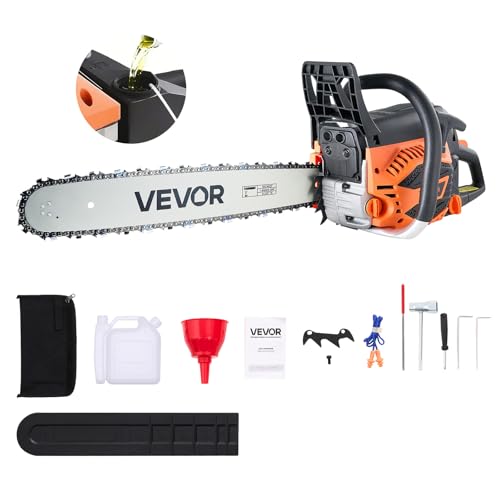
The VEVOR 62cc chainsaw is the largest model in this roundup. Its listed specifications include a 62cc two-stroke engine, 3.8 horsepower, and a 20-inch cutting bar. It also has a non-slip handle and dual fuel tanks, according to the product title. These features point toward heavy cutting work rather than small garden jobs.
I would place this model in a separate category from the best small gas chainsaw options. A 20-inch bar offers substantial reach, but the saw will need more space and careful handling. It may make sense for users who often cut larger logs or clear heavy wood on private land. It is not my first choice for simple branch trimming, small trees, or quick weekend yard work. Buyers should confirm its weight, chain specifications, oil capacity, and service support before ordering.
✅ Pros
- ✔ 62cc engine offers the largest displacement in this roundup.
- ✔ Listed 3.8 HP output provides a strong power specification.
- ✔ 20-inch bar offers substantial cutting reach.
- ✔ Non-slip handle is listed as a design feature.
- ✔ Dual fuel tanks are included in the product description.
- ✔ Better suited to larger wood than the 12-inch model.
- ✔ May appeal to users who need a larger gas saw for property work.
⚠️ Cons
- ✖ Too large for many routine homeowner trimming tasks.
- ✖ A 20-inch bar requires more room and careful handling.
- ✖ The larger engine may use more fuel than a compact model.
- ✖ Greater size can increase user fatigue.
- ✖ Not the best choice for a new chainsaw user.
- ✖ The supplied listing does not confirm the full service and parts network.
My Recommendation
I would recommend this VEVOR to experienced users who need a large cutting setup, not to someone shopping for a small gas chainsaw. The 62cc engine and 20-inch bar give it a clear role in heavier property work. It may be useful for suitable large logs and demanding wood-cutting tasks. Still, buyers should not assume that more horsepower means better results for every job. A large saw can feel tiring during small cuts and may be harder to control in tight spaces. For normal home use, a shorter bar and smaller engine are often a better match.
| Best For | Why |
|---|---|
| Large log cutting | The 20-inch bar offers more reach for suitable large logs. |
| Heavy property cleanup | Its larger engine is aimed at more demanding cutting work. |
| Experienced chainsaw users | Its size and power call for sound technique and strong safety habits. |
Husqvarna 120 Mark III 14-Inch Review
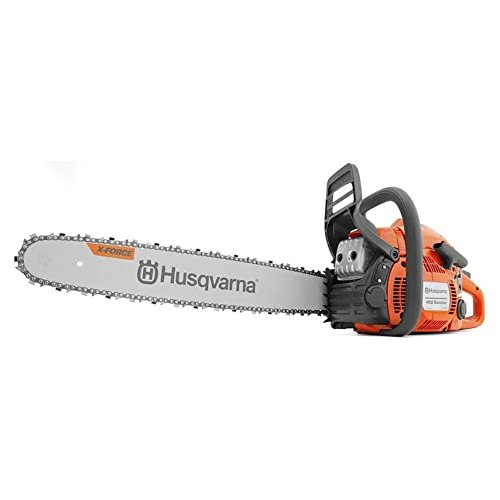
The Husqvarna 120 Mark III is my leading choice in this group for most homeowners who want a small gas chainsaw. This version has a 38cc two-cycle X-Torq engine and a 14-inch bar. It also lists an automatic chain oiler. These details give it a useful balance of engine size and cutting reach for common home tasks.
I like the 14-inch size because it does not go as far toward the large end as an 18-inch or 20-inch saw. It can suit small tree work, storm cleanup, and cutting manageable pieces of firewood. The X-Torq engine is designed around improved engine efficiency, but real fuel use depends on the wood, chain condition, and how you operate the saw. I would still check the exact weight and included accessories before purchase. A good fit matters more than a long feature list.
✅ Pros
- ✔ 38cc engine suits a range of common homeowner cutting jobs.
- ✔ 14-inch bar keeps the cutting setup relatively compact.
- ✔ X-Torq engine design focuses on efficient engine operation.
- ✔ Automatic oiler supplies chain oil during use.
- ✔ Shorter bar can be easier to handle than an 18-inch setup.
- ✔ Useful balance between pruning capacity and general wood cutting.
- ✔ Husqvarna is an established chainsaw brand with a broad product range.
- ✔ A practical size for users who do not need a large forestry saw.
⚠️ Cons
- ✖ Not intended for very large logs or heavy professional cutting.
- ✖ Gas engine requires fuel and oil maintenance.
- ✖ It produces engine noise and exhaust during operation.
- ✖ A 14-inch bar may not suit users who often cut large-diameter wood.
- ✖ Actual weight and included accessories should be checked before ordering.
My Recommendation
This is the model I would start with when comparing the best small gas chainsaw options for general homeowner use. Its 38cc engine and 14-inch bar offer a sensible middle ground. The saw is small enough for many home jobs yet has more reach than a very short pruning saw. I would use it as a candidate for storm cleanup, manageable firewood, and routine property maintenance. It is not a replacement for professional tree equipment. If you often cut large trunks or work in trees, choose equipment that matches that work and your training.
| Best For | Why |
|---|---|
| Home yard work | Its engine and bar size fit many normal property maintenance tasks. |
| Small to medium wood | The 14-inch bar offers useful reach without moving into a large saw size. |
| Occasional firewood cutting | It can handle suitable firewood pieces when the wood size and cutting method fit the saw. |
Husqvarna 120 Mark III 16-Inch Review
This Husqvarna 120 Mark III uses the same listed 38cc two-cycle X-Torq engine as the 14-inch version. The main difference is the longer 16-inch bar. It also includes an automatic chain oiler, according to the supplied product title. That extra bar length gives the saw more reach for suitable cutting jobs.
I see this model as a good option for homeowners who want one saw for a wider range of wood sizes. The longer bar may help when cutting larger branches or manageable logs. However, bar length alone does not tell you how well a saw will perform. Chain sharpness, engine condition, wood type, and safe cutting technique all matter. The 16-inch version is still a homeowner saw, so I would not treat it as a heavy-duty professional tool.
✅ Pros
- ✔ 38cc X-Torq engine offers a useful homeowner power class.
- ✔ 16-inch bar provides more reach than the 14-inch version.
- ✔ Automatic oiler helps keep the chain supplied with bar oil.
- ✔ Can handle a wider range of suitable wood sizes than a shorter bar.
- ✔ Gas operation allows use away from electrical outlets.
- ✔ Same general engine platform as the 14-inch version.
- ✔ Useful for homeowners who cut firewood and manage yard debris.
⚠️ Cons
- ✖ Longer bar may feel less compact during small trimming jobs.
- ✖ The 38cc engine may be less suitable for demanding large-log work.
- ✖ Gas fuel preparation and maintenance remain necessary.
- ✖ The longer bar does not make every cut faster or easier.
- ✖ The product image supplied is the same as the 14-inch listing, so buyers should confirm the selected bar size.
My Recommendation
I would choose the 16-inch Husqvarna if I expected to cut larger wood more often than I expected to prune small branches. It keeps the 38cc engine platform but adds two inches of bar length over the 14-inch option. That can make it more flexible for some property owners. Still, I would pick the 14-inch version if compact handling matters most. Check the exact listing and package before checkout because the supplied image is shared by both Husqvarna versions. Make sure the bar length shown in the order details is 16 inches.
| Best For | Why |
|---|---|
| Mixed yard work | The longer bar gives more reach for different suitable cutting tasks. |
| Moderate firewood jobs | It offers more bar length than the 14-inch version. |
| Homeowners with larger branches | The extra reach may help with suitable larger wood on the ground. |
Final Verdict: Which Should You Buy?
The Husqvarna 120 Mark III with its 14-inch bar is my overall pick for the best small gas chainsaw in this roundup. Its 38cc engine, compact cutting setup, and automatic oiler make it a practical choice for many homeowners. Choose the 16-inch version if you need more reach. The 12-inch VEVOR is a specialized compact option, while the larger VEVOR saws suit heavier cutting jobs.
Before you buy, match the engine and bar to your work, check parts support, and read the manual. Wear proper safety gear and never rush a cut. The best small gas chainsaw is the one you can use safely for the jobs you actually have.
FAQs Of best small gas chainsaw
Q What is the best small gas chainsaw for homeowners?
Q Is a 12-inch gas chainsaw powerful enough?
Q Is a 14-inch or 16-inch chainsaw better?
Q Are small gas chainsaws better than battery chainsaws?
Q Can a beginner use a small gas chainsaw?