Best Gas Chainsaw For Cutting Trees: Top 5 Picks
The PROYAMA 68CC is my leading choice for demanding tree cutting, thanks to its large engine and bar options.
A fallen tree can block your driveway, fill your yard with heavy branches, or leave you with a large pile of firewood. If you live in a rural area or own a home with mature trees, a gas chainsaw can make these jobs much easier. It offers strong cutting power without a battery or power cord. But not every saw suits every tree. I compared five gas chainsaws by engine size, bar length, handling, and intended use. This guide will help you find the best gas chainsaw for cutting trees, whether you need a tool for yard cleanup, farm work, or larger wood.
🏆 Top 3 Products

PROYAMA 68CC Gas Chainsaw
Its 68cc engine and 20- or 24-inch bar options make it a strong candidate for larger tree-cutting jobs.

SUPMIXTOOLS 62cc Gas Chainsaw
Its 62cc engine and 20-inch bar offer a useful balance for general tree cutting and firewood work.

VEVOR 25.4CC Gas Chainsaw
Its compact 12-inch design is suited to smaller branches and light trimming tasks.
SUPMIXTOOLS 62cc 20-Inch Gas Chainsaw
The SUPMIXTOOLS 62cc gas chainsaw is a full-size option for people who need more than a small pruning saw. It pairs a 62cc two-cycle engine with a 20-inch bar. This setup may suit firewood cutting, storm cleanup, and general wood work around a home or farm. The long bar gives it more reach than a compact 12-inch model.
I like the basic idea behind this setup because it covers several common cutting tasks. The engine size places it in the heavier-use group among these five options. However, a large engine and long bar can add weight. Check the exact weight, chain details, fuel mix, and service instructions before buying.
✅ Pros
- ✔ 62cc engine offers a larger power class than compact pruning saws.
- ✔ 20-inch bar provides useful reach for larger pieces of wood.
- ✔ Two-cycle gas design does not need a power cord.
- ✔ Can suit firewood cutting and routine property cleanup.
- ✔ Useful size for some home and farm cutting tasks.
- ✔ Longer bar may reduce the need for repeated cuts on suitable logs.
- ✔ Gas operation allows work away from electrical outlets.
⚠️ Cons
- ✖ The 20-inch setup may feel heavy during long work sessions.
- ✖ Two-cycle engines need correctly mixed fuel.
- ✖ A long bar needs more care and control.
- ✖ The listing alone does not confirm long-term durability or service support.
- ✖ A large saw may be too much for light pruning.
My Recommendation
I would consider the SUPMIXTOOLS 62cc model if you need one gas saw for regular wood cutting and general property work. Its 20-inch bar and 62cc engine give it a useful full-size setup. It may suit people who cut firewood, clear fallen limbs, or manage wood on a rural property. Before ordering, confirm the saw’s weight, bar specifications, replacement chain details, and warranty terms. It is not my choice for overhead pruning or risky tree felling.
| Best For | Why |
|---|---|
| Firewood cutting | The 62cc engine and 20-inch bar suit many medium and larger logs. |
| Farm property work | Gas power allows cutting in areas without nearby outlets. |
| Storm cleanup | The full-size setup may help with suitable fallen wood and limbs. |
VEVOR 62cc 20-Inch Gas Chainsaw
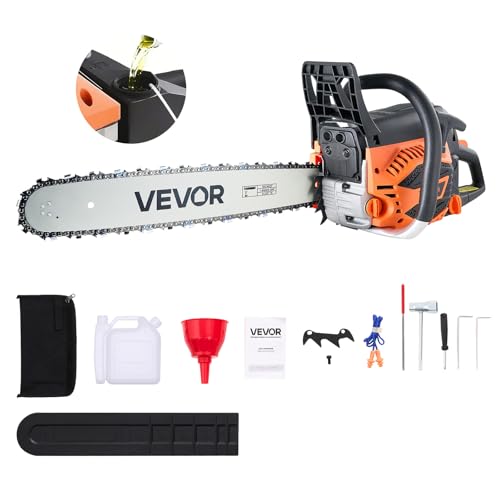
The VEVOR 62cc gas chainsaw is another full-size option for tree and wood cutting. Its listing states a 3.8 HP, two-stroke engine and a 20-inch bar. It also lists a non-slip handle and dual fuel tanks. This combination targets users who need a gas-powered tool for wood cutting, tree trimming from the ground, and land cleanup.
The 20-inch bar gives this model a similar size to the SUPMIXTOOLS saw. Its stated engine output may appeal to buyers who want a larger gas saw. Still, power claims do not tell me how the saw feels during a long cut. I would check its weight, chain speed, parts supply, and owner feedback before making a choice.
✅ Pros
- ✔ 62cc two-stroke engine is suited to a full-size chainsaw design.
- ✔ Listed 3.8 HP output gives buyers a clear power claim to compare.
- ✔ 20-inch bar offers reach for larger logs.
- ✔ Non-slip handle design may help provide a firm grip.
- ✔ Dual fuel tanks are listed as part of the design.
- ✔ Gas engine supports work away from electrical outlets.
- ✔ Can suit firewood and general property cleanup.
⚠️ Cons
- ✖ The 20-inch bar can increase handling demands.
- ✖ The engine requires the correct fuel and oil mix.
- ✖ The listed horsepower does not prove real cutting speed.
- ✖ Replacement part availability should be checked before purchase.
- ✖ May be too large for small branches and light pruning.
My Recommendation
The VEVOR 62cc model is worth considering if you want a full-size gas chainsaw with a 20-inch bar. Its listed engine output and non-slip handle are useful points to compare. I would place it on a shortlist for firewood, fallen wood, and general land cleanup. Compare its total weight and warranty with the other 62cc option before buying. A first-time user should learn basic chainsaw safety with a smaller, easier-to-control task rather than begin with large tree felling.
| Best For | Why |
|---|---|
| Medium and large logs | The 20-inch bar offers more cutting reach than a compact saw. |
| Property cleanup | The gas design suits outdoor work away from outlets. |
| Buyers comparing full-size saws | The 62cc engine and listed 3.8 HP output provide useful comparison points. |
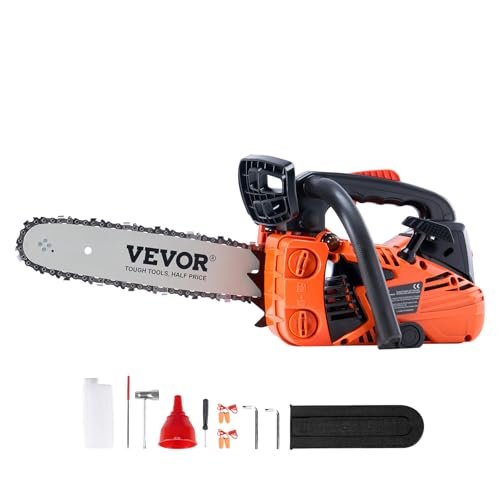
VEVOR 25.4cc 12-Inch Gas Chainsaw
The VEVOR 25.4cc gas chainsaw takes a very different approach from the two larger VEVOR and SUPMIXTOOLS models. It uses a compact 25.4cc two-cycle engine with a 12-inch bar. The listing gives its output as 1.2 HP. This smaller design targets branch cutting, light trimming, and smaller wood tasks.
I would not compare this saw directly with a 62cc or 68cc model for large tree work. Its main appeal is its compact size. A shorter bar can be easier to guide in suitable small branches. However, a top-handle design needs special care. Such saws are often intended for trained arborists, not casual one-handed yard work. Always follow the maker’s instructions and use both hands as required.
✅ Pros
- ✔ Compact 25.4cc engine suits light cutting tasks.
- ✔ 12-inch bar is suited to smaller branches and wood.
- ✔ Smaller design may be easier to move than a full-size saw.
- ✔ Gas operation avoids the need for a power outlet.
- ✔ Can suit selected farm and garden trimming tasks.
- ✔ Useful alternative when a 20-inch bar would be excessive.
- ✔ Short bar can be practical in suitable tight work areas.
⚠️ Cons
- ✖ Not designed as a replacement for a full-size tree-cutting saw.
- ✖ The 1.2 HP rating limits its role in demanding wood work.
- ✖ A 12-inch bar has less reach on large logs.
- ✖ Top-handle saws require proper training and careful handling.
- ✖ The small engine still needs fuel mixing and routine service.
My Recommendation
I would choose this VEVOR model only for light cutting tasks that match its compact design. It may suit small branches and selected trimming work. It is not my pick for cutting large trunks, regular firewood production, or general tree felling. The top-handle format deserves special attention because it can be harder to control in the wrong hands. If you are a homeowner without chainsaw training, consider a conventional rear-handle model instead.
| Best For | Why |
|---|---|
| Small branch work | The 12-inch bar is better matched to smaller wood. |
| Light garden tasks | Its compact engine and design target lighter jobs. |
| Trained users needing a compact saw | The smaller format may suit specific professional trimming tasks. |
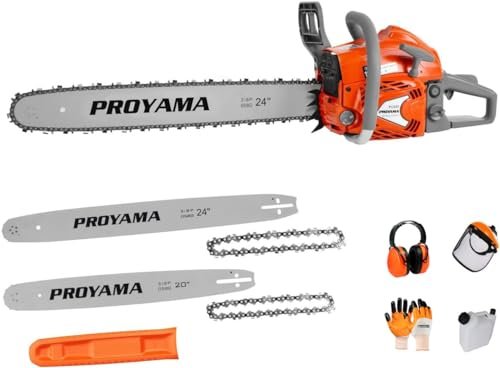
PROYAMA 68cc 20/24-Inch Gas Chainsaw
The PROYAMA 68cc gas chainsaw has the largest listed engine in this group. Its listing gives an output of 4.5 HP and offers 20-inch and 24-inch bar options. It also lists a magnesium alloy chain brake. These details make it the most appealing option here for buyers who need a larger gas chainsaw for demanding wood cutting.
I like the flexibility of having two bar options, as long as the chosen setup matches the maker’s instructions. The 68cc engine gives this saw a higher stated power class than the 62cc models. But a powerful saw can also be tiring and harder to control. I would treat it as a serious tool, not a beginner’s shortcut. Proper training, protective gear, and regular maintenance remain essential.
✅ Pros
- ✔ 68cc engine offers the largest displacement in this product group.
- ✔ Listed 4.5 HP output makes it a strong candidate for heavy cutting.
- ✔ 20-inch and 24-inch bar options offer setup flexibility.
- ✔ Magnesium alloy chain brake is listed as a design feature.
- ✔ Two-cycle gas power suits remote outdoor work.
- ✔ May suit larger firewood and property maintenance tasks.
- ✔ Longer approved bar option may provide added reach on suitable wood.
⚠️ Cons
- ✖ A 68cc engine may add weight and vibration.
- ✖ The 24-inch setup needs more strength and control.
- ✖ Long bars can increase kickback and handling risks.
- ✖ The larger engine may use more fuel than a compact saw.
- ✖ The listed power rating does not confirm real-world cutting results.
My Recommendation
The PROYAMA 68cc is my leading choice among these five products for demanding tree and wood cutting. Its larger engine and 20- or 24-inch bar options give it the broadest stated cutting setup in this group. I would consider it for experienced users who regularly handle large logs and heavy property cleanup. For most general jobs, I would start with the approved 20-inch setup rather than choose the longest bar by default. Confirm the full specifications, safety parts, service support, and warranty before purchase.
| Best For | Why |
|---|---|
| Demanding wood cutting | The 68cc engine and listed 4.5 HP output target heavier work. |
| Experienced chainsaw users | The larger engine and long bar options need good control and skill. |
| Large property cleanup | The approved 20- or 24-inch setup may suit larger fallen wood. |
PROYAMA 62cc 18/22-Inch Gas Chainsaw

The PROYAMA 62cc gas chainsaw offers another full-size choice for people who cut wood on a regular basis. The listing gives its engine output as 3.5 HP and offers 18-inch and 22-inch bar options. It also lists a three-position spring vibration system and a transparent fuel tank. These features give buyers several details to compare before choosing a saw.
The vibration system may help reduce some vibration felt at the handles, though it cannot remove fatigue. The transparent tank may also make fuel checks easier. I see this model as a middle ground between the compact VEVOR saw and the larger 68cc PROYAMA. It may suit users who want a full-size gas chainsaw without moving straight to the largest engine in this group.
✅ Pros
- ✔ 62cc engine suits many medium and demanding cutting tasks.
- ✔ Listed 3.5 HP output provides a useful comparison point.
- ✔ 18-inch and 22-inch bar options add flexibility.
- ✔ Three-position spring vibration system is a useful listed feature.
- ✔ Transparent fuel tank helps users check the fuel level.
- ✔ Gas engine allows outdoor use without a power cord.
- ✔ Can suit firewood cutting and routine property maintenance.
⚠️ Cons
- ✖ The larger engine may feel heavy during extended work.
- ✖ The 22-inch bar may be harder to control than the 18-inch option.
- ✖ The vibration system does not prevent fatigue or injury.
- ✖ Two-cycle fuel mixing adds a regular maintenance step.
- ✖ Long-term reliability and parts support need checking.
My Recommendation
I would shortlist the PROYAMA 62cc if you want a full-size gas chainsaw with a choice of bar lengths. The 18-inch option may be more manageable for many routine cutting jobs, while the approved 22-inch option may suit larger wood. Its vibration system and transparent tank are useful features to consider. I would compare its weight and warranty with the SUPMIXTOOLS and VEVOR 62cc models before buying. It is best suited to users who already understand basic chainsaw safety and care.
| Best For | Why |
|---|---|
| Regular firewood cutting | The 62cc engine and available bar sizes suit a range of logs. |
| Home and farm maintenance | Its gas design works in outdoor areas without nearby power. |
| Buyers who value bar options | The 18-inch and 22-inch choices offer different handling and reach. |
Final Verdict: Which Should You Buy?
The PROYAMA 68cc is my top choice among these five gas chainsaws for demanding tree and wood cutting. Its 68cc engine, listed 4.5 HP output, and 20- or 24-inch bar options give it the strongest stated setup in this group. The SUPMIXTOOLS 62cc is a good alternative for general firewood and property work. Choose the compact VEVOR only for light tasks.
The best gas chainsaw for cutting trees should match your wood size, skill, and safety needs. Compare engine power, bar length, weight, and service support before buying. Wear proper protective gear and hire a trained tree professional for risky felling jobs.
FAQs Of best gas chainsaw for cutting trees
Q What is the best gas chainsaw for cutting trees?
Q Is a 20-inch chainsaw good for cutting trees?
Q Is a 62cc gas chainsaw powerful enough for large trees?
Q Should I choose a 20-inch or 24-inch chainsaw bar?
Q Are gas chainsaws better than battery chainsaws for cutting trees?